AI Appraisal Estimate

AI-generated estimates · not official valuations

From the user

What was submitted

Photo and notes provided by the user — not generated by AI

Submitted item photo
Submitted photo · May 27, 2026

User's notes

No additional notes provided.

AI analysis below

AI appraisal

AI analysis & estimate

AI-Generated · Verify before acting

Everything below is generated by AI for informational purposes only. AI can make mistakes — the AI may misidentify items or misattribute them (artist, maker, brand, designer, origin, era). This is not an official valuation and should not be used for insurance, sale, tax, estate, legal, or lending purposes — or any decision requiring a certified appraisal. It is not an authoritative claim about any person, brand, or rights holder — do not share or rely on it as a factual statement about a third party. Always consult qualified professionals before making financial decisions.

Read the full disclaimer

AI Identification

·Not independently authenticated·Verify before acting

Japanese Satsuma-style Moriage Porcelain Vase

Asian Antiques - Japanese Ceramics

AI Estimated Value

·Not an official valuation·Verify before acting

$400 - $600

As of May 27, 2026

AI Item Analysis

·AI can make mistakes·Verify before acting
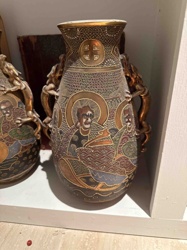
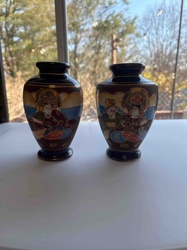
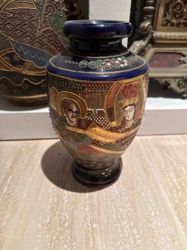
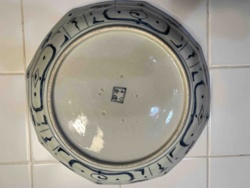
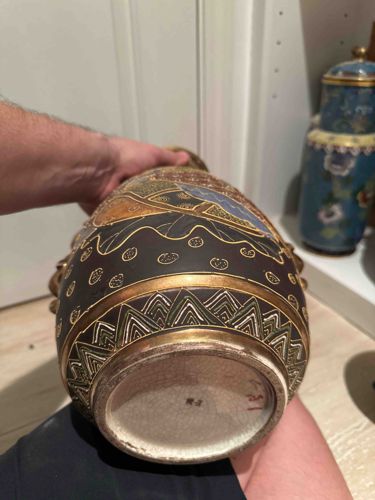
This is a large, hand-decorated Japanese porcelain vase, likely dating from the Meiji (1868–1912) to early Taisho era. The piece features a bulbous ovoid body with a tapered base, constructed from a cream-colored earthenware or porcelain core. It is heavily decorated using the 'moriage' technique, which involves raised, slip-trailed enamel detailing that creates a distinct three-dimensional texture. The color palette is rich, featuring a charcoal-black matte ground contrasted with vibrant gold gilding, earthy ochre, forest green, and sky blue accents. The surface is divided into decorative registers: the base shows a geometric zigzag pattern with incised white detailing, while the main body features scenic cartouches and 'mon' style floral circular patterns. Notable features include ornate, gilded figural handles on the sides. On the underside, the base displays a fine, age-appropriate craquelure glaze and a small dark mark that may indicate a workshop signature or kiln mark, though it is partially obscured. Condition issues include light surface wear to the gilding, some dust accumulation in the raised textures, and minor scuffing on the unglazed foot rim. The overall craftsmanship suggests a high-quality production intended for the export market, exhibiting the intricate density and ornamental flair characteristic of traditional Satsuma ware.
AI Appraisal Report

·AI can make mistakes·Verify before acting
Based on my visual examination of the provided images, this appears to be a genuine Japanese Satsuma-style earthenware vase, likely dating to the late Meiji (1890-1912) or early Taisho period. The piece exhibits the classic characteristics of high-quality export ware, notably the intense 'moriage' beadwork and raised enamels on a matte dark ground, a style heavily favored by Western markets during the Japonisme movement. The distinctive craquelure visible on the underside is consistent with traditional Satsuma earthenware paste, lending credibility to its age. The figural handles and intricate geometric banding suggest production by a skilled workshop, potentially one in the Kyoto or Yokohama export hubs. The condition appears generally good for its age, with expected wear to the fragile gilding on high points—a common issue with moriage pieces. I note no obvious structural cracks or catastrophic chips in the photos, though the dust accumulation hides the finer details. From a market perspective, demand for heavy moriage ware has softened slightly compared to fine-painted 'Gosu Blue' or signed Kinkozan pieces, but large, decorative examples still command solid prices as decorative antiques. However, this appraisal is provisional. Without physical handling, I cannot verify the weight (crucial for distinguishing between heavy earthenware and lighter porcelain reproductions) or inspect the interior for restoration invisible to the camera. The mark on the base is obscured; a clear macro image or in-person rubbing is required to attribute it to a specific kiln or artist, which could significantly alter the valuation. Professional cleaning is also recommended to reveal the full luster of the enamel.

Get your items appraised

Instant estimates of your treasures with AI-powered appraisals

Browse More Appraisals