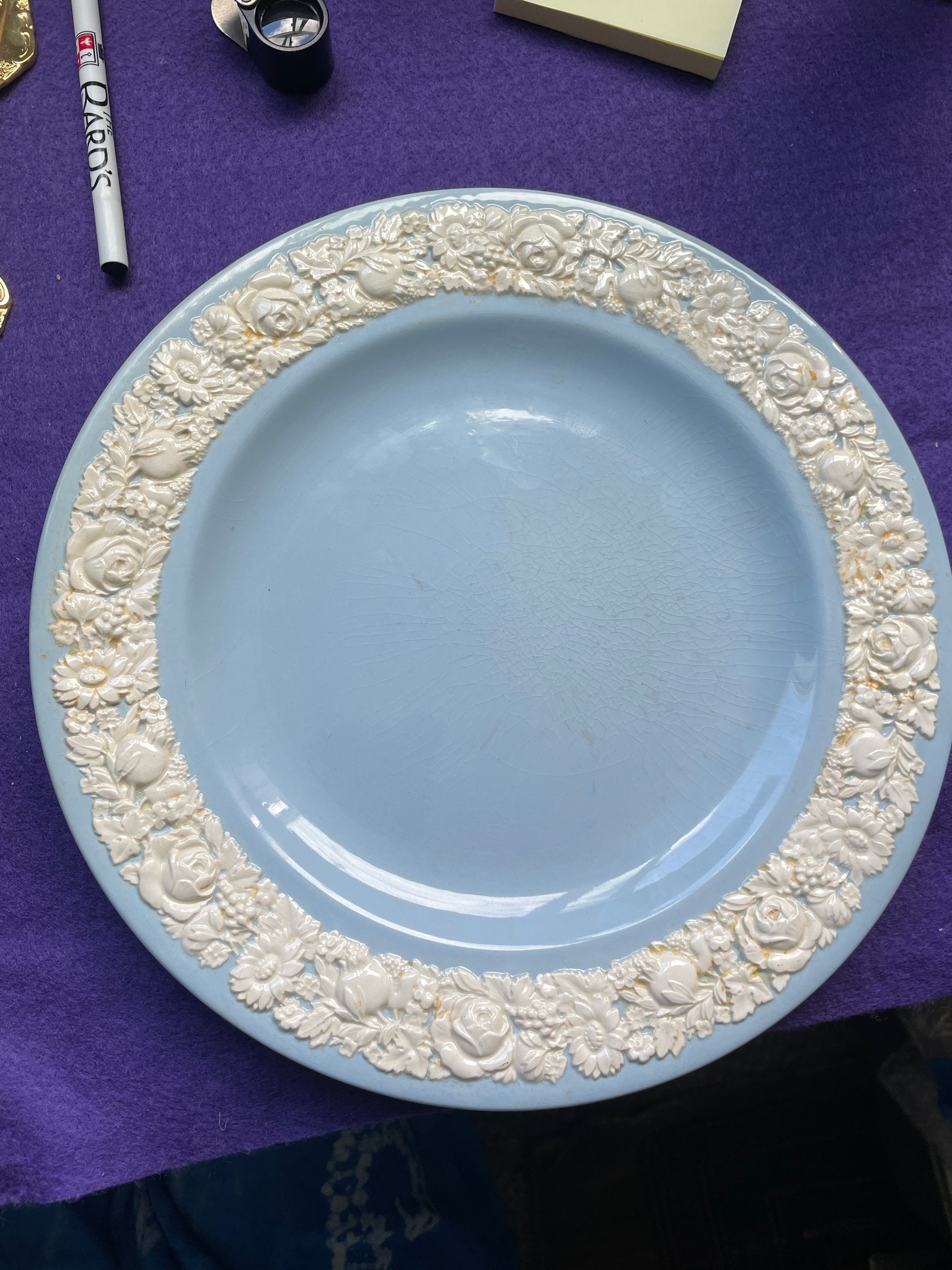
Wedgwood Queensware Blue Embossed Plate
This is a circular ceramic plate, likely a dinner or serving plate, featuring the iconic Wedgwood 'Queensware' style. The piece is characterized by a pale lavender-blue glazed earthenware body (often referred to as 'celadon blue' in some pattern variations) with a thick, cream-colored (creamware) bas-relief border. The embossed border, known as 'applied sprigging,' displays a lush, continuous floral garland of roses, daisies, and berries in high relief. Physically, the plate showcases a glossy finish on the blue well, while the cream-colored sprigged elements appear slightly more matte. Regarding condition, there is significant and dense 'crazing' (fine spider-web cracking of the glaze) visible throughout the center of the blue well, which is common in older earthenware but impacts the value. Furthermore, there are visible yellowish-brown stains or oxidation spots trapped within the crevices of the white floral border and some surface scratches in the center. While no maker's mark is visible from the top, this specific design is a hallmark of the Wedgwood factory in England, likely dating from the mid-20th century. The craftsmanship is high, evidenced by the crisp molding of the floral motifs, though the glaze integrity has compromised with age.
AI-Generated Appraisal Disclaimer
Estimated Value
$25.00 - $45.00
Basic Information
Category
Fine Ceramics & Porcelain
Appraised On
April 15, 2026
Estimated Value
$25.00 - $45.00
Item Description
This is a circular ceramic plate, likely a dinner or serving plate, featuring the iconic Wedgwood 'Queensware' style. The piece is characterized by a pale lavender-blue glazed earthenware body (often referred to as 'celadon blue' in some pattern variations) with a thick, cream-colored (creamware) bas-relief border. The embossed border, known as 'applied sprigging,' displays a lush, continuous floral garland of roses, daisies, and berries in high relief. Physically, the plate showcases a glossy finish on the blue well, while the cream-colored sprigged elements appear slightly more matte. Regarding condition, there is significant and dense 'crazing' (fine spider-web cracking of the glaze) visible throughout the center of the blue well, which is common in older earthenware but impacts the value. Furthermore, there are visible yellowish-brown stains or oxidation spots trapped within the crevices of the white floral border and some surface scratches in the center. While no maker's mark is visible from the top, this specific design is a hallmark of the Wedgwood factory in England, likely dating from the mid-20th century. The craftsmanship is high, evidenced by the crisp molding of the floral motifs, though the glaze integrity has compromised with age.
Get Your Items Appraised
Instant estimates of your treasures with AI-powered instant appraisals