Biedermeier Style Abatant Secrétaire
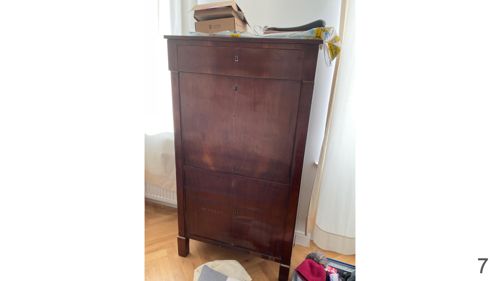
This item is an upright fall-front writing desk, commonly known as a secrétaire à abattant, crafted in the Biedermeier style, likely dating to the mid-to-late 19th century. The piece features a vertical rectangular silhouette with a rich, dark flame mahogany or walnut veneer that exhibits classic book-matched symmetry on the central fall-front panel. It is constructed with a top frieze drawer containing a central vertical keyhole, followed by a large hinged writing flap that opens to reveal an interior drawer system (not visible), and a lower section with two cupboard doors. The piece sits on short, square tapered legs. The finish shows a moderate patina with visible clouding or blooming in the lacquer, particularly on the lower doors and central panel, suggesting exposure to moisture or temperature fluctuations. There are minor abrasions and surface scratches consistent with age and use, especially along the base and edges. The overall craftsmanship appears high, utilizing solid wood secondary structures with fine veneering techniques characteristic of Continental European furniture of this period.
AI-Generated Appraisal Disclaimer
Estimated Value
$800 - $1,400
Basic Information
Category
Antique Furniture
Appraised On
February 25, 2026
Estimated Value
$800 - $1,400
Item Description
This item is an upright fall-front writing desk, commonly known as a secrétaire à abattant, crafted in the Biedermeier style, likely dating to the mid-to-late 19th century. The piece features a vertical rectangular silhouette with a rich, dark flame mahogany or walnut veneer that exhibits classic book-matched symmetry on the central fall-front panel. It is constructed with a top frieze drawer containing a central vertical keyhole, followed by a large hinged writing flap that opens to reveal an interior drawer system (not visible), and a lower section with two cupboard doors. The piece sits on short, square tapered legs. The finish shows a moderate patina with visible clouding or blooming in the lacquer, particularly on the lower doors and central panel, suggesting exposure to moisture or temperature fluctuations. There are minor abrasions and surface scratches consistent with age and use, especially along the base and edges. The overall craftsmanship appears high, utilizing solid wood secondary structures with fine veneering techniques characteristic of Continental European furniture of this period.
Related Tags
Explore similar items and categories:
Get Your Items Appraised
Instant estimates of your treasures with AI-powered instant appraisals