Photo and notes provided by the user — not generated by AI
Submitted photo · June 27, 2026
User's notes
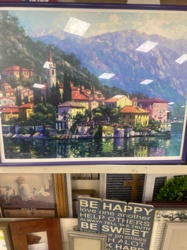
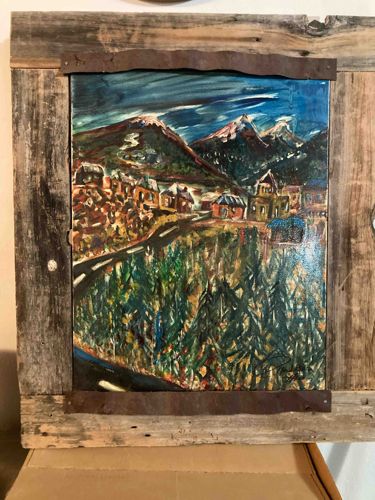
Approximately 16 x 24 oil, painting of mountain town, possibly New Mexico, first name, unknown; De Baca or D Baca last name
AI analysis below
AI appraisal
AI analysis & estimate
AI-Generated · Verify before acting
Everything below is generated by AI for informational purposes only. AI can make mistakes — the AI may misidentify items or misattribute them (artist, maker, brand, designer, origin, era). This is not an official valuation and should not be used for insurance, sale, tax, estate, legal, or lending purposes — or any decision requiring a certified appraisal. It is not an authoritative claim about any person, brand, or rights holder — do not share or rely on it as a factual statement about a third party. Always consult qualified professionals before making financial decisions.
Note
This analysis also relies on unverified notes provided by the user, which may be incomplete or inaccurate and could affect the result.
This is an original oil painting depicting a mountain town landscape, possibly located in New Mexico, as suggested by the context. The artwork itself measures approximately 16 x 24 inches. The painting features a vibrant and somewhat expressionistic style, characterized by broad brushstrokes and rich, earthy color tones punctuated by brighter accents. The composition includes prominent snow-capped mountains in the background under a dynamic, cloudy blue sky. In the midground, a cluster of buildings, indicative of a small town or village, is nestled amongst rolling hills and dense foliage, possibly evergreens. A road or path winds through the scene, adding depth to the landscape. The foreground is dominated by a lush, green forest rendered with textured brushwork, suggesting individual trees or dense undergrowth. The colors are generally saturated, with blues, greens, browns, and reds creating a lively scene. The surface of the oil painting appears slightly glossy, indicating a possible varnish or the inherent sheen of oil paints. There are no immediately obvious significant condition issues such as cracks, flaking, or major discoloration visible in the provided image; however, a close inspection would be required to confirm. The painting is framed in what appears to be a rustic, handcrafted frame made from reclaimed wood, possibly barnwood or weathered planks. The frame exhibits a natural, distressed finish with visible grain, knots, and irregularities, contributing to a rustic aesthetic. The corners of the wooden frame show some signs of wear and minor gaps, which are consistent with its rustic construction. Adding to the unique framing, strips of rusted or oxidized metal are affixed along the inner edge of the wooden frame, directly contacting the painting. These metal strips have a distinct aged patina, characterized by varying shades of reddish-brown and textured surfaces. This combination of reclaimed wood and rusted metal suggests a folk art or rustic contemporary style of framing, which complements the subject matter of a rugged mountain landscape. The artist's last name appears to be 'De Baca' or 'D Baca', visible as a signature in the lower right portion of the painting. The full first name is unknown. The style suggests a 20th-century American landscape painting, possibly mid to late 20th century, leaning towards a regionalist or post-impressionistic influence given its expressive quality.
AI Appraisal Report
·AI can make mistakes·Verify before acting
I have examined the provided image of the oil painting by De Baca, depicting a mountain town landscape. The artwork, measuring approximately 16 x 24 inches, presents a vibrant, expressionistic style with broad brushstrokes and rich, earthy tones, characteristic of mid to late 20th-century regionalist or post-impressionistic American landscape painting. I observe no obvious major condition issues like cracks or flaking from the image; however, a definitive assessment of condition would require in-person inspection. The framing, a rustic combination of reclaimed wood and rusted metal, complements the subject matter and adds to its appeal. The signature 'De Baca' or 'D Baca' is visible, but without a known first name or documented sales history under this name, the artist's market presence is currently limited. The market for unknown or less-documented regional artists with appealing subject matter like this generally falls into the decorative to emerging collector category. Comparable works by lesser-known regional landscape artists of similar size and quality often realize values within this range, particularly those with a folk art or rustic aesthetic like this piece. Demand exists for charming, well-executed landscapes that resonate with buyers' personal aesthetics. The main factor impacting value here is the artist's current obscurity. For full authentication and a more precise valuation, an in-person examination to verify media, condition, and actual signature, along with provenance documentation, would be essential. Without these, the authenticity of the artwork and its condition details based solely on an image are limited.