AI estimate as of August 2, 2025 · verify with a professional before acting
AI-Generated · Verify before acting
Everything on this page is generated by AI for informational purposes only. AI can make mistakes — the AI may misidentify items or misattribute them (artist, maker, brand, designer, origin, era). This is not an official valuation and should not be used for insurance, sale, tax, estate, legal, or lending purposes — or any decision requiring a certified appraisal. It is not an authoritative claim about any person, brand, or rights holder — do not share or rely on it as a factual statement about a third party. Always consult qualified professionals before making financial decisions.
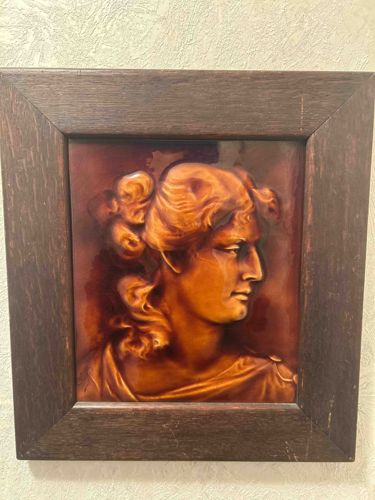
This item is a framed ceramic or pottery art tile featuring a bas-relief portrait of a classical figure, likely a goddess or muse, depicted in profile. The tile exhibits a rich, iridescent reddish-brown glaze that creates depth and highlights the sculptural qualities of the relief. The figure has flowing, curly hair that is styled in an elaborate updo, characteristic of classical antiquity. Her profile is strong, with defined features, and she appears to be draped in classical attire, indicated by the visible fabric folds and a hint of a clasp on her shoulder. The overall impression is one of elegance and classical beauty. The tile is set within a simple, dark-stained wooden frame, possibly oak, given its visible grain, which complements the warm tones of the ceramic. The frame appears to have a slightly distressed or aged finish, with some visible scuffs and wear marks, particularly on the edges and corners, suggesting age or handling. The construction of the frame seems to be mitered at the corners. There are no obvious glaring condition issues on the ceramic tile itself, such as cracks or chips, though the nature of the glaze might conceal minor imperfections. The piece evokes a late 19th to early 20th-century aesthetic, possibly Art Nouveau or Arts and Crafts, due to the use of ceramic in decorative arts and the classical revival themes popular during those periods. The quality of the relief work is fine, indicating skilled craftsmanship in its molding and glazing.
AI Appraisal Report
Based on my visual examination of the provided image, this Framed Ceramic Bas-Relief Art Tile, featuring a classical female profile, appears to be in very good condition. The ceramic tile itself shows no obvious chips, cracks, or significant surface abrasions, which is remarkable given its age. The iridescent reddish-brown glaze is well-preserved, highlighting the detailed sculptural qualities. The simple, dark-stained wooden frame exhibits appropriate wear for its presumed age, with scuffs and minor distressing that are consistent with handling over time rather than damage. This patina actually enhances its antique appeal.
Authenticity, based solely on visual inspection, points towards a late 19th or early 20th-century origin, aligning with the Arts and Crafts or Art Nouveau movements, which frequently incorporated classical motifs and ceramic art. The craftsmanship, particularly the fine relief work and quality of the glaze, suggests a skilled artisan or manufacturer of that period.
The market for decorative art tiles, especially those with classical or allegorical themes from this era, remains stable. Demand is moderate, driven by collectors of period ceramics and those seeking unique wall decor with historical charm. While not exceedingly rare, the quality and condition of this piece elevate its desirability. Comparable sales of similar bas-relief ceramic tiles from manufacturers like Grueby, Rookwood (though less frequently in this specific style), or anonymous yet skilled artisans from the Arts & Crafts period, generally fall within a specific range, assuming good condition.
Factors significantly impacting value include the excellent condition of the tile, the appealing classical subject matter, and the historical aesthetic it embodies. Limitations in authentication from images alone are crucial to note: I cannot definitively ascertain the specific manufacturer or artist without a physical examination for maker's marks, signatures, or specific production identifiers on the reverse of the tile or frame. An in-person examination would also allow for a more thorough assessment of the glaze's integrity, any subtle repairs, and the precise wood type and construction of the frame. Furthermore, provenance documentation (e.g., original sales receipts, exhibition history) would provide invaluable support for its authenticity and origin. Scientific testing, such as thermoluminescence dating, could confirm the age of the ceramic but is generally not undertaken for items in this value range unless there are significant authenticity doubts or higher perceived value.
Considering these factors, my appraisal reflects its aesthetic appeal, condition, and likely historical period.