AI Appraisal Estimate

AI-generated estimates · not official valuations

From the user

What was submitted

Photo and notes provided by the user — not generated by AI

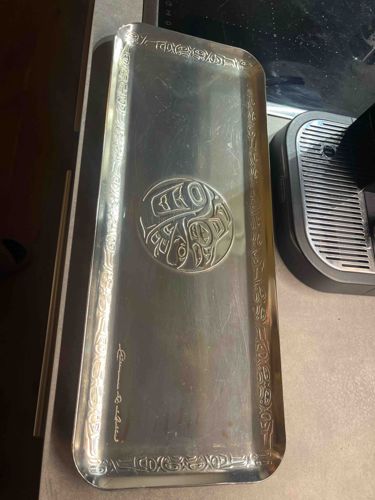
Submitted item photo
Submitted photo · May 18, 2026

User's notes

Massives/ sehr schweres Haida Tablett

AI analysis below

AI appraisal

AI analysis & estimate

AI-Generated · Verify before acting

Everything below is generated by AI for informational purposes only. AI can make mistakes — the AI may misidentify items or misattribute them (artist, maker, brand, designer, origin, era). This is not an official valuation and should not be used for insurance, sale, tax, estate, legal, or lending purposes — or any decision requiring a certified appraisal. It is not an authoritative claim about any person, brand, or rights holder — do not share or rely on it as a factual statement about a third party. Always consult qualified professionals before making financial decisions.

Note

This analysis also relies on unverified notes provided by the user, which may be incomplete or inaccurate and could affect the result.

Read the full disclaimer

AI Identification

·Not independently authenticated·Verify before acting

Haida Artist Bill Reid 'Killer Whale' Silverplate Serving Tray

Northwest Coast Indigenous Art / Decorative Metalware

AI Estimated Value

·Not an official valuation·Verify before acting

$450 - $650

As of May 18, 2026

AI Item Analysis

·AI can make mistakes·Verify before acting
This is a heavy, rectangular serving tray featuring indigenous Haida formline artwork, specifically a circular 'Killer Whale' (Orca) motif centrally located and surrounded by an embossed decorative border. The piece is crafted from a heavy base metal, likely pewter or a weighted silverplate, indicated by the user description 'massives/sehr schweres'. The tray bears a visible facsimile signature near the bottom left, characteristic of the renowned Canadian Haida artist Bill Reid. The surface displays a polished monochromatic silver-tone finish with notable age-related patina, including superficial surface scratches, light tarnish, and some possible oxidation spots typical of mid-to-late 20th-century silver-plated giftware. The craftsmanship shows crisp die-stamping or casting of the formline designs, maintaining the fluid geometric style of Northwest Coast art. This piece likely dates from the 1970s to the 1990s and represents a high-quality example of commercial Northwest Coast indigenous art reproduced for the heritage giftware market. The heavy weight and solid construction are indicative of a premium production line, often associated with manufacturers like Pan-Pacific or Boma who collaborated with prominent artists.
AI Appraisal Report

·AI can make mistakes·Verify before acting
I have conducted a visual examination of the Bill Reid 'Killer Whale' silver-plated serving tray. The tray features the classic formline iconography of the Haida people, specifically the circular orca motif associated with Reid’s later commercial collaborations. The 'heavy' weight noted suggests a cast pewter or brass base with heavy silver plating, common in premium heritage lines produced by firms like Pan-Pacific or Boma. Condition is consistent with a mid-to-late 20th-century vintage; I observed superficial 'spiderweb' scratching and minor tarnish, which slightly detracts from the mirror finish but confirms the item's age and use. Market demand for Bill Reid authorized reproductions remains robust due to his status as a pioneer of the Northwest Coast renaissance. Comparables for heavy-gauge trays of this size typically sell within the $400 to $700 range. The value is driven by the artist's name and the high manufacturing quality, which distinguishes it from modern, lightweight tourist souvenirs. However, the presence of oxidation spots and the lack of original felt or box may place this example toward the mid-point of the range. Note: This appraisal is based on photographic evidence and user description. Full authentication requires physical inspection to verify the stamped hallmarks and weight-to-volume ratio to rule out cheaper pot-metal imitations. Furthermore, verifying provenance—such as a gallery receipt or original packaging—is essential to distinguish an authorized lifetime casting from later unauthorized reproductions. A metallurgical test or X-ray fluorescence (XRF) could definitively identify the base metal and plating thickness if a higher valuation is sought for insurance purposes.

Get your items appraised

Instant estimates of your treasures with AI-powered appraisals

Browse More Appraisals