AI estimate as of November 23, 2025 · verify with a professional before acting
AI-Generated · Verify before acting
Everything on this page is generated by AI for informational purposes only. AI can make mistakes — the AI may misidentify items or misattribute them (artist, maker, brand, designer, origin, era). This is not an official valuation and should not be used for insurance, sale, tax, estate, legal, or lending purposes — or any decision requiring a certified appraisal. It is not an authoritative claim about any person, brand, or rights holder — do not share or rely on it as a factual statement about a third party. Always consult qualified professionals before making financial decisions.
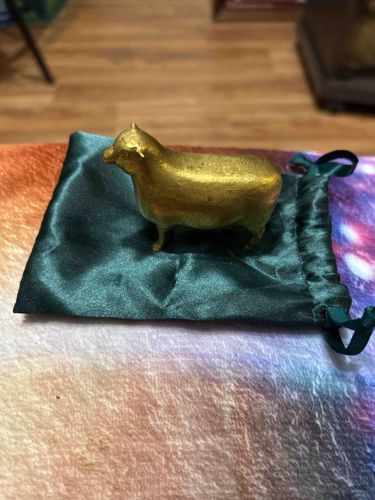
This item is a small, solid-looking figurine depicting a pig, crafted from a material that appears to be metal with a gilt or gold-toned finish. The primary color is a lustrous, somewhat muted gold, exhibiting slight variations in sheen, suggesting either natural patina, surface wear, or the texture of the underlying material. The pig is presented in a static, standing pose, with four stout legs visible, though the precise detailing of hooves or musculature is indistinct due to the overall smooth and somewhat abstract rendering of the form. Its head is slightly turned to the left, featuring small, erect ears and a distinctly recognizable snout. The body is rounded and compact, characteristic of a pig. There are no overt markings, engravings, or maker's marks visible on the surface from this angle. The surface shows some minor inconsistencies in the gilt application or some wear, particularly on the higher points and edges, which gives it a slightly aged appearance rather than a pristine, factory-new look. The craftsmanship appears to be reasonably good for a decorative figurine of this type, with a smooth finish and well-defined basic animal form. Its small size suggests it is likely a decorative accent, a desk ornament, or possibly even a charm or good luck token. The item is resting on a dark teal or emerald green satin-like pouch, which has a drawstring closure, against a multi-colored fleece or faux fur background, presumably indicating the item's current storage or presentation.
AI Appraisal Report
I have examined the image of this gilt metal pig figurine. Based on visual inspection, the item appears to be in good to very good condition, exhibiting minor surface wear consistent with age and handling, particularly slight inconsistencies in the gilt application on raised areas. This contributes to an aged, rather than damaged, aesthetic. Its authenticity as a decorative gilt metal figurine is apparent, given the typical manufacturing techniques for such items. Without physical inspection, however, I cannot definitively confirm the base metal composition or the precise nature of the 'gilt' — whether it's a gold wash, plating, or a gold-toned finish.
Market conditions for such decorative animal figurines are generally stable, with a moderate demand for charming, well-executed pieces. Comparables typically include similar small metal animal sculptures, often found in estate sales, antique shops, or online marketplaces. These items usually fall into the decorative arts category rather than fine jewelry or high art. True rarity is not indicated; numerous similar items were produced. Factors impacting value are primarily its aesthetic appeal, condition, material quality (which is hard to ascertain fully from the image), and perceived craftsmanship. Its small size limits its impact as a standalone decor piece, suggesting its value lies in its charm and potential as a collector's item within a niche.
To fully authenticate the material and confirm the gilding process, an in-person examination, including potential non-destructive material analysis (e.g., XRF scanning), would be necessary. Documentation regarding provenance, such as original purchase receipts or verifiable history of ownership, would also significantly aid in establishing its origin and potential value, especially if it were associated with a known maker. Without these, the appraisal remains based solely on visual cues and market trends for general decorative items.