AI Appraisal Estimate

AI-generated estimates · not official valuations

From the user

What was submitted

Photo and notes provided by the user — not generated by AI

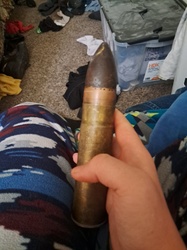
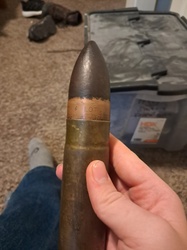
Submitted item photo
Submitted photo · June 3, 2026

User's notes

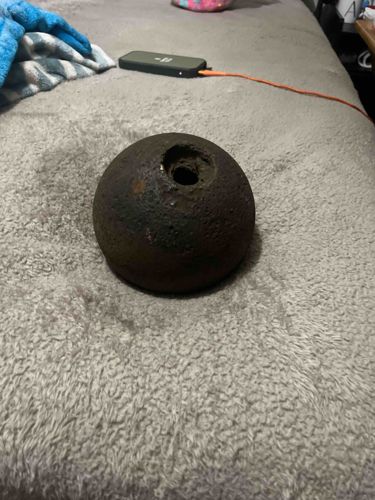
Civil War cannonball 12lb.

AI analysis below

AI appraisal

AI analysis & estimate

AI-Generated · Verify before acting

Everything below is generated by AI for informational purposes only. AI can make mistakes — the AI may misidentify items or misattribute them (artist, maker, brand, designer, origin, era). This is not an official valuation and should not be used for insurance, sale, tax, estate, legal, or lending purposes — or any decision requiring a certified appraisal. It is not an authoritative claim about any person, brand, or rights holder — do not share or rely on it as a factual statement about a third party. Always consult qualified professionals before making financial decisions.

Note

This analysis also relies on unverified notes provided by the user, which may be incomplete or inaccurate and could affect the result.

Read the full disclaimer

AI Identification

·Not independently authenticated·Verify before acting

12-Pounder Bormann-Fused Spherical Shell

Military Antiques & Historical Ordnance

AI Estimated Value

·Not an official valuation·Verify before acting

$450-600

As of June 3, 2026

AI Item Analysis

·AI can make mistakes·Verify before acting
This item is a spherical cast iron artillery projectile, commonly known as a 12-pounder shell, dating back to the American Civil War era (circa 1861-1865). The projectile is hollow, designed originally to be filled with black powder and iron shrapnel. A prominent feature is the large recessed circular opening at the top, which was manufactured to receive a Bormann time fuse—a thin metal alloy disc used to set the explosion time after firing. The surface of the iron exhibits significant pitting and oxidation, consistent with being buried or exposed to the elements for over a century, resulting in a dark, textured brown and black patina. The spherical body appears generally intact but shows signs of iron rot and scaling typical of recovered relics. The absence of the soft metal fuse indicates it was likely removed or deteriorated. Such ordinance was a staple of the Model 1841 Mountain Howitzer and the Model 1857 12-Pounder Napoleon field guns. Extreme caution is always advised with such relics as they can occasionally still contain dormant explosive filler if not professionally deactivated.
AI Appraisal Report

·AI can make mistakes·Verify before acting
I have conducted a visual examination of the 12-pounder Bormann-fused spherical shell. The item appears to be an authentic specimen of Union field artillery from the American Civil War era. The casting process, specifically the visible seam and the characteristic recess for the Bormann time fuse, aligns with production standards for the Model 1857 Napoleon. The surface shows heavy pitting and oxidation, providing a 'battlefield relic' aesthetic that is highly sought after by collectors, though the significant 'iron rot' and scaling on the lower hemisphere slightly detract from the structural value compared to 'attic-condition' specimens. The Bormann fuse itself is missing, which is common for recovered ordnance but reduces the value compared to those with intact, legible lead-alloy timing discs. Market demand for Civil War ordnance remains stable; however, the market has seen a surplus of recovered relics recently, keeping prices for 12-pounder common shells in this condition within the mid-range. A significant value factor is the safety status; as an appraiser, I must assume the shell is 'live' unless clear evidence of deactivation (a drilled drainage hole) is visible. A certified 'inert' status would enhance marketability. This appraisal is based solely on digital images. Final authentication would require a physical inspection to verify the weight, check for internal filler, and ensure the iron hasn't been chemically treated with modern sealants that could hide deeper corrosion. Ideally, provenance detailing the site of recovery would further solidify the historical significance and value.

Get your items appraised

Instant estimates of your treasures with AI-powered appraisals

Browse More Appraisals