AI Appraisal Estimate

AI-generated estimates · not official valuations

From the user

What was submitted

Photo and notes provided by the user — not generated by AI

Submitted item photo
Submitted photo · May 21, 2026

User's notes

No additional notes provided.

AI analysis below

AI appraisal

AI analysis & estimate

AI-Generated · Verify before acting

Everything below is generated by AI for informational purposes only. AI can make mistakes — the AI may misidentify items or misattribute them (artist, maker, brand, designer, origin, era). This is not an official valuation and should not be used for insurance, sale, tax, estate, legal, or lending purposes — or any decision requiring a certified appraisal. It is not an authoritative claim about any person, brand, or rights holder — do not share or rely on it as a factual statement about a third party. Always consult qualified professionals before making financial decisions.

Read the full disclaimer

AI Identification

·Not independently authenticated·Verify before acting

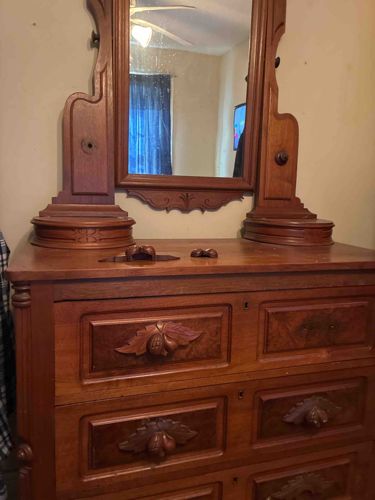
Victorian Eastlake Style Walnut Dresser with Wishbone Mirror

Antique Furniture

AI Estimated Value

·Not an official valuation·Verify before acting

$450.00 - $700.00

As of May 21, 2026

AI Item Analysis

·AI can make mistakes·Verify before acting
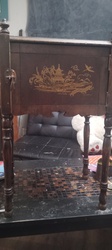
This is an antique Victorian-era dresser, likely dating from the 1870s to 1890s, showcasing prominent Eastlake and Renaissance Revival design elements. The piece is constructed from solid walnut with decorative burl walnut veneers on the drawer fronts for added visual contrast. The upper portion features a 'wishbone' style swinging mirror supported by two ornate vertical stanchions. These supports rest on small semicircular 'handkerchief' or glove drawers with incised line carvings. The dresser base contains three large drawers, each adorned with distinctive hand-carved fruit and leaf wooden pulls, specifically a nut or acorn motif nestled in foliage. The drawer fronts feature recessed panels and keyholes for locks. Physically, the piece displays a medium-to-dark warm honey patina typical of aged walnut. Condition-wise, the wood surface shows visible scratches and minor scuffs consistent with age, particularly on the top surface where a drawer pull appears to be detached and resting. The mirror glass appears to be original with some foxing or surface dust. The craftsmanship is high, featuring turned side columns and incised geometric detailing characteristic of the period's mass-manufactured yet high-quality furniture guilds.
AI Appraisal Report

·AI can make mistakes·Verify before acting
Based on my visual examination, this is a genuine late 19th-century Victorian Eastlake dresser, circa 1880. The use of walnut with burl veneers and the characteristic incised 'spoon' carvings (Eastlake style) combined with the 'wishbone' mirror support are highly indicative of the era. The presence of hand-carved fruit-and-nut pulls is a desirable feature that suggests a higher tier of production than basic utilitarian models of the time. The condition appears fair to good; while the patina is warm and inviting, there is visible surface wear and a detached pull on the top surface. The 'foxing' on the mirror suggests the original silvering is intact, which collectors often prefer over modern replacements. Market demand for Eastlake furniture has stabilized but remains lower than mid-century modern or formal mahogany pieces. The current market value is driven by the 'wishbone' configuration and the presence of the handkerchief drawers. Similar items at regional auctions typically realize between $400 and $600, while specialized antique retailers may list them closer to $900. As this appraisal is based on photographic evidence, several limitations apply. I cannot verify the type of joinery (e.g., Knapp joints vs. dovetails) which would further pin down the manufacturer and date. A physical inspection is required to confirm the structural integrity of the walnut, check for active woodworm, and verify if the locks are functional. Full authentication would require examining the underside and back panels for maker’s marks and ensuring the burl veneer is not lifting from the core wood. Provenance documentation, such as a bill of sale or family history, would further solidify its valuation.

Get your items appraised

Instant estimates of your treasures with AI-powered appraisals

Browse More Appraisals