AI identification & appraisal estimate

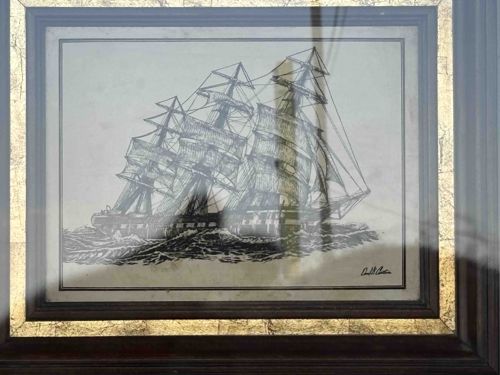
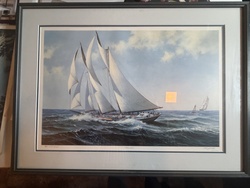
Framed Nautical Etching of a Three-Masted Clipper Ship

Submitted photo of Framed Nautical Etching of a Three-Masted Clipper Ship
Photo submitted by the user — not generated by AI

AI Estimated Value

Not an official valuation

$150 - $250

AI estimate as of February 16, 2026 · verify with a professional before acting

AI-Generated · Verify before acting

Everything on this page is generated by AI for informational purposes only. AI can make mistakes — the AI may misidentify items or misattribute them (artist, maker, brand, designer, origin, era). This is not an official valuation and should not be used for insurance, sale, tax, estate, legal, or lending purposes — or any decision requiring a certified appraisal. It is not an authoritative claim about any person, brand, or rights holder — do not share or rely on it as a factual statement about a third party. Always consult qualified professionals before making financial decisions.

Read the full disclaimer

AI Item Analysis

This item is a detailed monochromatic maritime illustration, likely an etching or a fine-line ink drawing, depicting a majestic three-masted clipper ship or man-of-war navigating choppy seas. The artwork is rendered in black ink on an aged, off-white or cream-colored paper substrate, exhibiting a fine cross-hatching technique that provides depth and shadow to the sails and hull. The composition captures the vessel at a dynamic angle, showcasing the intricate rigging, masts, and billowing sails typical of the 19th-century nautical style. In the lower-right corner, there is a distinct handwritten signature, which appears to read 'Donald C. [...]'. The art is housed in an elaborate multi-tiered frame. The innermost layer is a dark wood or composite molding, followed by a wide, decorative gold-leaf or gilt-filigree border that shows a textured, aged patina. The outermost frame consists of a thick, dark-stained wood with a classic profile. Regarding condition, the paper shows visible signs of foxing and several brownish age spots (oxidation), particularly in the upper-left and central sky areas, which is common for mid-20th-century prints. The glass surface shows significant reflections from an external light source, indicating it is likely standard picture glass rather than non-reflective museum glass. The craftsmanship of the frame suggests a professional mounting, intended for a library or traditional study setting. The overall aesthetic points to a vintage reproduction or original mid-century maritime artwork inspired by 18th and 19th-century naval history.
AI Appraisal Report

I have virtually examined the framed nautical etching of a three-masted clipper ship. The work displays characteristic mid-20th-century craftsmanship, utilizing detailed cross-hatching to emulate 19th-century maritime prints. The signature, appearing to be 'Donald C. [likely Crawford or similar commercial artists of the era]', suggests a prolific illustrator rather than a high-gallery naval master. The condition is compromised by significant foxing and oxidation spots in the sky region, likely caused by acidic mounting materials or humidity. This 'toning' negatively impacts the value, as restoration costs for paper cleaning would exceed the item’s market worth. The frame is the most substantial physical asset here; the multi-tiered gilt and wood molding is high-quality and professional, suggesting it was once a centerpiece in a traditional study. Market demand for monochromatic maritime prints has softened, relegated primarily to 'coastal chic' decor rather than serious investment collecting. Comparables for mid-century maritime etchings in similar condition typically hammer between $75 and $150, with the higher valuation here attributed to the impressive framing. Limitations: My assessment is based solely on visual digital evidence. I cannot confirm if the piece is an original plate-pressed etching or a high-quality lithographic reproduction without inspecting for a 'platemark' indentation or identifying dot patterns under 30x magnification. A physical inspection would also determine if the foxing has structural rot (mold). Provenance or a gallery label on the reverse would be required to definitively identify the artist and increase the certainty of this valuation.

Keep exploring

More fine art / nautical prints appraisals

Get your items appraised

Instant AI-powered appraisal estimates from a photo

Browse More Appraisals