AI Appraisal Estimate

AI-generated estimates · not official valuations

From the user

What was submitted

Photo and notes provided by the user — not generated by AI

Submitted item photo
Submitted photo · May 25, 2026

User's notes

No additional notes provided.

AI analysis below

AI appraisal

AI analysis & estimate

AI-Generated · Verify before acting

Everything below is generated by AI for informational purposes only. AI can make mistakes — the AI may misidentify items or misattribute them (artist, maker, brand, designer, origin, era). This is not an official valuation and should not be used for insurance, sale, tax, estate, legal, or lending purposes — or any decision requiring a certified appraisal. It is not an authoritative claim about any person, brand, or rights holder — do not share or rely on it as a factual statement about a third party. Always consult qualified professionals before making financial decisions.

Read the full disclaimer

AI Identification

·Not independently authenticated·Verify before acting

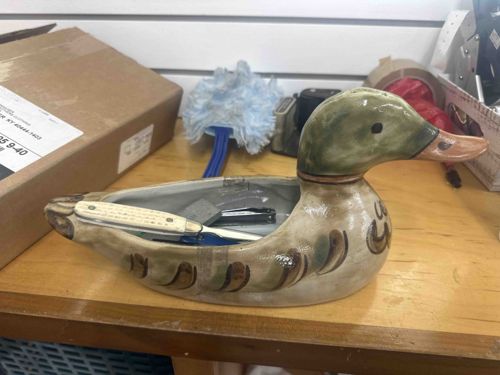
Vintage Hand-Painted Glazed Ceramic Mallard Duck Planter/Trinket Dish

Vintage Ceramic Decor / Housewares

AI Estimated Value

·Not an official valuation·Verify before acting

$5 - $12

As of May 25, 2026

AI Item Analysis

·AI can make mistakes·Verify before acting
This item is a decorative ceramic duck figurine, specifically designed as a functional piece with a hollowed-out back, serving as either a small planter, catch-all, or trinket dish. The piece is modeled after a Mallard drake, featuring a characteristic green head, tan body, and orange beak. It is constructed from glazed earthenware or pottery with visible hand-painted details. The painting style is somewhat folk-art or mid-century in nature, utilizing stylized, repetitive crescent shapes in brown and green to represent feathers along the flanks. The head displays a variegated green glaze with a dark circular eye and a defined collar line. In terms of dimensions, the piece appears to be approximately 8 to 10 inches in length. Regarding condition, the object shows several signs of age and significant repair. Most notably, there is a prominent break around the neck area that has been crudely repaired with a thick, visible adhesive or epoxy, creating a dark, uneven ring. There is also a vertical repair or structural crack visible on the side of the basin. The glossy glaze shows some areas of abrasion and particulate buildup. The interior of the dish currently contains miscellaneous items including a pocket knife and nail clippers, which are not part of the piece itself. Based on the glaze and painting style, this likely dates from the 1960s to the 1980s. While it shows charming craftsmanship in the original mold and paint, the heavy-handed repairs significantly impact its structural integrity and aesthetic value.
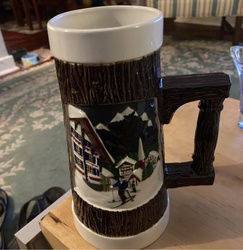
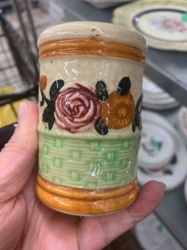
AI Appraisal Report

·AI can make mistakes·Verify before acting
I have examined the Vintage Hand-Painted Glazed Ceramic Mallard Duck Planter via high-resolution imagery. This mid-to-late 20th-century piece (c. 1960s-1980s) reflects a popular hobbyist or mass-market folk-art aesthetic characteristic of the era. Upon close inspection, the condition is poor. There is a prominent, amateurish repair at the neck featuring a thick, dark adhesive ring that indicates a full decapitation and reattachment. Additionally, a vertical structural crack is visible on the basin's exterior. Market conditions for decorative mallard-themed ceramics are saturated; these items are common at estate sales and thrift markets. While intact examples might command $20-$35 from nostalgic collectors, the severity of the damage and the lack of a prominent maker's mark (such as Lefton or Beswick) significantly depreciate this specific specimen. The value is strictly decorative or sentimental, likely relegated to a 'project' piece or utilitarian use. While I can confirm the material is glazed earthenware based on the fracture patterns and glaze reflectiveness, I cannot definitively rule out newer reproductions without a physical weight test or a tactile 'tink' test to check for further internal stress fractures. A full authentication would require checking the base for impressed stamps or labels and using UV light to identify the extent of the adhesive residue and any hidden overpainting. The presence of miscellaneous metal items in the basin during photography suggests it has recently served as a functional 'catch-all,' contributing further to superficial glaze abrasions.

Get your items appraised

Instant estimates of your treasures with AI-powered appraisals

Browse More Appraisals