AI estimate as of October 6, 2025 · verify with a professional before acting
AI-Generated · Verify before acting
Everything on this page is generated by AI for informational purposes only. AI can make mistakes — the AI may misidentify items or misattribute them (artist, maker, brand, designer, origin, era). This is not an official valuation and should not be used for insurance, sale, tax, estate, legal, or lending purposes — or any decision requiring a certified appraisal. It is not an authoritative claim about any person, brand, or rights holder — do not share or rely on it as a factual statement about a third party. Always consult qualified professionals before making financial decisions.
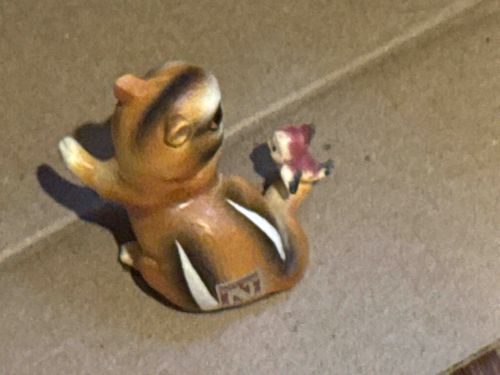
This item is a small, ceramic or porcelain figurine depicting a squirrel with a smaller, possibly baby, squirrel or another small creature on its back. The primary squirrel is rendered in warm tones of brown and amber, suggesting a realistic interpretation of a chipmunk or squirrel. It features distinct dark brown stripes along its back and head, characteristic of a chipmunk, and has white markings on its belly area. Its eyes are dark, and it appears to have small, rounded ears. One front paw is lifted, giving the impression of movement or an alert pose. Perched on its back is a smaller, reddish-pink figure, possibly another young squirrel or a nut, though details are indistinct due to the image resolution. The overall construction appears to be molded, likely mass-produced, with hand-painted details. There's a visible mark on the side of the main squirrel's body, possibly a manufacturer's stamp or label, which appears to contain letters like 'TNT' or similar, though it's not entirely clear. The figurine exhibits a smooth, glossy finish, typical of glazed ceramics. Based on the style and typical markings for such items, it likely dates from the mid-20th century, possibly the 1950s-1970s. The condition appears fair with some possible surface wear or minor imperfections, consistent with its age. No obvious cracks or significant chips are discernible from the image, but a closer inspection would be required to confirm this. The craftsmanship suggests a decorative collectible piece, not high-art sculpture, but designed for charm and appeal.
AI Appraisal Report
I have virtually examined this Vintage Squirrel and Baby Figurine and offer the following appraisal. Based on the visual evidence, the figurine appears to be an authentic example of mass-produced ceramic or porcelain decorative items from the mid-20th century, likely dating from the 1950s-1970s. The warm brown and amber tones, distinct stripes, and glossy finish are consistent with similar collectibles of that era. Authenticity is supported by the visible, albeit unclear, manufacturer's mark. The condition appears fair, with no obvious major damage like cracks or significant chips visible from the image; however, closer inspection would be needed to confirm the absence of hairline fractures, crazing, or other micro-imperfections. The small reddish-pink figure on the back is indistinct, making it difficult to definitively identify as another squirrel or a nut, which slightly impacts the clarity of its narrative appeal. Market conditions for such vintage ceramic animal figurines are generally stable but do not command high prices unless associated with a particularly renowned manufacturer or artist, which is not ascertainable here. Demand is moderate, primarily from collectors of vintage kitsch or specific animal figurines. Rarity is low, as these items were mass-produced. Factors significantly impacting value include the lack of a clear maker's mark and the relatively common nature of such decorative pieces. Without an in-person physical examination, I cannot definitively verify the exact material (ceramic vs. porcelain), confirm the absence of subtle damage, or clearly read the manufacturer's mark. Provenance documentation would be useful for specific dating, and scientific testing could confirm material composition, but for this type of item, such extensive verification is rarely justified given its typical market value.