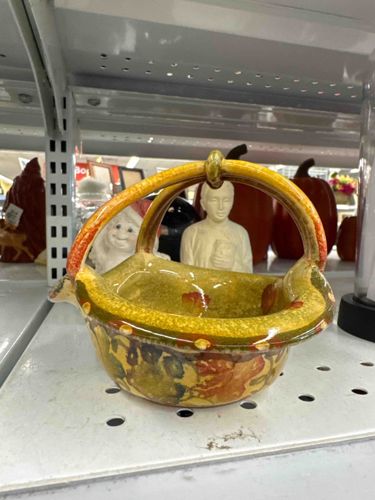
Majolica Style Glazed Ceramic Decorative Basket
This item is a small, hand-painted ceramic decorative basket, likely weighing between 1 to 2 pounds and measuring approximately 6 to 8 inches in length. It is crafted from earthenware and features a rich, glossy glaze consistent with the Majolica style. The color palette is dominated by autumnal tones, including ochre yellow, burnt orange, and forest green. The exterior depicts stylized floral or fruit motifs in a painterly, somewhat rustic fashion. The basket features two integrated ceramic handles that arc overhead and meet at a central raised 'knot' or finial. The rim is embellished with a series of small, raised decorative bosses or dots in a lighter yellow glaze, adding a tactile element to the design. In terms of condition, there is a visible chip on the far left edge of the scalloped rim, exposing the underlying beige ceramic body. The glaze shows signs of fine crazing throughout, which is typical for pottery of this age and type. While no specific maker's mark is visible in this view, the style suggests a mid-20th-century European or American studio pottery origin. The overall craftsmanship is charming and artisanal, though the visible chip impacts the formal appraised value.
AI-Generated Appraisal Disclaimer
Estimated Value
$45 - $65
Basic Information
Category
Decorative Arts - Ceramics
Appraised On
April 8, 2026
Estimated Value
$45 - $65
Item Description
This item is a small, hand-painted ceramic decorative basket, likely weighing between 1 to 2 pounds and measuring approximately 6 to 8 inches in length. It is crafted from earthenware and features a rich, glossy glaze consistent with the Majolica style. The color palette is dominated by autumnal tones, including ochre yellow, burnt orange, and forest green. The exterior depicts stylized floral or fruit motifs in a painterly, somewhat rustic fashion. The basket features two integrated ceramic handles that arc overhead and meet at a central raised 'knot' or finial. The rim is embellished with a series of small, raised decorative bosses or dots in a lighter yellow glaze, adding a tactile element to the design. In terms of condition, there is a visible chip on the far left edge of the scalloped rim, exposing the underlying beige ceramic body. The glaze shows signs of fine crazing throughout, which is typical for pottery of this age and type. While no specific maker's mark is visible in this view, the style suggests a mid-20th-century European or American studio pottery origin. The overall craftsmanship is charming and artisanal, though the visible chip impacts the formal appraised value.
Get Your Items Appraised
Instant estimates of your treasures with AI-powered instant appraisals