AI estimate as of August 30, 2025 · verify with a professional before acting
AI-Generated · Verify before acting
Everything on this page is generated by AI for informational purposes only. AI can make mistakes — the AI may misidentify items or misattribute them (artist, maker, brand, designer, origin, era). This is not an official valuation and should not be used for insurance, sale, tax, estate, legal, or lending purposes — or any decision requiring a certified appraisal. It is not an authoritative claim about any person, brand, or rights holder — do not share or rely on it as a factual statement about a third party. Always consult qualified professionals before making financial decisions.
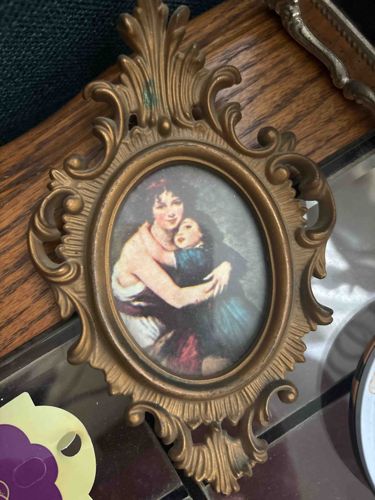
This item is a small, oval-shaped decorative miniature picture frame, likely intended for display on a table or shelf. The frame itself appears to be constructed from a cast metal, possibly brass or a brass-plated alloy, given its aged, dulled gold finish and the visible patina. The design is highly ornate, featuring prominent rococo-style scrollwork and acanthus leaf motifs that embellish both the top and bottom sections, as well as along the sides of the oval opening. These decorative elements are raised and detailed, suggesting a casting process rather than stamping. The overall color of the frame is a muted, antique gold, showing signs of tarnishing or oxidation, particularly in the crevices of the scrollwork. There is a noticeable greenish discoloration, indicative of verdigris, on the upper left scroll, suggesting the base metal is copper-containing, such as brass. The miniature artwork within the frame depicts two figures, seemingly a woman embracing a child, rendered in a painterly style with visible brushstrokes, suggesting it might be a print or a small photographic reproduction designed to mimic a miniature painting. The colors in the artwork are somewhat muted but show distinct hues of red, blue, and flesh tones. The image is protected by a clear pane, likely glass or acrylic, which appears to be intact. No visible maker's marks or signatures are discernible on the front of the frame or the artwork. The style of the frame suggests it could date from the late 19th to mid-20th century, drawing inspiration from historical revivalist trends. The craftsmanship, while decorative, appears to be mass-produced rather than custom-made, but the casting is relatively clean. The visible condition issues are consistent with age and exposure, specifically the tarnishing and the aforementioned verdigris on the frame.
AI Appraisal Report
This ornate cast metal miniature picture frame, with its rococo-style scrollwork and acanthus leaf motifs, appears to be constructed from brass or a brass-plated alloy, given the aged, dulled gold finish and localized verdigris on the upper left scroll. The overall muted antique gold color shows consistent tarnishing and oxidation, indicative of its age and material, aligning with a late 19th to mid-20th century production. The miniature print of two figures, likely a reproduction designed to mimic a miniature painting, is protected by an intact clear pane.
Based on visual examination, the item appears authentic to its described period and style; there are no signs suggesting it is a modern reproduction claiming to be antique. The casting quality suggests mass production rather than bespoke craftsmanship, which is typical for such decorative items.
Market conditions for such small, decorative cast metal frames are generally moderate. While charming, they are not exceedingly rare, and demand is driven primarily by decorative appeal and condition. Comparable items, often found in antique shops or online marketplaces, typically range from $30 to $100 depending on intricacy, condition, and provenance. The current tarnishing and verdigris are consistent with age and do not significantly detract from value unless severe, which is not the case here. Without a discernible maker's mark or notable historical significance, its value is largely decorative.
Given that my appraisal is based solely on provided images, limitations exist in definitively assessing authenticity and condition. A physical examination would allow for tactile inspection of the casting quality, precise identification of the metal composition, assessment of the artwork's medium (print vs. painting), and thorough inspection for hidden damages or repairs. Provenance documentation, if available, could significantly enhance its value by linking it to a notable collection or history. Scientific testing of the metal or artwork would provide definitive dating and material analysis.