AI Appraisal Estimate

AI-generated estimates · not official valuations

From the user

What was submitted

Photo and notes provided by the user — not generated by AI

Submitted item photo
Submitted photo · May 19, 2026

User's notes

Acrylic painting

AI analysis below

AI appraisal

AI analysis & estimate

AI-Generated · Verify before acting

Everything below is generated by AI for informational purposes only. AI can make mistakes — the AI may misidentify items or misattribute them (artist, maker, brand, designer, origin, era). This is not an official valuation and should not be used for insurance, sale, tax, estate, legal, or lending purposes — or any decision requiring a certified appraisal. It is not an authoritative claim about any person, brand, or rights holder — do not share or rely on it as a factual statement about a third party. Always consult qualified professionals before making financial decisions.

Note

This analysis also relies on unverified notes provided by the user, which may be incomplete or inaccurate and could affect the result.

Read the full disclaimer

AI Identification

·Not independently authenticated·Verify before acting

Contemporary Fluid Acrylic Pour Painting

Fine Art - Contemporary Paintings

AI Estimated Value

·Not an official valuation·Verify before acting

$450 - $650

As of May 19, 2026

AI Item Analysis

·AI can make mistakes·Verify before acting
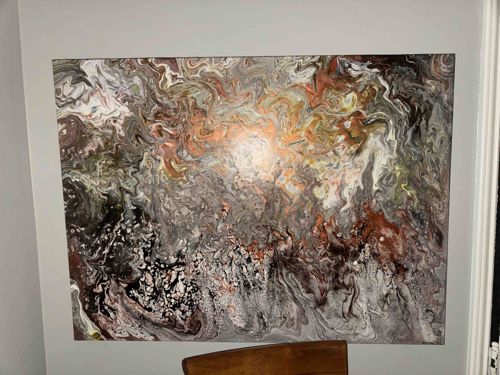
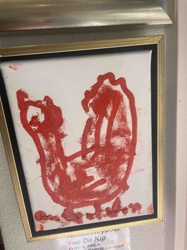
This item is a large-format abstract expressionist artwork created using a fluid acrylic pour technique on a stretched canvas. The piece exhibits a complex marbling effect with a palette dominated by earthy and metallic tones, including burnt sienna, deep ochre, charcoal grey, and iridescent copper or gold accents. The composition centers around a bright, circular focal point toward the upper-middle section, reminiscent of a sun or celestial body, around which the paint flows in chaotic, organic swirls. The technique involves thin layers of acrylic pigment mixed with pouring mediums to create 'cells' and lacing, particularly visible in the lower sections where white and black pigments interact. The canvas appears to be a gallery-wrapped style, though it is currently unframed and mounted directly to a light grey wall. The dimensions appear to be approximately 30 by 40 inches. No visible signature is discernible from the front, which is common for contemporary pour art. The condition is excellent with no visible cracking (crazing), fading, or surface damage. The craftsmanship is characterized by the deliberate control over fluid dynamics, resulting in a dense, multi-layered texture that suggests a modern creation, likely from the late 2010s to the early 2020s.
AI Appraisal Report

·AI can make mistakes·Verify before acting
I have virtually examined this large-format abstract expressionist fluid acrylic pour painting (approximately 30" x 40"). The work displays high-level technical execution of the fluid dynamics method, specifically within the 'cells' and lacing visible in the lower registers. The palette of earth tones and metallic accents is currently on-trend for interior design, which bolsters its decorative market value. The condition appears excellent; the absence of crazing or 'muddying' of colors indicates a professional-grade pouring medium and proper curing environment. In the current contemporary art market, unsigned fluid art typically falls into the 'emerging artist' or 'high-end decorative' category. While the technical skill is evident, the lack of a discernible signature or established provenance limits its value as a primary market investment piece. Comparable works of this size on gallery-wrapped canvas by unrepresented artists typically sell within the $400 to $800 range through online galleries and local boutiques. Significant value drivers include the celestial composition and the size, which is desirable for residential focal points. However, the market for pour art is currently saturated, which caps the valuation. This appraisal is based strictly on visual inspection of the digital assets provided. A definitive valuation would require in-person examination to verify the depth of the pigment layers and ensure no structural issues exist with the stretcher bars. To fully authenticate the work, I would require a curriculum vitae (CV) of the artist, a signed Certificate of Authenticity (COA), or a signature on the reverse of the canvas. Scientific testing of the acrylic polymer could confirm the manufacture date if provenance is unavailable.

Get your items appraised

Instant estimates of your treasures with AI-powered appraisals

Browse More Appraisals