AI Appraisal Estimate

AI-generated estimates · not official valuations

From the user

What was submitted

Photo and notes provided by the user — not generated by AI

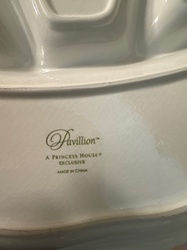
Submitted item photo
Submitted photo · June 15, 2026

User's notes

No additional notes provided.

AI analysis below

AI appraisal

AI analysis & estimate

AI-Generated · Verify before acting

Everything below is generated by AI for informational purposes only. AI can make mistakes — the AI may misidentify items or misattribute them (artist, maker, brand, designer, origin, era). This is not an official valuation and should not be used for insurance, sale, tax, estate, legal, or lending purposes — or any decision requiring a certified appraisal. It is not an authoritative claim about any person, brand, or rights holder — do not share or rely on it as a factual statement about a third party. Always consult qualified professionals before making financial decisions.

Read the full disclaimer

AI Identification

·Not independently authenticated·Verify before acting

Majolica-Style Ceramic Soup Tureen with Matching Sotto-Piatto

Kitchen & Dining - Serveware

AI Estimated Value

·Not an official valuation·Verify before acting

$45-85

As of June 15, 2026

AI Item Analysis

·AI can make mistakes·Verify before acting
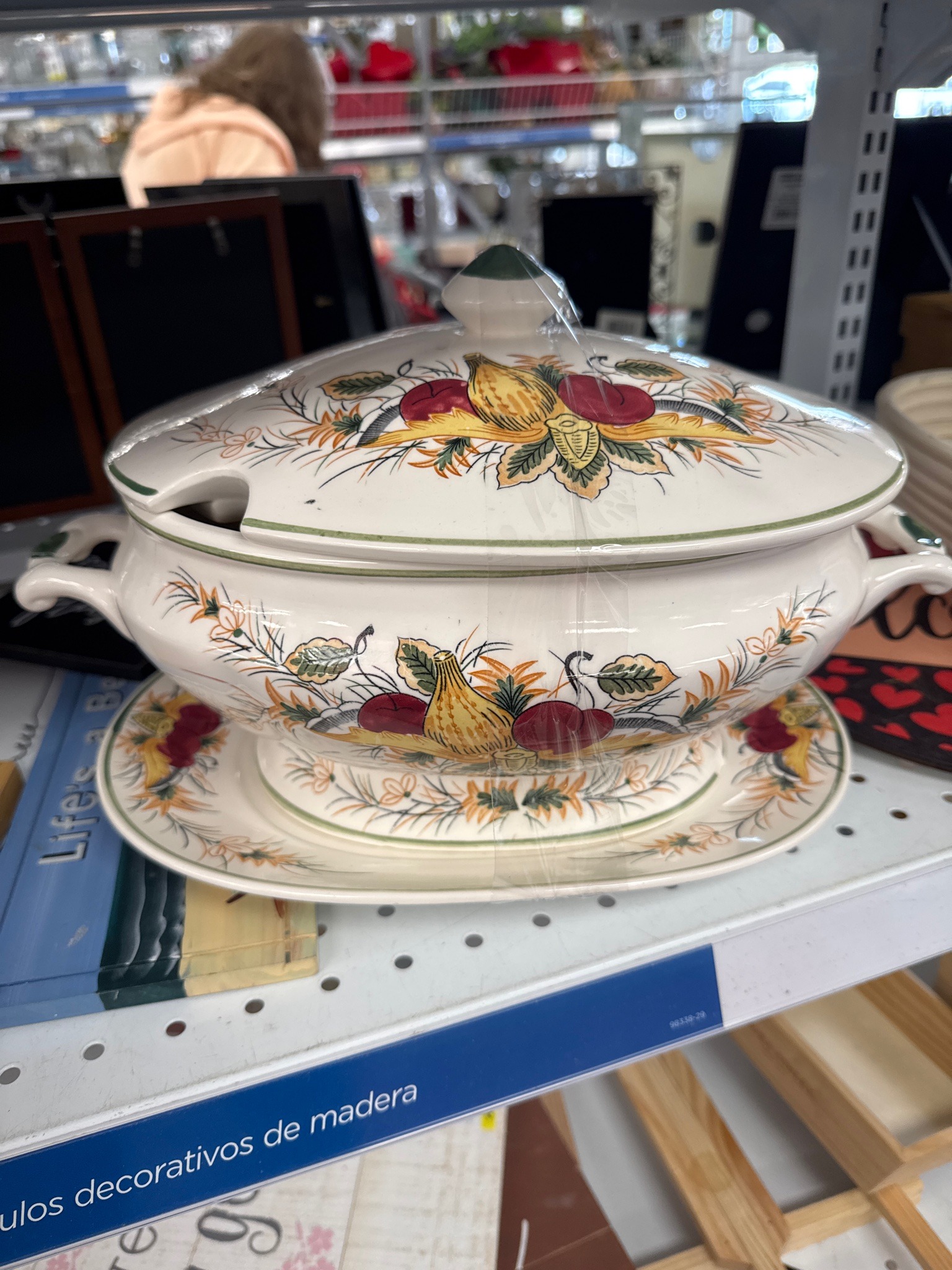
This is a large, ceramic soup tureen set consisting of three pieces: an oval-shaped bowl with integral scroll handles, a fitted domed lid with a ladle notch and decorative finial, and a matching underplate (sotto-piatto). The set is constructed from white-glazed earthenware or ironstone, featuring a vibrant harvest-themed motif. The central decoration consists of a repeating pattern of gourds, pumpkins, and pomegranates or apples in earthy tones of ochre yellow, deep burgundy red, and olive green. Fine black line-work details the foliage and harvest elements, while light orange floral sprays provide a delicate filler pattern. A continuous green banding accents the rims and base, framing the decorative panels. The tureen is of substantial size, likely measuring approximately 12-14 inches in length. Its style is reminiscent of late 20th-century Italian majolica or popular American country-kitchen ceramics from the 1980s or 90s. The piece shows high-gloss glazing and uniform ceramic craftsmanship. It appears to be in excellent used condition with no visible chips, cracks, or crazing, though a clear adhesive tape is currently securing the lid for retail display. No specific manufacturer's mark is visible from this angle, but the design suggests a mass-produced quality intended for seasonal or decorative dining use.
AI Appraisal Report

·AI can make mistakes·Verify before acting
Based on my visual examination of this ceramic soup tureen set, I have identified it as a contemporary majolica-style production, likely dating from the 1980s or 1990s. The piece features a high-gloss lead-free glaze over a white earthenware body, decorated with a harvest motif of gourds and pomegranates. The condition appears to be excellent; however, the presence of adhesive tape on the lid carries a minor risk of residue or glaze lifting if not removed carefully. While the design mimics traditional Italian artisan techniques, the uniformity of the transfer decoration and the molding of the scroll handles suggests a mass-market manufacturer, common to brands like Fitz and Floyd or similar imports from Italy or Portugal for high-end department stores. The market for seasonal country-kitchen ceramics is currently stable but saturated, with high supply and moderate demand. Comparables for three-piece sets (tureen, lid, and underplate) in similar condition typically realize $45 to $85 at secondary market venues like eBay or regional estate auctions. Value is bolstered by the presence of the matching underplate, which is frequently lost or broken. A primary limitation of this appraisal is the lack of a visible maker's mark or underside photography, which could identify the specific kiln and potentially increase the value if linked to a prestigious designer. A physical inspection would be required to rule out internal structural cracks (ringing the ceramic) or 'flea bite' chips along the ladle notch. Authentic verification of mid-century Italian origin would require confirming hand-painted brushstrokes rather than printed transfers, which cannot be definitively distinguished from these photos alone.

Get your items appraised

Instant estimates of your treasures with AI-powered appraisals

Browse More Appraisals