AI Appraisal Estimate

AI-generated estimates · not official valuations

From the user

What was submitted

Photo and notes provided by the user — not generated by AI

Submitted item photo
Submitted photo · May 28, 2026

User's notes

No additional notes provided.

AI analysis below

AI appraisal

AI analysis & estimate

AI-Generated · Verify before acting

Everything below is generated by AI for informational purposes only. AI can make mistakes — the AI may misidentify items or misattribute them (artist, maker, brand, designer, origin, era). This is not an official valuation and should not be used for insurance, sale, tax, estate, legal, or lending purposes — or any decision requiring a certified appraisal. It is not an authoritative claim about any person, brand, or rights holder — do not share or rely on it as a factual statement about a third party. Always consult qualified professionals before making financial decisions.

Read the full disclaimer

AI Identification

·Not independently authenticated·Verify before acting

Late Victorian Eastlake Style Carved Walnut Commode

Antique Furniture

AI Estimated Value

·Not an official valuation·Verify before acting

$350-550

As of May 28, 2026

AI Item Analysis

·AI can make mistakes·Verify before acting
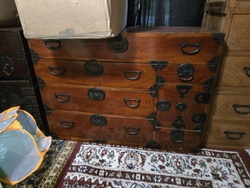
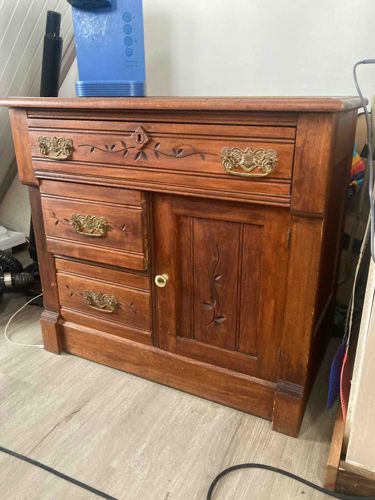
This is a late Victorian commode or washstand, likely dating from the 1880s to 1890s, showcasing the characteristics of the Eastlake movement mixed with provincial charm. The piece is constructed from walnut with a warm, aged patina. It features a single full-width top drawer with an inset diamond-shaped brass escutcheon and two brass bail handles. Below the top drawer is a small two-drawer stack on the left and a single paneled cabinet door on the right. The drawer fronts and the central door panel are decorated with shallow, stylized floral and leaf carvings typical of the era. The hardware consists of ornately stamped brass backplates and swing handles, showing some oxidation and a dull gold luster. The construction includes a solid plinth base and rectangular side panels. In terms of condition, the wood shows significant surface wear, including various scuffs along the bottom plinth, minor nicks in the wood grain, and potential fading of the finish on the top surface. The small brass door knob appears to be a later replacement compared to the more ornate drawer hardware. Overall, the piece exhibits the sturdy, functional craftsmanship associated with late 19th-century American or European furniture manufacture.
AI Appraisal Report

·AI can make mistakes·Verify before acting
This late Victorian walnut commode, circa 1885, is a representative example of the Eastlake style, characterized by its characteristic incised linear carvings and geometric silhouette. Upon my visual examination, the piece exhibits the expected material properties of American black walnut with a period-appropriate patina. The hardware, primarily ornate brass bail pulls with stamped backplates, appears original, though the small pull on the cabinet door is a later, non-matching replacement. The condition is fair to good for its age; while the structure appears sound, there is notable finish loss on the top surface and significant scuffing along the plinth base consistent with a century of domestic use. In today's market, Victorian 'brown furniture' of this scale faces challenges due to a shift in decorative tastes, though Eastlake pieces remain popular for their functional dimensions and charm. Recent auction results for similar walnut washstands typically fall within the $300 to $600 range depending on the wood quality and carving complexity. The primary value-diminishing factors here are the non-original door hardware and the surface wear which may require sympathetic restoration. Please note that this appraisal is based solely on digital imagery. A physical inspection is required to verify construction methods, such as dovetail joinery and wood oxidation on the drawer interiors, to confirm mid-to-late 19th-century origin. Without examining the back panel and underside for saw marks or modern fasteners, I cannot definitively exclude the possibility of a 20th-century reproduction, though the wear patterns suggest authentic age. No provenance documentation was provided, which could bolster the item's historical value if tied to a specific maker.

Get your items appraised

Instant estimates of your treasures with AI-powered appraisals

Browse More Appraisals