AI Appraisal Estimate

AI-generated estimates · not official valuations

From the user

What was submitted

Photo and notes provided by the user — not generated by AI

Submitted item photo
Submitted photo · May 28, 2026

User's notes

No additional notes provided.

AI analysis below

AI appraisal

AI analysis & estimate

AI-Generated · Verify before acting

Everything below is generated by AI for informational purposes only. AI can make mistakes — the AI may misidentify items or misattribute them (artist, maker, brand, designer, origin, era). This is not an official valuation and should not be used for insurance, sale, tax, estate, legal, or lending purposes — or any decision requiring a certified appraisal. It is not an authoritative claim about any person, brand, or rights holder — do not share or rely on it as a factual statement about a third party. Always consult qualified professionals before making financial decisions.

Read the full disclaimer

AI Identification

·Not independently authenticated·Verify before acting

Hand-carved wooden figurative sculpture in an African folk art style

Sculptures and Figurines

AI Estimated Value

·Not an official valuation·Verify before acting

$150 - $350

As of May 28, 2026

AI Item Analysis

·AI can make mistakes·Verify before acting
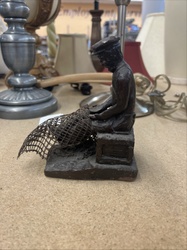
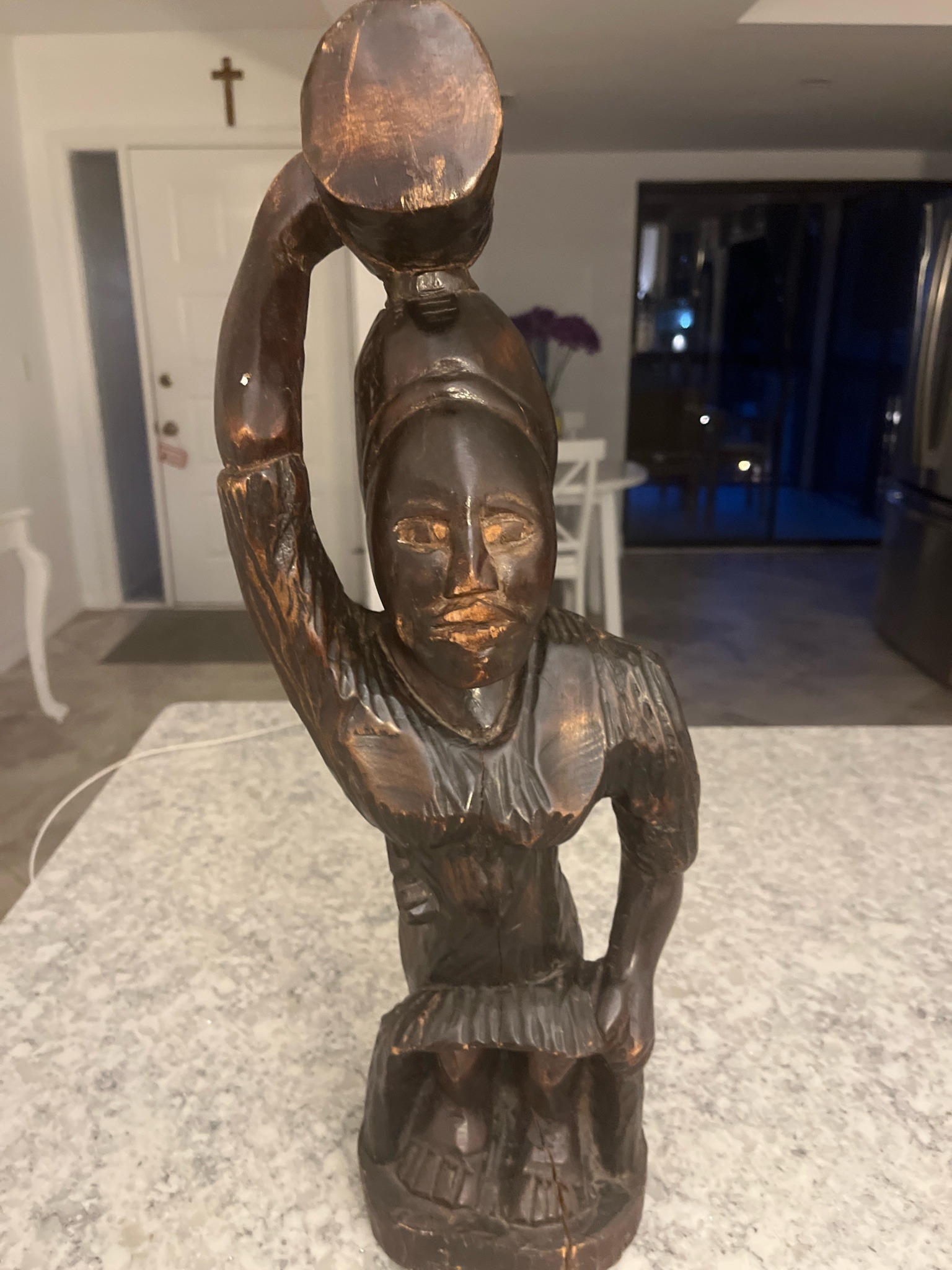
This piece appears to be a hand-carved wooden sculpture depicting a figure holding a circular vessel or drum above their head. The figure is stylized, featuring a textured garment with vertical lines, a distinctive facial expression with carved almond-shaped eyes, and a prominent nose and mouth. The sculpture is rendered in a dark wood, likely mahogany or ebony based on appearance, and is finished with a visible shellac or wax that has accumulated wear and a light-colored dust in the recessed carvings. The construction is solid and somewhat rustic, showing visible tool marks that are consistent with artisanal hand-carving techniques rather than mass-produced machine work. Stylistically, it is consistent with mid-to-late 20th-century African folk art, possibly of West African origin such as the Makonde or Shona traditions, though without a visible maker's mark or signature, this attribution is a hypothesis subject to verification. Notable condition issues include minor scuffing on the raised surfaces, some possible drying cracks near the base, and a small white mark on the right shoulder area. The overall craftsmanship suggests a skilled artisan, with particular attention paid to the balance of the figure and the rhythmic patterns in the clothing.


AI Appraisal Report

·AI can make mistakes·Verify before acting
I have examined the digital image of this hand-carved wooden figurative sculpture. Based on what I can see, the piece displays characteristics consistent with mid-to-late 20th-century African folk art, possibly originating from West African traditions. However, without a visible maker's mark or signature, this attribution remains a working hypothesis and cannot be considered a confirmed identification from a photograph alone. The wood appears to be a dense hardwood, such as mahogany, which has been finished with a dark stain or wax. The visible tool marks and rhythmic textural patterns in the garment are indicative of artisanal hand-carving rather than machine production. I can't verify the exact age or species of wood without a physical inspection to check for weight, grain structure, and the nature of the drying cracks visible at the base. The value of $150 to $350 is based on the assumption that this is a mid-century artisanal work. Condition issues, such as the scuffing and the white mark on the shoulder, have been factored into this estimate. In the general market for African-style folk art, there is consistent demand for pieces demonstrating this level of balanced composition and rhythmic detail. If this item were to be revealed as a modern mass-produced souvenir or a contemporary reproduction 'in the style of' these earlier traditions, the value would likely decrease to the $40-$75 range. To provide a more accurate valuation, an in-person examination would be required to assess the wood's density, search for obscure markings, and evaluate the depth of the patina. Scientific testing or provenance documentation would also be necessary to move beyond a hypothetical attribution.

Related Tags

Explore similar items and categories

Get your items appraised

Instant estimates of your treasures with AI-powered appraisals

Browse More Appraisals