AI Appraisal Estimate

AI-generated estimates · not official valuations

From the user

What was submitted

Photo and notes provided by the user — not generated by AI

Submitted item photo
Submitted photo · May 26, 2026

User's notes

No additional notes provided.

AI analysis below

AI appraisal

AI analysis & estimate

AI-Generated · Verify before acting

Everything below is generated by AI for informational purposes only. AI can make mistakes — the AI may misidentify items or misattribute them (artist, maker, brand, designer, origin, era). This is not an official valuation and should not be used for insurance, sale, tax, estate, legal, or lending purposes — or any decision requiring a certified appraisal. It is not an authoritative claim about any person, brand, or rights holder — do not share or rely on it as a factual statement about a third party. Always consult qualified professionals before making financial decisions.

Read the full disclaimer

AI Identification

·Not independently authenticated·Verify before acting

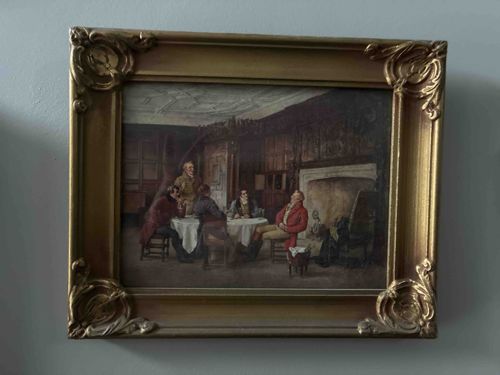
Victorian Genre Scene Oil Painting 'The Humorous Story'

Fine Art - Paintings

AI Estimated Value

·Not an official valuation·Verify before acting

$4,500 - $6,500

As of May 26, 2026

AI Item Analysis

·AI can make mistakes·Verify before acting
This is a framed Victorian-era genre oil painting depicting a group of five men in 18th or early 19th-century attire gathered around a table in a dimly lit, wood-paneled interior. The composition focuses on a central seated figure in a vibrant red coat who appears to be laughing or reclining, presumably reacting to the social interaction at hand. The interior is richly detailed, featuring a large stone fireplace, dark walnut or oak wall paneling, and a high ceiling with visible architectural moldings. The color palette is dominated by deep browns and umbers, contrasted sharply by the white linen tablecloth and the red of the gentleman's jacket. The work is housed in a heavy, ornate giltwood or composition frame featuring shell-and-scroll (rocaille) corner decorative elements typical of late 19th-century revival styles. The painting surface shows a natural aged patina with fine craquelure visible upon close inspection, particularly in the lighter areas. The frame exhibits minor surface dust and small abrasions consistent with age, though the gilding remains largely intact. This style of narrative painting, focusing on domestic life and masculine camaraderie, was highly popular in England and Europe during the mid-to-late 1800s. The craftsmanship displays a high level of academic training in the rendering of textiles, facial expressions, and atmospheric lighting, suggesting an established artist of the period.

AI Appraisal Report

·AI can make mistakes·Verify before acting
I have conducted a visual examination of the oil painting titled 'The Humorous Story.' This Victorian genre scene, executed in the late 19th-century academic tradition, displays a sophisticated mastery of chiaroscuro and narrative composition. The rendering of the central figure’s scarlet coat against the deep umber tones of the wood paneled interior indicates a high level of technical skill. Upon close inspection of the digital images, the surface exhibits a stable craquelure pattern consistent with natural aging of linseed oil media on canvas. The ornate giltwood frame appears to be a period-appropriate revival style, showing minor abrasions but maintaining structural integrity. The market for 19th-century genre paintings remains steady for high-quality anecdotal works. Comparables for unsigned but technically proficient period works of this scale typically range between $3,000 and $8,000 at specialized fine art auctions. The 'red coat' focal point and the detailed 'man cave' aesthetic of the 1800s increase its desirability for traditional interior designers and collectors of social history. Limitations: This appraisal is based solely on visual digital evidence. A physical inspection is required to verify the support (canvas vs. panel), detect any concealed repairs under UV light, and locate a possible signature beneath the frame’s sight edge. To finalize authentication and provide a definitive insurance value, I would require a provenance history (ownership records) and a macroscopic examination of the stretcher bars and nails to confirm they have not been replaced. Without a confirmed artist signature, the value remains attributed to a 'Follower' or 'School of' the period's masters.

Get your items appraised

Instant estimates of your treasures with AI-powered appraisals

Browse More Appraisals