Indian Dhokra Brass Elephant Figurine
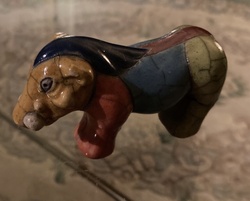
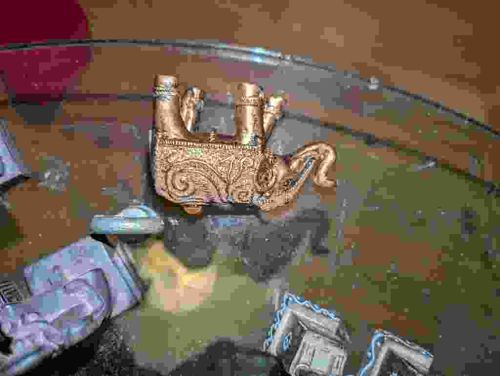
This is a small, hand-crafted elephant figurine executed in the traditional Dhokra style, an ancient non-ferrous lost-wax metal casting technique and cultural hallmark of the tribal regions of India. The item is constructed from a brass-copper alloy, exhibiting a warm, burnished bronze-to-gold color profile. Physically, the elephant features the characteristic 'wire-work' aesthetic typical of this craft, where the body is adorned with intricate, raised relief patterns consisting of scrolls, spirals, and cross-hatched lines that mimic fine threading or weaving. The trunk is elegantly curved upward in a gesture of good luck, and the legs are stylized as thick, rounded pillars with banded decorations. The craftsmanship is intentionally primitive yet sophisticated, showing the organic texture of the original wax mold. Regarding condition, the piece shows a light age-related patina with some darker oxidation settling into the recessed areas of the ornate surface patterns, which enhances its visual depth. There are no obvious signs of structural damage or repairs, although the casting shows small pits and irregularities inherent to the artisanal hand-made process. Estimated to be a late 20th-century piece, this idol or decorative object is a fine example of traditional metalworking heritage.
AI-Generated Appraisal Disclaimer
Estimated Value
$45 - $85
Basic Information
Category
Folk Art Metalwork / Collectible Figurines
Appraised On
April 7, 2026
Estimated Value
$45 - $85
Item Description
This is a small, hand-crafted elephant figurine executed in the traditional Dhokra style, an ancient non-ferrous lost-wax metal casting technique and cultural hallmark of the tribal regions of India. The item is constructed from a brass-copper alloy, exhibiting a warm, burnished bronze-to-gold color profile. Physically, the elephant features the characteristic 'wire-work' aesthetic typical of this craft, where the body is adorned with intricate, raised relief patterns consisting of scrolls, spirals, and cross-hatched lines that mimic fine threading or weaving. The trunk is elegantly curved upward in a gesture of good luck, and the legs are stylized as thick, rounded pillars with banded decorations. The craftsmanship is intentionally primitive yet sophisticated, showing the organic texture of the original wax mold. Regarding condition, the piece shows a light age-related patina with some darker oxidation settling into the recessed areas of the ornate surface patterns, which enhances its visual depth. There are no obvious signs of structural damage or repairs, although the casting shows small pits and irregularities inherent to the artisanal hand-made process. Estimated to be a late 20th-century piece, this idol or decorative object is a fine example of traditional metalworking heritage.
Get Your Items Appraised
Instant estimates of your treasures with AI-powered instant appraisals