AI identification & appraisal estimate

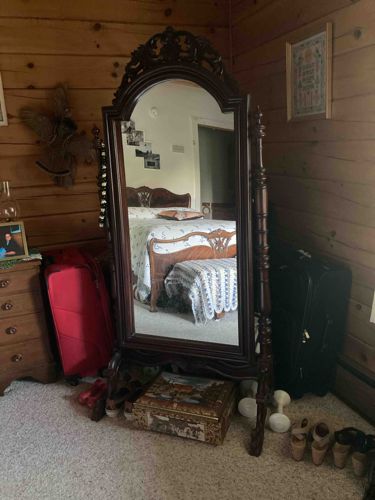
Carved Wood Cheval Mirror

Submitted photo of Carved Wood Cheval Mirror
Photo submitted by the user — not generated by AI

AI Estimated Value

Not an official valuation

$400-800

AI estimate as of September 22, 2025 · verify with a professional before acting

AI-Generated · Verify before acting

Everything on this page is generated by AI for informational purposes only. AI can make mistakes — the AI may misidentify items or misattribute them (artist, maker, brand, designer, origin, era). This is not an official valuation and should not be used for insurance, sale, tax, estate, legal, or lending purposes — or any decision requiring a certified appraisal. It is not an authoritative claim about any person, brand, or rights holder — do not share or rely on it as a factual statement about a third party. Always consult qualified professionals before making financial decisions.

Read the full disclaimer

AI Item Analysis

The item is a large, ornate cheval mirror, also known as a full-length dressing mirror, featuring a dark stained or naturally dark wood frame. The frame is elaborately carved, especially at the top, where it displays a prominent arched pediment with intricate scrolled motifs and possibly floral or foliate designs. The side supports of the mirror stand are turned and fluted, suggesting a classical or antique-inspired design. The mirror itself is rectangular with a rounded or arched top edge, conforming to the shape of the frame's pediment. It is designed to pivot within its stand, allowing for angle adjustment. The wood appears to be solid and substantial, indicating good construction quality. The dark finish of the wood contributes to a sense of formality or elegance. No distinct manufacturer's marks or signatures are visible from the provided image. The overall style, with its detailed carvings and traditional construction, suggests it could date from the late 19th century to the early to mid-20th century, or it could be a more contemporary reproduction in an antique style. The condition appears good from the photo, with no obvious major damage like cracks in the mirror or significant breaks in the wood frame. There may be some minor wear consistent with use and age, such as small scratches or rubs on the wood finish, but these are not clearly discernible. The mirror's substantial size and decorative elements make it a significant piece of furniture, likely intended for a bedroom or dressing area.
AI Appraisal Report

Based on my visual examination of the provided image, this Carved Wood Cheval Mirror appears to be in good overall condition. There are no readily apparent major flaws like cracks in the mirror glass or significant breaks in the elaborate wood carvings. Some minor wear commensurate with age, such as superficial scratches or abrasions on the dark wood finish, is likely present but not clearly discernible from the picture alone. The quality of the carving, particularly the ornate pediment and fluted supports, suggests a well-made piece. Authenticity verification from an image has limitations. While the style points to either a late 19th to early 20th-century piece or a quality reproduction, definitively dating it and confirming its authenticity without physical inspection is impossible. An in-person examination would allow me to assess joinery, wood type, and the presence of any manufacturing marks or labels. Without provenance, these details are crucial. Comparing it to similar antique or vintage cheval mirrors, both original and reproductions, indicates a fair market value for a well-preserved piece of this decorative scale. Demand for ornate antique-style furniture can be niche, but cheval mirrors, especially those with significant carving, retain interest for their decorative and functional utility. Reproductions in this style are plentiful, which can depress the value of similar authentic pieces if not properly identified. The substantial size and decorative elements enhance its appeal. My valuation reflects its condition and decorative merit, tempered by the uncertainty regarding its age and origin purely from an image. Full authentication would require a hands-on inspection to examine construction methods, wood grain, patination, and any hidden markings.

Keep exploring

More furniture appraisals

Get your items appraised

Instant AI-powered appraisal estimates from a photo

Browse More Appraisals