AI Appraisal Estimate

AI-generated estimates · not official valuations

From the user

What was submitted

Photo and notes provided by the user — not generated by AI

Submitted item photo
Submitted photo · June 6, 2026

User's notes

No additional notes provided.

AI analysis below

AI appraisal

AI analysis & estimate

AI-Generated · Verify before acting

Everything below is generated by AI for informational purposes only. AI can make mistakes — the AI may misidentify items or misattribute them (artist, maker, brand, designer, origin, era). This is not an official valuation and should not be used for insurance, sale, tax, estate, legal, or lending purposes — or any decision requiring a certified appraisal. It is not an authoritative claim about any person, brand, or rights holder — do not share or rely on it as a factual statement about a third party. Always consult qualified professionals before making financial decisions.

Read the full disclaimer

AI Identification

·Not independently authenticated·Verify before acting

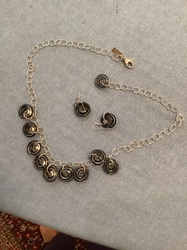
Beaded Necklace with Carved Elephant Pendant

Jewelry - Necklace

AI Estimated Value

·Not an official valuation·Verify before acting

$75-150

As of June 6, 2026

AI Item Analysis

·AI can make mistakes·Verify before acting
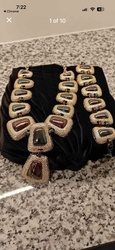
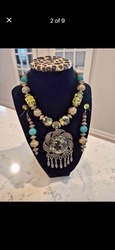
This is a long strand necklace, likely made from bone, ivory, or a synthetic resin, given its uniform, light cream to off-white color and matte finish. The beads are spherical and appear to be consistent in size, strung together to form a substantial length. The most prominent feature is the large, carved pendant in the shape of an elephant. The elephant carving is detailed, depicting the animal in profile with a raised trunk, adorned with what apepars to be a decorative blanket or howdah on its back. This decoration is rendered in subtle colors, including hints of orange, grey, and possible green or blue, suggesting a hand-painted or inlaid detail that adds character to the otherwise monochromatic piece. The carving exhibits good craftsmanship with defined features such as the ears, tusks, and lines indicating drapery on the elephant's covering. The overall condition appears good with no immediately visible chips or cracks on the beads or the pendant. The surface of the beads and pendant show a smooth texture, indicative of wear or polishing. The toggle clasp or closure at the end of the bead strand is also of the same material, maintaining a cohesive aesthetic. The stylistic elements, particularly the elephant motif and the material's aesthetic, suggest a possible South Asian or East Asian influence, possibly dating from the mid to late 20th century. The piece is displayed in what seems to be a black velvet-lined jewelry box, enhancing its presentation.
AI Appraisal Report

·AI can make mistakes·Verify before acting
Upon visual examination of the provided image, this beaded necklace with a carved elephant pendant appears to be in very good condition. The beads and pendant show no visible chips, cracks, or significant abrasions. The uniform color and matte finish of the beads and pendant suggest a material such as bone, synthetic resin, or possibly ivory, though definitive identification is impossible without direct inspection. The detailed carving of the elephant, with its raised trunk and decorative blanket in subtle colors, indicates good craftsmanship. The integrated toggle clasp maintains aesthetic continuity. Market conditions for such pieces can vary. While genuine antique ivory pieces command higher values, contemporary or vintage pieces made from bone, resin, or even post-1970s ivory (which often faces import/export restrictions) typically fall into a different price bracket. The elephant motif often appeals to collectors of Asian-inspired jewelry or animal-themed pieces. This particular piece appears to be a decorative item, likely from the mid to late 20th century. Its artistic appeal adds to its desirability, though it is not exceedingly rare. Key factors impacting value include the actual material; if it is truly antique ivory, its value would significantly increase, but modern or synthetic materials would yield a more modest appraisal. Without physical access, I cannot definitively confirm authenticity or material. A direct examination would be needed to conduct scratch tests, examine grain patterns for natural materials (like the Schreger lines in ivory), or perform density tests. Provenance documentation could also shed light on its origin and age. Without these, the appraisal is based heavily on aesthetic appeal and presumed material.

Get your items appraised

Instant estimates of your treasures with AI-powered appraisals

Browse More Appraisals