AI estimate as of November 28, 2025 · verify with a professional before acting
AI-Generated · Verify before acting
Everything on this page is generated by AI for informational purposes only. AI can make mistakes — the AI may misidentify items or misattribute them (artist, maker, brand, designer, origin, era). This is not an official valuation and should not be used for insurance, sale, tax, estate, legal, or lending purposes — or any decision requiring a certified appraisal. It is not an authoritative claim about any person, brand, or rights holder — do not share or rely on it as a factual statement about a third party. Always consult qualified professionals before making financial decisions.
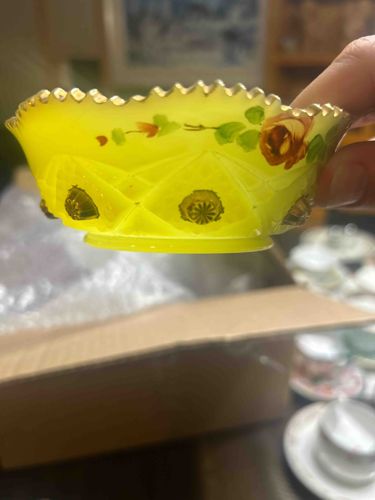
This is a small, decorative bowl crafted from opalescent yellow glass, likely dating to the late 19th or early 20th century, consistent with the Victorian or Edwardian eras. The glass exhibits a characteristic translucent yellow hue with a milky, opalescent quality that becomes more pronounced along the edges and raised patterns. The bowl features a prominent 'Daisy and Button' pressed glass pattern, defined by a grid of raised diamond shapes, each containing a central 'button' or starburst motif. Four of these buttons, visible on the side, are embellished with a gold-colored accent, enhancing the decorative effect. The rim of the bowl is intricately scalloped or crimped, a common finish for this period, and appears to be adorned with a delicate gold gilt line, suggesting a higher quality finish. Complementing the molded pattern, the exterior of the bowl is hand-painted with charming floral motifs. One prominent design features a large, detailed reddish-brown rose with green foliage, while another section shows smaller red flower buds and additional green leaves. The artistic application of the paintwork indicates hand craftsmanship. The bowl sits on a small, round foot or base, also likely molded. Given its small size, it may have been intended as a nut bowl, candy dish, or a decorative accent piece. No visible chips, cracks, or significant wear are immediately apparent on the glass in the provided images, though a thorough inspection would be needed to confirm the absence of minor flaws or paint loss on closer examination. The quality of the pressed glass and the hand-painted details suggest a well-made, collectible item.
AI Appraisal Report
Based on my visual examination of the provided image, this Opalescent Yellow Daisy and Button Glass Bowl with Hand-Painted Floral Decor appears to be in excellent condition. I observe no obvious chips, cracks, or significant loss to the hand-painted decor or the gold gilt on the rim. The opalescent yellow glass, characteristic of late 19th to early 20th-century American pressed glass, shows good clarity and opalescence, particularly along the molded patterns. The hand-painted rose and floral motifs are well-preserved and add a desirable artistic element to the factory-produced glass form. The gold accents on the 'buttons' also appear intact.
Market conditions for antique American pressed glass, particularly 'Daisy and Button' patterns, are stable but not experiencing rapid appreciation. Pieces with uncommon colors, good opalescence, and well-preserved hand-painting tend to command higher prices. This specific item benefits from its appealing yellow opalescent color and the added value of the hand-painted decoration, which elevates it above standard unadorned Daisy and Button pieces. Demand for such charming decorative items remains consistent among collectors of Victorian and Edwardian glassware.
Factors significantly impacting its value include the excellent preservation of the hand-painting, the attractive opalescent yellow color, and the absence of visible damage. Its small size suggests it was likely a nut dish or candy bowl.
It is important to note the limitations of image-based appraisal. A full authentication would require in-person examination to thoroughly check for hairline cracks, minute chips, shelf wear on the base, and any professional repairs or touch-ups to the paint or gilt that are not visible in photographs. I would also look for maker's marks, though many such pieces were unmarked. Provenance documentation, if available, would further enhance its value and authenticity confirmation.