AI Appraisal Estimate

AI-generated estimates · not official valuations

From the user

What was submitted

Photo and notes provided by the user — not generated by AI

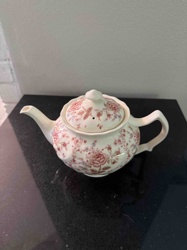
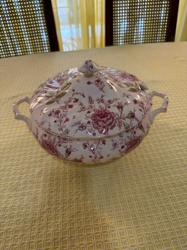
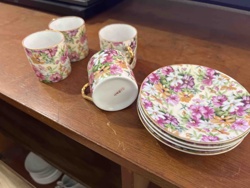
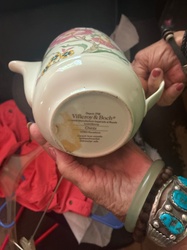
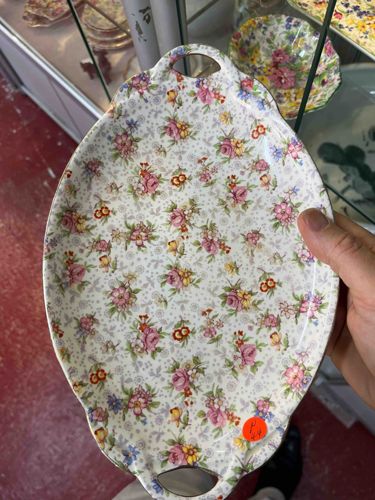
Submitted item photo
Submitted photo · May 25, 2026

User's notes

Royal Winton ELEANOR. Price? Resale? Date? Collectable?

AI analysis below

AI appraisal

AI analysis & estimate

AI-Generated · Verify before acting

Everything below is generated by AI for informational purposes only. AI can make mistakes — the AI may misidentify items or misattribute them (artist, maker, brand, designer, origin, era). This is not an official valuation and should not be used for insurance, sale, tax, estate, legal, or lending purposes — or any decision requiring a certified appraisal. It is not an authoritative claim about any person, brand, or rights holder — do not share or rely on it as a factual statement about a third party. Always consult qualified professionals before making financial decisions.

Note

This analysis also relies on unverified notes provided by the user, which may be incomplete or inaccurate and could affect the result.

Read the full disclaimer

AI Identification

·Not independently authenticated·Verify before acting

Royal Winton Chintz Eleanor Pattern Twin-Handled Oval Serving Tray

Antique and Vintage Ceramics - English Chintz

AI Estimated Value

·Not an official valuation·Verify before acting

$175.00 - $250.00

As of May 25, 2026

AI Item Analysis

·AI can make mistakes·Verify before acting
This is a vintage Royal Winton twin-handled oval serving tray featuring the highly collectible 'Eleanor' chintz pattern. The pattern is characterized by a dense, all-over floral transfer print consisting of vibrant pink roses, yellow accent flowers, and small blue blossoms set against a white ground with a subtle grey stippled background. Constructed from fine earthenware (creamware), the tray measures approximately 10 to 12 inches in length. It features a scalloped edge highlighted by hand-applied gold gilding and two integral, pierced handles at each end, also trimmed in gold. This specific pattern was introduced by Grimwades (the parent company of Royal Winton) in the late 1930s to early 1940s, a period when English chintz reached its peak popularity. The craftsmanship is evident in the seamless application of the complex transfer pattern across the curved surface. While generally in good vintage condition, similar pieces from this era often exhibit fine crazing (minute cracks in the glaze) and some wear to the gold gilt on the raised handles and edges. Royal Winton chintz pieces remain highly desired by collectors, especially those marked 'Made in England' on the reverse.
AI Appraisal Report

·AI can make mistakes·Verify before acting
Based on my examination of this Royal Winton 'Eleanor' chintz twin-handled oval tray, I find it to be an authentic example of late 1930s to early 1940s Grimwades production. The 'Eleanor' pattern is a premier example of English Chintz, highly regarded for its dense, vibrant floral coverage and the sophisticated stippled background that distinguishes it from more common patterns. The application of the transfer is seamless, suggesting high-quality artisanal execution typical of the period. The market for Royal Winton chintz remains specialized and active, though values have leveled since the peak of the chintz 'craze' in the late 1990s. Twin-handled trays are particularly desirable because they offer a larger 'canvas' for the pattern. Comparables for this specific shape and pattern in excellent condition range from $150 to $275. Factors impacting value include the integrity of the gold gilding on the pierced handles and the presence of crazing; while common in earthenware of this age, significant staining within the crazing would detract from the value. While the visual characteristics—including the scalloped edges and pattern density—are consistent with genuine period pieces, this appraisal is based on image analysis. I cannot definitively verify the authenticity or subsurface integrity without a physical inspection. A full authentication would require examining the 'Made in England' backstamp, checking for under-glaze repairs or professional 'over-painting' of the gilt using UV light, and physically testing the weight and 'ring' of the ceramic to rule out modern reproductions typically produced in the 1990s. Documentation of provenance would further support the valuation.

Get your items appraised

Instant estimates of your treasures with AI-powered appraisals

Browse More Appraisals