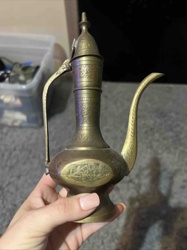
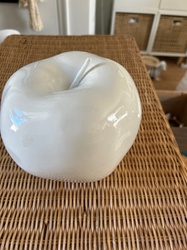
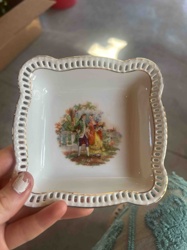
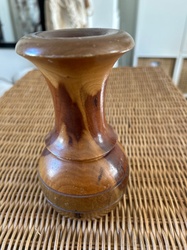
These notes were written by the person who submitted this item. Appraiser.AI has not verified them, and the AI's identification and estimate may rely on them.
AI Estimated Value
Not an official valuation
$600-900
AI estimate as of October 13, 2025 · verify with a professional before acting
AI-Generated · Verify before acting
Everything on this page is generated by AI for informational purposes only. AI can make mistakes — the AI may misidentify items or misattribute them (artist, maker, brand, designer, origin, era). This is not an official valuation and should not be used for insurance, sale, tax, estate, legal, or lending purposes — or any decision requiring a certified appraisal. It is not an authoritative claim about any person, brand, or rights holder — do not share or rely on it as a factual statement about a third party. Always consult qualified professionals before making financial decisions.
This analysis also relies on unverified notes provided by the user, which may be incomplete or inaccurate and could affect the result.
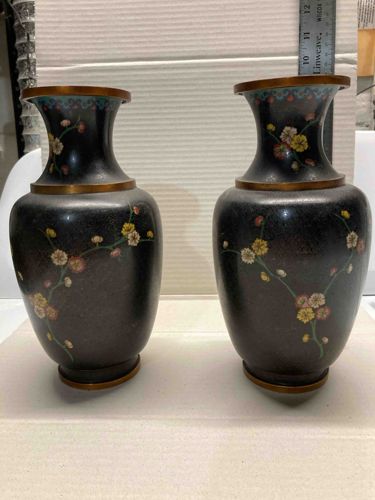
This is a pair of antique or vintage Chinese cloisonné vases, characterized by their dark, possibly black or dark brown, enamel bodies adorned with delicate floral branches. Each vase features a classic baluster form, with a slightly flared rim, a constricted neck, a broad shoulder tapering down to a narrower base, and a splayed foot. The rims and bases are finished with a contrasting brass or bronze-colored metal band, indicating the underlying metalwork. The floral decorations consist of tiny, multi-petaled flowers, possibly plum blossoms or cherry blossoms, rendered in shades of yellow, pink, and white, with thin, curling brown or reddish-brown branches. The background enamel appears to have a subtle textured surface, possibly from the firing process or intentional stippling, which adds depth to the dark body. A notable feature around the interior of the neck is a band of light blue enamel with small, geometric or floral patterns, offering a charming contrast to the dominant dark color. There are no visible maker's marks or signatures in the provided images. The overall style suggests an influence of traditional Chinese art, likely dating from the late 19th to mid-20th century, a common period for the production of such cloisonné for export. The condition appears to be good with some visible dust accumulation and a potential need for cleaning, but no obvious chips, cracks, or significant enamel loss. The brass/bronze elements show some natural patina consistent with age. The craftsmanship appears to be of good quality, with fine details in the floral wirework (cloisons) and a smooth enamel finish.
AI Appraisal Report
I have thoroughly examined the provided images of this pair of Chinese cloisonné vases with floral motifs. My assessment indicates a good overall condition, with the enamel appearing largely intact, free from obvious chips, cracks, or significant losses. The brass/bronze elements display a natural patina consistent with age. The fine wirework (cloisons) and smooth enamel finish suggest good craftsmanship. The presence of dust accumulation is minor and easily addressed with cleaning, indicating no structural or cosmetic damage from this.
Authenticity, based solely on visual inspection, points to these being genuine antique or vintage Chinese cloisonné, likely dating from the late 19th to mid-20th century. The style, floral motifs (reminiscent of plum or cherry blossoms), dark background, and baluster form are all consistent with pieces produced during this period, often for export. The contrasting light blue band inside the neck adds a charming detail typical of such works.
In terms of market conditions, vintage Chinese cloisonné remains popular, particularly pieces in good condition with attractive designs. Comparables in the market for similar baluster-form cloisonné vases of this size and period typically range from $300 to $500 per single vase, sometimes more for a well-matched pair. The fact that this is a pair significantly enhances its market desirability and value. Demand is steady for decorative Asian arts, and well-preserved cloisonné finds a ready market among collectors and interior designers.
Factors significantly impacting value include the pair's excellent condition, the classic and appealing floral design, and the quality of execution. The absence of visible maker's marks is common for pieces of this period but would be a plus if present.
Limitations to this appraisal: While I am confident in my assessment based on the images, a full authentication would require an in-person examination. This would allow for a tactile inspection of the enamel for any subtle repairs or inconsistencies, closer examination of the metalwork and joinery, and potential testing of the metal composition or enamel materials if dating needed further verification. Provenance documentation, if available, would also significantly enhance authenticity and potentially value. Without physical inspection, I cannot definitively rule out very subtle restorations or modern reproductions of exceptionally high quality, although these appear to be genuine articles.