AI estimate as of July 17, 2025 · verify with a professional before acting
AI-Generated · Verify before acting
Everything on this page is generated by AI for informational purposes only. AI can make mistakes — the AI may misidentify items or misattribute them (artist, maker, brand, designer, origin, era). This is not an official valuation and should not be used for insurance, sale, tax, estate, legal, or lending purposes — or any decision requiring a certified appraisal. It is not an authoritative claim about any person, brand, or rights holder — do not share or rely on it as a factual statement about a third party. Always consult qualified professionals before making financial decisions.
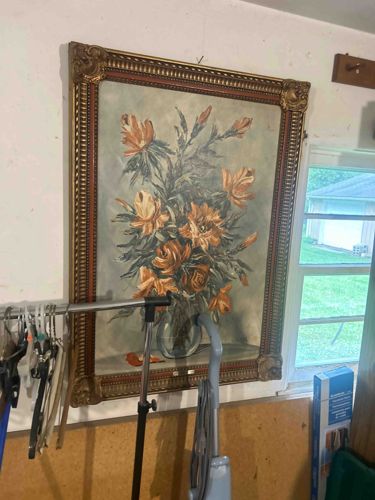
This item is a framed floral still life painting, likely oil on canvas, depicting a vibrant bouquet of orange and yellow-hued flowers with green foliage, arranged in a clear glass vase. The overall color palette is warm, set against a muted, possibly light teal or grey-green background, suggesting an impressionistic or post-impressionistic influence. The flowers appear to be a type of rose or similar large-petaled bloom, rendered with visible brushstrokes, indicating a painterly quality rather than hyperrealism. The painting is encased in a large, ornate gilded frame with intricate detailing. The frame features a multi-layered construction, with a prominent outer band of carved or molded relief patterns, possibly acanthus leaves or a similar classical motif, in a gold finish. Beneath this, there appears to be a smaller inner border, possibly in a reddish-brown tone, creating depth before reaching the canvas. The corners of the frame are embellished with a more concentrated decorative element, adding to its grandeur.
Observable condition issues include some dust accumulation, particularly on the frame and the surface of the painting, which is typical for items displayed over time. There are no immediately apparent significant damages such as tears, punctures, or extensive paint loss from the visible image. The frame itself shows minor wear consistent with age, possibly some rubbing or slight discoloration of the gilding, but appears structurally sound. The general aesthetic suggests a traditional, decorative art piece, possibly dating from the mid-20th century or later, designed to complement classic interior decor. While no specific artist's signature or maker's marks are visible in the provided image, the craftsmanship of the frame is a quality indicator, suggesting that the piece was intended as a substantial decorative artwork. The size of the painting appears to be quite large, dominating the section of the wall it occupies, indicating it was meant as a focal point.
AI Appraisal Report
Based on my visual examination of the provided image, this framed floral still life painting presents as a decorative art piece, likely oil on canvas, characterized by its warm color palette and impressionistic brushwork. The substantial, ornate gilded frame with classical motifs significantly contributes to its overall presentation and perceived value. The condition appears to be good, with wear consistent with age, primarily surface dust and minor frame rub-wear. There are no visible major damages such as tears or extensive paint loss.
Without a signature, provenance documents, or closer physical inspection, authenticity as a work by a notable artist is impossible to determine from images alone. Further verification would require in-person examination for artist's marks, inspection of paint layers and canvas for age consistency, and potentially scientific testing (e.g., pigment analysis, carbon dating if applicable to materials) for full authentication if it were attributed to a specific period or artist. Market conditions for decorative floral still lifes are stable, particularly for pieces with attractive, well-preserved frames. Comparables would include similar large-scale, unsigned decorative oil paintings with substantial period-style frames, often found in estate sales or general art auctions. Demand is generally from interior decorators or individuals seeking large-scale traditional art to complement classic decor. Rarity is low; similar decorative pieces are not uncommon. The primary factors impacting value are its decorative appeal, size, and the quality and condition of the ornate frame. The lack of an identifiable artist prevents it from commanding fine art prices typically associated with named artists.