AI Appraisal Estimate

AI-generated estimates · not official valuations

From the user

What was submitted

Photo and notes provided by the user — not generated by AI

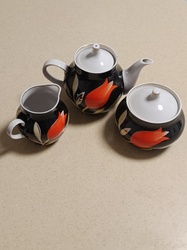
Submitted item photo
Submitted photo · May 28, 2026

User's notes

100 years

AI analysis below

AI appraisal

AI analysis & estimate

AI-Generated · Verify before acting

Everything below is generated by AI for informational purposes only. AI can make mistakes — the AI may misidentify items or misattribute them (artist, maker, brand, designer, origin, era). This is not an official valuation and should not be used for insurance, sale, tax, estate, legal, or lending purposes — or any decision requiring a certified appraisal. It is not an authoritative claim about any person, brand, or rights holder — do not share or rely on it as a factual statement about a third party. Always consult qualified professionals before making financial decisions.

Note

This analysis also relies on unverified notes provided by the user, which may be incomplete or inaccurate and could affect the result.

Read the full disclaimer

AI Identification

·Not independently authenticated·Verify before acting

Antique Hand-Painted Scalloped Fish Platter

Antique Ceramics & Serveware

AI Estimated Value

·Not an official valuation·Verify before acting

$150 - $250

As of May 28, 2026

AI Item Analysis

·AI can make mistakes·Verify before acting
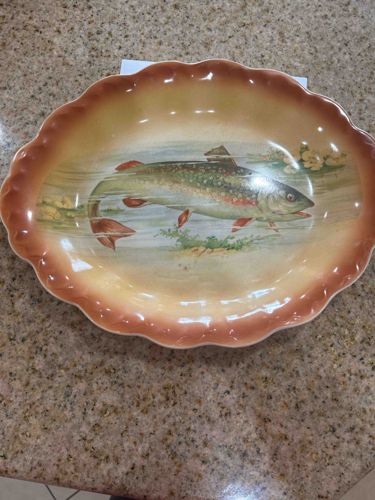
This is an antique ceramic serving platter, likely dating to the early 20th century (circa 1920s), consistent with the 100-year age provided. The platter features an oval shape with a distinctive heavily scalloped or ruffled rim. The central decorative motif depicts a large, detailed trout rendered in a realistic style, swimming amongst aquatic vegetation. The color palette of the fish includes earthy greens, spotted yellows, and vibrant red-orange fins, which provides a striking contrast against the pale cream-to-yellow center. The rim is finished with a gradient 'airbrushed' or sponged effect in a warm terracotta or burnt orange tone. Physically, the piece appears to be made of glazed earthenware or porcelain. While no maker's mark is visible on the front, this style is characteristic of European (likely French Limoges or German) or high-end American pottery of the era. The condition appears fair to good for its age, showing visible surface crazing throughout the glaze, which is a common aging characteristic of century-old ceramics. There is a small dark spot or possible minor chip near the lower green foliage. The craftsmanship is evidenced by the delicate shading of the lithograph or hand-painted transfer and the complex molding of the edge.
AI Appraisal Report

·AI can make mistakes·Verify before acting
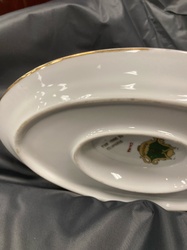
I have carefully examined the provided images of this scalloped fish platter, estimated to date from the early 1920s. The piece exhibits the classic hallmarks of European majolica or earthenware from the period, most notably the 'Barbotine' style popular in French and German workshops. The central trout motif is well-executed with a pleasing realism, and the sponged terracotta rim provides an excellent aesthetic frame. My visual inspection confirms the age, as evidenced by the uniform fine-line crazing throughout the glaze—a natural result of the differing expansion rates between the ceramic body and the vitreous glaze over a century. In the current market, decorative game-themed serveware remains a steady niche, though prices have softened from the highs of the late 1990s. Comparables for unsigned European fish platters with scalloped edges typically range from $125 to $300 depending on the vibrancy of the colors. This specific piece is hindered slightly by the visible surface staining and a potential chip near the foliage, which reduces its grade to 'Fair-Good'. Authenticity is likely based on the glaze behavior, but a definitive valuation is limited by the absence of a visible maker's mark (such as Sarreguemines or Villeroy & Boch). For a full authentication, an in-person inspection of the reverse side is necessary to check for incised mold numbers or stamps. Furthermore, tactile examination is required to determine if the trout is a hand-painted transfer or a more valuable multi-layered hand-painted relief. Without a physical inspection or provenance documentation, this valuation represents an estimated fair market value for decorative purposes.

Get your items appraised

Instant estimates of your treasures with AI-powered appraisals

Browse More Appraisals