AI estimate as of August 26, 2025 · verify with a professional before acting
AI-Generated · Verify before acting
Everything on this page is generated by AI for informational purposes only. AI can make mistakes — the AI may misidentify items or misattribute them (artist, maker, brand, designer, origin, era). This is not an official valuation and should not be used for insurance, sale, tax, estate, legal, or lending purposes — or any decision requiring a certified appraisal. It is not an authoritative claim about any person, brand, or rights holder — do not share or rely on it as a factual statement about a third party. Always consult qualified professionals before making financial decisions.
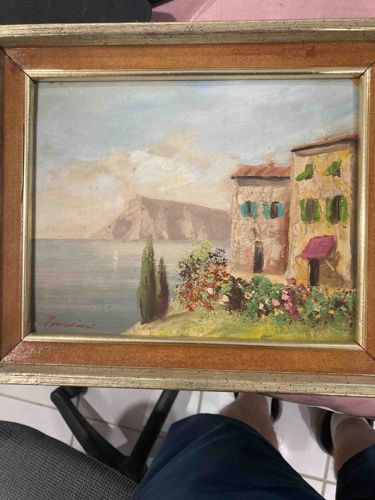
This item is a framed oil painting or similar medium on a rigid support, depicting a picturesque Mediterranean coastal scene. The physical characteristics include a horizontal rectangular composition, housed within a wooden frame approximately 2-3 inches wide. The frame has a prominent inner golden-toned fillet, followed by a mid-brown, possibly stained or lacquered, section with a visible grain or texture, and an outer golden-toned edge. The painting itself shows a body of water, likely a sea or large lake, with distant mountains or cliffs receding into the background on the left. The foreground features a verdant hillside leading down to the water, adorned with two distinct buildings with terracotta-colored roofs and textured, ancient-looking walls. One building has bright blue shutters, while the other exhibits vibrant green shutters and a small red awning over an entryway. Lush, colorful foliage, including what appears to be cypress trees and flowering bushes with pink and red blooms, populates the immediate foreground. The brushwork appears expressive, with visible impasto, particularly in the rendering of the foliage and possibly the building textures, indicating an oil-based medium. A signature, partially visible as 'Mancini' or a similar Italian surname, is present in the lower left corner of the painting. The condition appears to be relatively good, with no obvious major damage, tears, or significant paint loss. The colors retain vibrancy, suggesting decent preservation. The frame itself shows minor scuffs or wear consistent with age and handling, particularly on the golden edges, indicating a moderate patina. The style suggests a 20th-century European landscape, possibly from the mid-century, characterized by a romanticized or impressionistic approach to a classic scenic view. The craftsmanship of the painting appears competent, with a clear intention to capture the light and atmosphere of the setting.
AI Appraisal Report
Upon examining the provided image of this Mediterranean coastal scene painting, I assess its condition to be relatively good. There are no readily apparent tears, significant paint loss, or major damages to the canvas itself. The colors appear vibrant, suggesting good preservation over time. The frame shows minor scuffs and wear consistent with age and handling, particularly on the gold-toned edges, indicating a moderate patina. This aligns with many 20th-century European landscape paintings. Authenticity, based solely on visual inspection, is limited. The signature 'Mancini' or similar Italian surname in the lower left corner is noted. However, without a physical examination of the brushwork, paint layers, and supporting documentation, I cannot definitively confirm its authenticity without question.
Market conditions for 20th-century European landscape paintings by less widely-known artists are generally stable but not exceptionally strong. Comparables would typically include Italian or Mediterranean landscape artists from the mid-20th century whose works are expressive or impressionistic in style. Demand exists for decorative, well-executed pieces that evoke a sense of place. While not rare in its subject matter, the quality of execution and visible impasto elevate it above purely mass-produced works. Factors impacting value include the artist's full identity and exhibition history, if any, and the overall condition. This piece is primarily decorative and appealing.
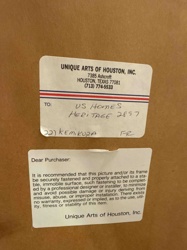
For full authentication, an in-person examination would be crucial to assess paint quality, medium consistency, and precise brushstroke details. Provenance documentation, such as receipts, gallery labels, or previous ownership records, would significantly enhance authenticity and value. Scientific testing, like pigment analysis, could confirm the period of creation. Without these, the appraisal remains based on visual characteristics and general market trends for similar decorative art.