Paleolithic Chert Biface Hand Axe/Hammer Tool
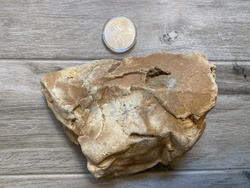
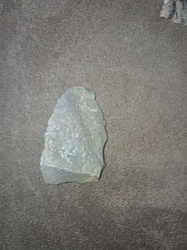
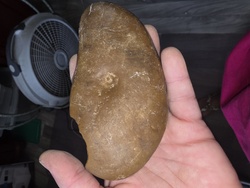
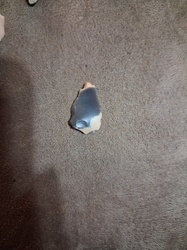
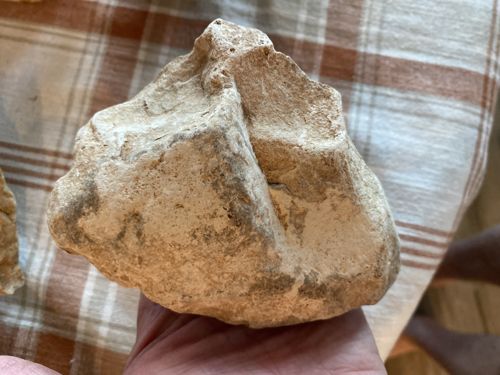
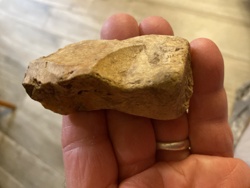
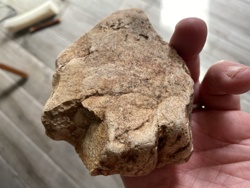
This artifact is a significant prehistoric lithic tool, measuring approximately 6 inches by 4 inches, discovered in Guthrie, Oklahoma. Crafted from light-colored, tan-to-buff chert, the specimen exhibits the characteristic morphology of a multi-purpose Paleolithic implement, serving functions as a hand axe, scraper, and hammer stone. The physical construction shows evidence of intentional percussion flaking, resulting in a bifacial geometry with a tapered, somewhat pointed bit and a thicker, more rounded butt end designed for handheld grip. The surface displays a matte finish with a distinct mineral patina and localized iron staining consistent with long-term exposure to subterranean or fluvial environments. Notable features include numerous hinge fractures and bulbs of percussion that indicate deliberate reduction and shaping by prehistoric artisans. The piece shows significant water-worn attributes and edge rounding, suggesting it was found in an area with alluvial movement. While there are no modern maker's marks, the rhythmic scarring along the edges serves as a diagnostic indicator of human manufacture rather than natural geofactual formation. The overall condition is stable, though it exhibits significant ancient wear and weathered scars across its various faces. This artifact represents a critical example of early human technology in North America, highlighting the craftsmanship involved in transforming raw stone into specialized survival equipment.
AI-Generated Appraisal Disclaimer
Estimated Value
$150 - $350
Basic Information
Category
Prehistoric Stone Artifacts / Archaeology
Appraised On
February 25, 2026
Estimated Value
$150 - $350
Additional Details Provided By Owner
User Provided Information
Paleolithic chert bi face hand axe scraper hammer tool found in Guthrie OK measuring 6" x 4"
Item Description
This artifact is a significant prehistoric lithic tool, measuring approximately 6 inches by 4 inches, discovered in Guthrie, Oklahoma. Crafted from light-colored, tan-to-buff chert, the specimen exhibits the characteristic morphology of a multi-purpose Paleolithic implement, serving functions as a hand axe, scraper, and hammer stone. The physical construction shows evidence of intentional percussion flaking, resulting in a bifacial geometry with a tapered, somewhat pointed bit and a thicker, more rounded butt end designed for handheld grip. The surface displays a matte finish with a distinct mineral patina and localized iron staining consistent with long-term exposure to subterranean or fluvial environments. Notable features include numerous hinge fractures and bulbs of percussion that indicate deliberate reduction and shaping by prehistoric artisans. The piece shows significant water-worn attributes and edge rounding, suggesting it was found in an area with alluvial movement. While there are no modern maker's marks, the rhythmic scarring along the edges serves as a diagnostic indicator of human manufacture rather than natural geofactual formation. The overall condition is stable, though it exhibits significant ancient wear and weathered scars across its various faces. This artifact represents a critical example of early human technology in North America, highlighting the craftsmanship involved in transforming raw stone into specialized survival equipment.
Related Tags
Get Your Items Appraised
Instant estimates of your treasures with AI-powered instant appraisals