AI Appraisal Estimate

AI-generated estimates · not official valuations

From the user

What was submitted

Photo and notes provided by the user — not generated by AI

Submitted item photo
Submitted photo · June 9, 2026

User's notes

No additional notes provided.

AI analysis below

AI appraisal

AI analysis & estimate

AI-Generated · Verify before acting

Everything below is generated by AI for informational purposes only. AI can make mistakes — the AI may misidentify items or misattribute them (artist, maker, brand, designer, origin, era). This is not an official valuation and should not be used for insurance, sale, tax, estate, legal, or lending purposes — or any decision requiring a certified appraisal. It is not an authoritative claim about any person, brand, or rights holder — do not share or rely on it as a factual statement about a third party. Always consult qualified professionals before making financial decisions.

Read the full disclaimer

AI Identification

·Not independently authenticated·Verify before acting

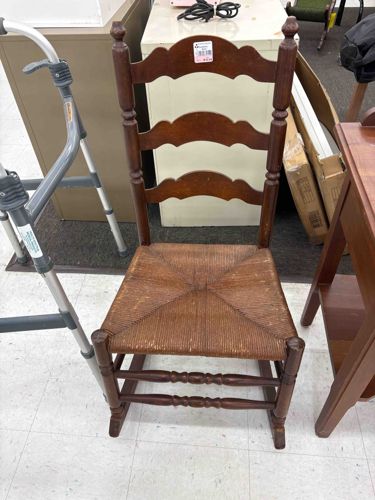
Ladderback Chair with Rush Seat

Furniture

AI Estimated Value

·Not an official valuation·Verify before acting

$75-150

As of June 9, 2026

AI Item Analysis

·AI can make mistakes·Verify before acting
This is a vintage or antique ladderback chair, characterized by its tall backrest featuring a series of horizontal slats (ladders) between the two vertical posts. The chair is constructed from wood, likely a hardwood given its dark brown stain and apparent durability. The four vertical posts of the backrest are turned, with the two rear posts extending above the top-most slat and culminating in decorative finials, possibly acorn or urn-shaped. The three horizontal back slats are scalloped or shaped, adding a decorative element to the otherwise functional design. The seat is a traditional woven rush, exhibiting a prominent 'envelope' or 'crisscross' pattern, which is characteristic of rush seating. The rush material appears to be in a natural or light brown tone, showing some wear and darkening consistent with age and use. The chair has straight front legs and slightly splayed back legs, all connected by turned stretchers, two on each side and two across the front and back, providing stability. The overall finish is a dark, warm brown, possibly a walnut or cherry stain, with visible signs of wear, particularly on the edges and high-traffic areas, suggesting a worn patina rather than damage. There is a price tag or label adhered to the upper back slat, indicating it may be from a retail or thrift environment. The craftsmanship appears sturdy and traditional, indicative of a piece designed for everyday use, potentially dating from the mid-20th century or earlier, though without closer inspection of joinery or specific manufacturing marks, an exact age is difficult to pinpoint. The chair's condition suggests it is well-used but structurally sound, with surface wear being the primary visible condition issue.

AI Appraisal Report

·AI can make mistakes·Verify before acting
Upon visual examination of this ladderback chair, I assess it to be a mid-20th-century piece, likely American-made, in the Colonial Revival style. The construction features turned posts with finials, scalloped slats, and a woven rush seat, which are characteristic of this design. The dark-stained hardwood and turned stretchers are typical for chairs of this era. The condition appears to be good and structurally sound, though it shows moderate to heavy surface wear consistent with its age and intended utilitarian purpose. The rush seat shows signs of use and some darkening but appears intact, which is a key value retention factor; a damaged or replaced seat would significantly decrease its worth. The current market for this type of furniture is relatively soft. While well-made, these chairs were produced in large numbers and are not considered rare. Comparables at auction and in secondary retail markets (e.g., antique shops, online marketplaces) typically sell in the $75 to $150 range, depending on condition and local demand. This piece's value is primarily as a decorative or functional item rather than a collectible antique. It's important to note the limitations of this appraisal, as it is based solely on images. A full authentication would require in-person examination to inspect the joinery (e.g., for signs of modern fasteners or glues), check for any maker's marks under the seat or on the frame, and assess the wood type and rush material more closely. Without provenance or physical inspection, I cannot definitively rule out that it is a more recent reproduction or an older piece, though the stylistic elements strongly point to the mid-20th century.

Get your items appraised

Instant estimates of your treasures with AI-powered appraisals

Browse More Appraisals