Paleolithic Biface Lithic Tool (Scraper/Hand Axe)
Prehistoric Artifacts / Lithic Tools

Paleolithic Biface Lithic Tool (Scraper/Hand Axe)

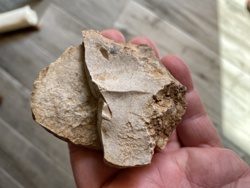
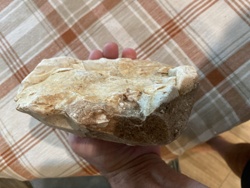
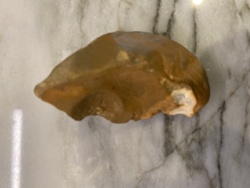
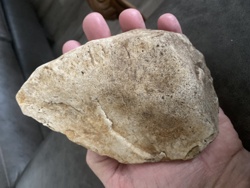
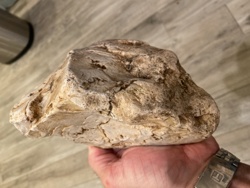
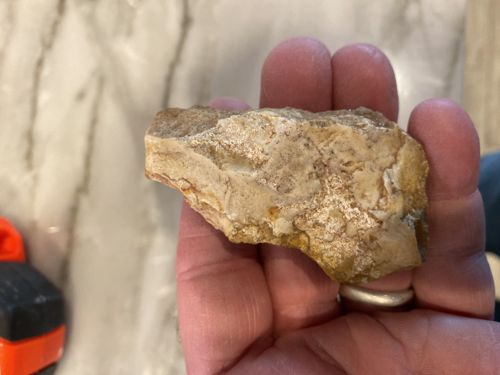
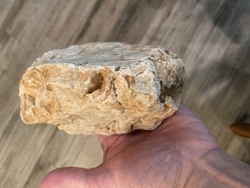
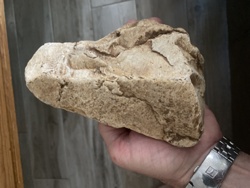
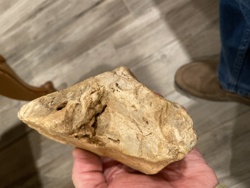
This is a small, bifacially worked lithic tool, measuring approximately 2.75 inches by 1.75 inches, originating from Guthrie, Oklahoma. The artifact is crafted from a high-quality chert or flint material, exhibiting a complex color palette that includes tan, cream, and ochre-yellow hues. The physical construction shows evidence of percussion flaking, resulting in a rugged, textured surface typical of prehistoric stone tool manufacturing. As a biface, it has been worked on both sides to create a functional edge, although the morphology suggests it may have served more effectively as a side-scraper or a small hand-held chopping tool rather than a traditional elongated hand axe. The object displays a heavy natural patina and calcification of the surface, indicating significant age and exposure to the elements over millennia. There is visible smoothing on the higher ridges of the flaked surfaces, which may be a combination of ancient water-wear (alluvial action) and intentional use-wear from processing materials. While the user identifies it as Acheulean, the location in North America suggests it would technically fall into a different cultural categorization, likely Paleo-Indian or Archaic period, as Acheulean technology is traditionally associated with Afro-Eurasian Lower Paleolithic sites. The piece shows no modern breaks, maintaining its original knapped integrity with softened, weathered edges that prove its authenticity as a prehistoric utility tool.
Estimated Value

$45–$85

Basic Information

Category

Prehistoric Artifacts / Lithic Tools

Appraised On

February 24, 2026

Estimated Value

$45–$85

Additional Details Provided By Owner

User Provided Information

Paleolithic Acheulean Bi face hand axe scraper tool found in Guthrie OK measuring 2.75 x 1.75

Item Description

This is a small, bifacially worked lithic tool, measuring approximately 2.75 inches by 1.75 inches, originating from Guthrie, Oklahoma. The artifact is crafted from a high-quality chert or flint material, exhibiting a complex color palette that includes tan, cream, and ochre-yellow hues. The physical construction shows evidence of percussion flaking, resulting in a rugged, textured surface typical of prehistoric stone tool manufacturing. As a biface, it has been worked on both sides to create a functional edge, although the morphology suggests it may have served more effectively as a side-scraper or a small hand-held chopping tool rather than a traditional elongated hand axe. The object displays a heavy natural patina and calcification of the surface, indicating significant age and exposure to the elements over millennia. There is visible smoothing on the higher ridges of the flaked surfaces, which may be a combination of ancient water-wear (alluvial action) and intentional use-wear from processing materials. While the user identifies it as Acheulean, the location in North America suggests it would technically fall into a different cultural categorization, likely Paleo-Indian or Archaic period, as Acheulean technology is traditionally associated with Afro-Eurasian Lower Paleolithic sites. The piece shows no modern breaks, maintaining its original knapped integrity with softened, weathered edges that prove its authenticity as a prehistoric utility tool.
Get Your Items Appraised

Instant estimates of your treasures with AI-powered instant appraisals

Browse More Appraisals