AI Appraisal Estimate

AI-generated estimates · not official valuations

From the user

What was submitted

Photo and notes provided by the user — not generated by AI

Submitted item photo
Submitted photo · June 12, 2026

User's notes

No additional notes provided.

AI analysis below

AI appraisal

AI analysis & estimate

AI-Generated · Verify before acting

Everything below is generated by AI for informational purposes only. AI can make mistakes — the AI may misidentify items or misattribute them (artist, maker, brand, designer, origin, era). This is not an official valuation and should not be used for insurance, sale, tax, estate, legal, or lending purposes — or any decision requiring a certified appraisal. It is not an authoritative claim about any person, brand, or rights holder — do not share or rely on it as a factual statement about a third party. Always consult qualified professionals before making financial decisions.

Read the full disclaimer

AI Identification

·Not independently authenticated·Verify before acting

Neoclassical Spelter or Bronze Allegorical River God Figure

Fine Art & Statuary

AI Estimated Value

·Not an official valuation·Verify before acting

$450 - $650

As of June 12, 2026

AI Item Analysis

·AI can make mistakes·Verify before acting
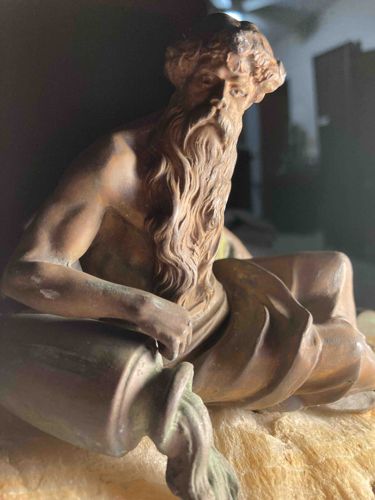
This item is a decorative sculptural figure depicting a bearded patriarch or a 'River God' in a reclining pose, a classic motif often seen in European fountain designs and garden statuary. The figure is cast in metal, likely spelter (white metal) with a bronze-colored patinated finish, or potentially cold-painted bronze. The character features a long, flowing undulated beard and curly hair, with a muscular bare torso emerging from draped fabric at the waist. A signature element of this iconographic style is the large vessel or amphora held under one arm, from which water appears to be flowing, symbolizing a river's source. The craftsmanship shows significant detail in the muscular anatomy and the textural rendering of the hair. Regarding condition, there is prominent wear to the surface finish, manifesting as scuffing on the arm and torso, and a heavy greenish-grey oxidation or patina near the mouth of the vessel. There are visible white spots on the arm and head that may indicate areas where the base metal is emerging from the paint or plating. The style is heavily influenced by Neoclassical and Renaissance revivals, suggesting it was manufactured in the late 19th to early 20th century. While no maker's marks are immediately visible in this view, the quality of the casting suggests a mid-tier ornamental production rather than a unique fine art bronze.

AI Appraisal Report

·AI can make mistakes·Verify before acting
I have completed a visual examination of the decorative metal sculpture depicting an Allegorical River God. This figure is a quintessential example of late 19th to early 20th-century Neoclassical revival statuary, likely of French or German origin. The iconography follows the classical 'Nilus' or 'Tiber' archetype, identifiable by the flowing amphora representing a river source. My assessment identifies the material as spelter (a zinc-based white metal alloy) rather than solid bronze, evidenced by the characteristic white oxidation and high-relief wear patterns on the arm and torso where the bronze-toned patination has been abraded. The casting quality is mid-market; while anatomical proportions are well-defined, the surface lacks the 'cire perdue' (lost wax) refinement seen in high-tier fine art. Current market demand for spelter allegorical figures is stable but modest, as collectors increasingly favor signed pieces or larger garden-scale editions. Comparable sales for unsigned spelter figures of this size and condition generally fall within the mid-hundreds. The value is suppressed by significant surface finish loss and oxidation, which requires professional conservation to prevent further degradation. Limitations: This appraisal is based solely on digital imagery. Definitive authentication requires an in-person scratch or weight test to confirm the base metal and a magnetic test to rule out iron-core components. To elevate the valuation, provenance documenting the specific foundry or artist should be sought. A physical inspection would also determine if the oxidation is stable or a result of active structural corrosion.

Get your items appraised

Instant estimates of your treasures with AI-powered appraisals

Browse More Appraisals