AI Appraisal Estimate

AI-generated estimates · not official valuations

From the user

What was submitted

Photo and notes provided by the user — not generated by AI

Submitted item photo
Submitted photo · May 27, 2026

User's notes

No additional notes provided.

AI analysis below

AI appraisal

AI analysis & estimate

AI-Generated · Verify before acting

Everything below is generated by AI for informational purposes only. AI can make mistakes — the AI may misidentify items or misattribute them (artist, maker, brand, designer, origin, era). This is not an official valuation and should not be used for insurance, sale, tax, estate, legal, or lending purposes — or any decision requiring a certified appraisal. It is not an authoritative claim about any person, brand, or rights holder — do not share or rely on it as a factual statement about a third party. Always consult qualified professionals before making financial decisions.

Read the full disclaimer

AI Identification

·Not independently authenticated·Verify before acting

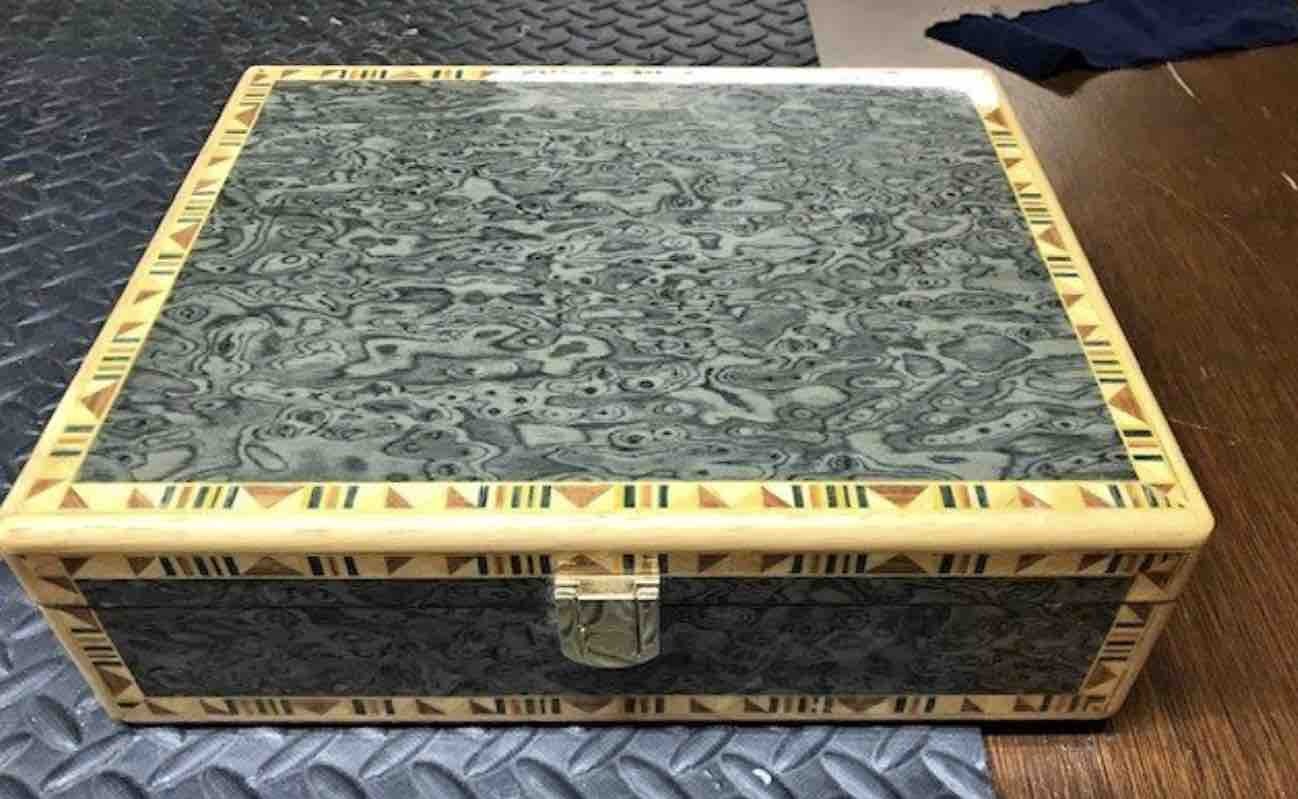
Inlaid Syrian Khatam Marquetry Box

Decorative Arts / Middle Eastern Antiques

AI Estimated Value

·Not an official valuation·Verify before acting

$450 - $650

As of May 27, 2026

AI Item Analysis

·AI can make mistakes·Verify before acting
This is a rectangular wooden decorative box featuring intricate marquetry and micro-mosaic inlay techniques characteristic of Middle Eastern craftsmanship, specifically Syrian Khatam work. The top lid and side panels are dominated by a dark greenish-grey burl wood veneer with a dense, swirling grain pattern. This central panel is framed by a complex geometric border composed of thousands of minute pieces of bone, dyed woods, and possibly brass, arranged in a repetitive triangular and linear pattern. The light-colored edging appears to be polished bone or synthetic ivory, providing a sharp contrast to the dark burl wood. The box is secured with a simple silver-toned metal latch on the front. Physically, the box appears to be medium-sized, approximately 10 to 12 inches in width. The condition shows minor wear consistent with light use; there is visible scuffing and some loss of finish on the front metal hardware, and the edges of the inlay show slight unevenness, which is common in handmade artisan pieces. The style suggests a mid-to-late 20th-century manufacture, likely from Damascus, known for its excellence in this specific marquetry tradition. The level of detail in the micro-mosaic indicates a high level of labor-intensive craftsmanship.
AI Appraisal Report

·AI can make mistakes·Verify before acting
Based on my visual examination of the provided documentation, this rectangular box is a fine example of Syrian Khatam (marquetry), likely originating from Damascus during the mid-to-late 20th century. The piece demonstrates high-caliber craftsmanship, specifically in the dense micro-mosaic borders which utilize bone and polychrome wood tesserae. The use of a figured burl wood veneer for the primary panels adds a layer of sophistication typically seen in artisan-grade exports rather than mass-market tourist souvenirs. The condition appears 'Good to Very Good'; I note minor patination on the hardware and expected micro-expansion at the inlay joints, which confirms the use of natural materials rather than printed mimics. The market for Syrian marquetry remains stable, though price points are heavily dictated by the density of the inlay. Boxes exceeding 10 inches with complex burl veneers command a premium. Comparables at auction and through specialized Middle Eastern antiquities dealers show realized prices between $400 and $700 for pieces of similar scale and vintage. The primary value-driver here is the labor-intensive nature of the khatam technique. Limitations: My assessment is based solely on digital images. A physical inspection is required to confirm the species of wood, the authenticity of the bone inlays (vs. celluloid), and to examine the interior lining, which significantly affects valuation. A full authentication would require provenance documentation to narrow the specific workshop of origin. Furthermore, I cannot verify the integrity of the adhesive used; older animal-hide glues can become brittle, and 'pinging' the inlay to check for delamination is essential before a final sale. Scientific testing is generally not required for this era, though UV light examination would confirm any localized repairs to the finish.

Get your items appraised

Instant estimates of your treasures with AI-powered appraisals

Browse More Appraisals