AI estimate as of September 22, 2025 · verify with a professional before acting
AI-Generated · Verify before acting
Everything on this page is generated by AI for informational purposes only. AI can make mistakes — the AI may misidentify items or misattribute them (artist, maker, brand, designer, origin, era). This is not an official valuation and should not be used for insurance, sale, tax, estate, legal, or lending purposes — or any decision requiring a certified appraisal. It is not an authoritative claim about any person, brand, or rights holder — do not share or rely on it as a factual statement about a third party. Always consult qualified professionals before making financial decisions.
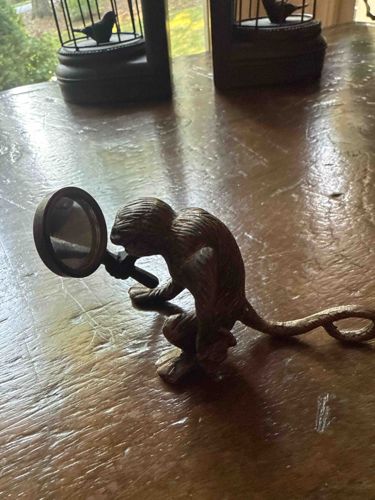
This item is a decorative figurine depicting a monkey holding a magnifying glass. It appears to be constructed from a dark-toned metal, possibly bronze, brass, or cast iron, with a rich, patinated finish suggesting age and imparting an antique aesthetic. The color is a deep, muted brown or dark grey, with subtle variations that highlight the texture. The monkey is rendered in a naturalistic pose, crouching slightly with both hands holding the magnifying glass up as if examining something closely. Details such as the fur texture, facial features, and musculature are discernible, indicating a good level of craftsmanship. The magnifying glass itself has a circular frame and contains a reflective surface, likely a mirror rather than a functional lens, given its decorative nature. The long, thin tail of the monkey curls gracefully, adding to the overall balance of the piece. The surface of the figurine shows some wear consistent with handling and age, evidenced by slightly lighter areas on raised surfaces where the patination might have thinned or rubbed off, particularly on the monkey's back, head, and the edges of the magnifying glass. There are no obvious breaks, repairs, or significant damage visible. The quality of the casting appears to be good, with crisp lines and defined features. Given its style and apparent material, it likely dates from the late 19th to early 20th century, a period when such whimsical and animal-themed decorative objects were popular.
AI Appraisal Report
Upon examining the provided image of this decorative monkey with magnifying glass figurine, I assess its condition as good, consistent with its likely age. The dark-toned metal, possibly bronze or brass, exhibits a rich, patinated finish, indicating age rather than newness. Subtle wear on raised surfaces like the monkey's back, head, and the magnifying glass rim is evident, suggesting handling over time but no significant damage or repairs are discernible from the image. The craftsmanship appears competent, with defined features in the fur texture and musculature. The magnifying glass itself contains a reflective surface, confirming its decorative, rather than functional, purpose.
Based on its style and material, I concur with the suggested late 19th to early 20th-century dating, a period when such whimsical, animal-themed bronze and brass decorative objects were quite popular. The market for these types of antique decorative figurines remains steady, particularly for well-preserved examples. Comparable items, especially those with refined casting and engaging poses, typically attract collectors of natural history or Victorian/Edwardian decor. While not exceptionally rare, unique poses and good condition enhance demand. Factors impacting value include the material (actual bronze would fetch more than cast iron), the quality of the patination, and the absence of damage. The charming character and relative scarcity of this specific pose contribute positively to its appeal.
It is crucial to note that this authenticity assessment is based solely on visual examination of the image. For full authentication and a more precise valuation, I would require an in-person examination to assess the exact material composition (e.g., specific gravity testing), feel the texture, inspect for hidden repairs, and confirm casting techniques. Provenance documentation, if available, would also significantly enhance authenticity and value verification.