AI estimate as of September 30, 2025 · verify with a professional before acting
AI-Generated · Verify before acting
Everything on this page is generated by AI for informational purposes only. AI can make mistakes — the AI may misidentify items or misattribute them (artist, maker, brand, designer, origin, era). This is not an official valuation and should not be used for insurance, sale, tax, estate, legal, or lending purposes — or any decision requiring a certified appraisal. It is not an authoritative claim about any person, brand, or rights holder — do not share or rely on it as a factual statement about a third party. Always consult qualified professionals before making financial decisions.
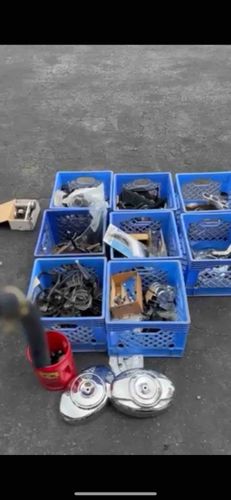
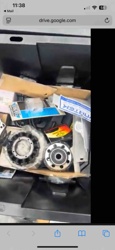
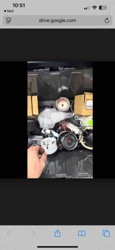
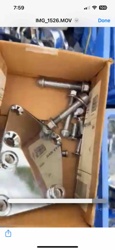
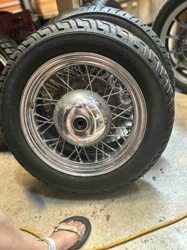
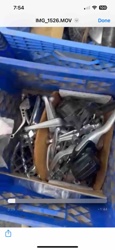
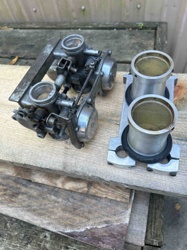
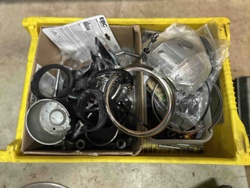
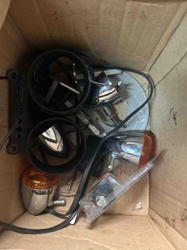
This collection comprises a significant quantity of assorted motorcycle parts and components, primarily organized within multiple blue plastic milk crates. There are at least nine such crates visible, filled with various metallic and plastic parts, electrical wiring, and smaller hardware. Specific items discernible include what appear to be engine components, carburetor-like assemblies, wiring harnesses, and possibly some bodywork pieces. One of the crates holds what looks like a partially disassembled carburetor or a similar fuel system component, alongside other mixed small parts. Another crate contains a dense tangle of black electrical wires and connectors. In the foreground, two prominent chrome-plated oval-shaped air filter covers or similar decorative engine covers are visible, exhibiting a high-gloss reflective surface with some minor surface dust or smudges. A red plastic bucket near these chrome covers contains more small parts or tools, partially obscured. The overall condition of the parts appears to range from used to potentially new or 'old stock' given the variety. Some components show expected wear, dust, and grime associated with use or storage, while the chrome parts appear relatively clean and intact. The items do not show significant signs of heavy damage or corrosion from this perspective, though a detailed inspection would be required for full assessment. The style suggests components from a variety of motorcycles, likely from the latter half of the 20th century to early 21st century given the visible technologies and material finishes. This lot represents a bulk collection of parts, potentially for repair, restoration, or salvage purposes.
AI Appraisal Report
I have examined the provided image of this collection of assorted motorcycle parts and components. This lot consists of numerous items stored in at least nine blue plastic milk crates, a red plastic bucket, and some loose components. Visible items include engine components, carburetor assemblies, electrical wiring harnesses, and what appear to be two prominent chrome air filter covers. The condition of the parts varies; some show expected wear, dust, and grime from use or storage, while the chrome covers appear relatively clean with minor surface smudges. No significant damage or heavy corrosion is immediately apparent. The style of parts suggests a mix from the late 20th to early 21st century motorcycles.
Market conditions for such bulk lots of unsorted used motorcycle parts are generally moderate. Their value is primarily driven by the potential for repair, restoration projects, or salvage of individual components. Comparables often include similar 'parts lot' sales on online marketplaces, where items are sold sight-unseen or with limited descriptions. Demand for specific components within such a mixed lot can be high, but the obscurity of specific models or years limits universal appeal. The lack of organization and clear identification of individual parts significantly impacts the overall immediate value, as potential buyers factor in the time and effort required to sort and identify usable items.
Several factors impact the value: the unsorted nature, the unknown specific origin (make/model/year) of parts, and the labor required for identification. The chrome covers, if originating from a desirable or classic model, could hold independent value, but this cannot be confirmed visually. Limitations in authenticity verification from images alone are substantial. I cannot definitively ascertain the functionality, specific origin, or completeness of any component. An in-person examination would be critical to test electrical components, assess wear on internal engine parts, confirm authenticity and specific model fitment, and conduct scientific testing for material composition if needed. Provenance documentation (e.g., from which bike they were removed) would also vastly improve valuation accuracy.