AI identification & appraisal estimate

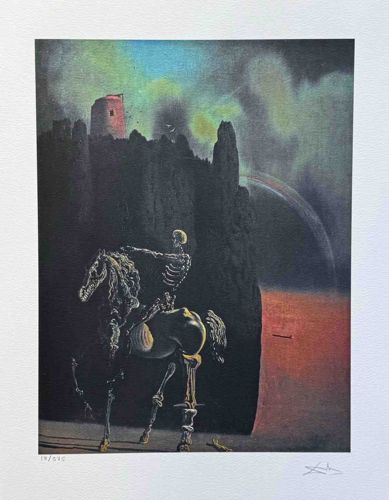
Knight of Death (Giclée Facsimile Print after Salvador Dalí)

Submitted photo of Knight of Death (Giclée Facsimile Print after Salvador Dalí)
Photo submitted by the user — not generated by AI

User's notes

Giclee

These notes were written by the person who submitted this item. Appraiser.AI has not verified them, and the AI's identification and estimate may rely on them.

AI Estimated Value

Not an official valuation

$150 - $350

AI estimate as of March 21, 2026 · verify with a professional before acting

AI-Generated · Verify before acting

Everything on this page is generated by AI for informational purposes only. AI can make mistakes — the AI may misidentify items or misattribute them (artist, maker, brand, designer, origin, era). This is not an official valuation and should not be used for insurance, sale, tax, estate, legal, or lending purposes — or any decision requiring a certified appraisal. It is not an authoritative claim about any person, brand, or rights holder — do not share or rely on it as a factual statement about a third party. Always consult qualified professionals before making financial decisions.

This analysis also relies on unverified notes provided by the user, which may be incomplete or inaccurate and could affect the result.

Read the full disclaimer

AI Item Analysis

This item is a contemporary giclée print on heavy, textured fine art paper, reproducing Salvador Dalí's surrealist masterpiece 'Knight of Death.' The composition features a skeletal knight mounted upon a skeletal horse, set against a dark, craggy landscape dominated by a silhouette of a tower. The color palette is evocative, utilizing deep blacks and shadowed greens contrasted against a vibrant, atmospheric orange and yellow sky that suggests a setting sun or a localized fire. The print is formatted with wide white margins characteristic of modern limited edition reproductions. A notable feature is the edition numbering 'IR/DVC' (or similar Roman numeral styling) in the lower left margin and a printed facsimile signature of Salvador Dalí in the lower right. The giclée process is evident in the smooth color transitions and sharp detail reproduction. The paper shows a distinct 'pebble' or 'cold-press' texture, indicating a high-quality substrate choice. The condition appears excellent with crisp edges and no visible foxing, staining, or sun-fading. As a giclée facsimile, it likely dates to the late 20th or early 21st century rather than Dalí's lifetime. The craftsmanship is professional, aimed at provide a faithful visual representation of the original oil painting's texture and surreal depth.
AI Appraisal Report

I have examined the digital representation of the 'Knight of Death' facsimile print. This piece is a modern giclée reproduction on textured fine art paper. While the print displays high-quality color saturation and mimics the impasto depth of Dalí’s original oil work, it is important to clarify its standing: this is a decorative facsimile, not an original lithograph or etching hand-signed by the artist. The presence of a 'facsimile signature' (one printed as part of the image) and Roman numeral editioning like 'IR/DVC' typically indicates a modern publishing house edition produced posthumously. The item appears in excellent condition, with no visible signs of UV damage, foxing, or handling wear. The 'pebble' texture suggests a high-grade inkjet process on archival substrate. The market for posthumous giclées is stable but limited; they are valued for their decorative appeal rather than investment potential. Comparable sales for similar Dalí giclées on the secondary market frequently fall within the $150 to $350 range. Higher valuations are typically reserved for lifetime editions with hand-signed graphite signatures and verified provenance. This appraisal is based solely on visual inspection of the provided images. A definitive evaluation is limited without physical inspection; in-person examination would be required to verify the ink stability, precise paper weight, and the legitimacy of the edition numbering. To elevate this item's provenance, documentation from the publisher or a Certificate of Authenticity (COA) specifying the total edition size and release date would be necessary.

Keep exploring

More fine art prints appraisals

Get your items appraised

Instant AI-powered appraisal estimates from a photo

Browse More Appraisals