Victorian Eastlake Style Walnut Parlor Table
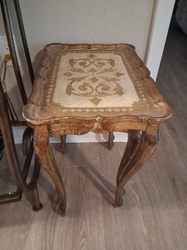
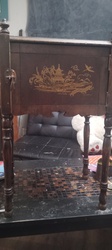
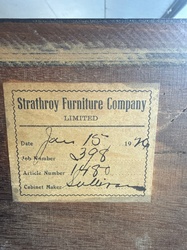
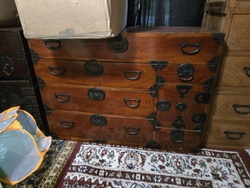
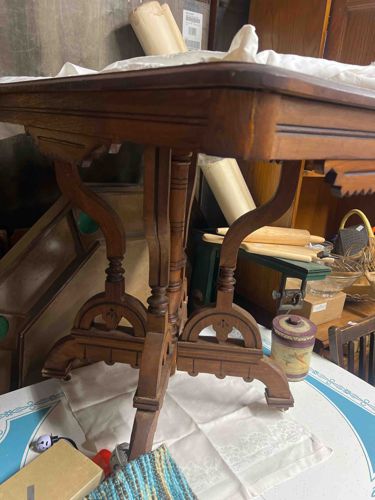
This is a late 19th-century Victorian parlor table, specifically designed in the Eastlake movement style. It is constructed from solid walnut with a medium-tone finish. The piece features a rectangular top with rounded cushion-molded edges and a deep apron decorated with incised linear carvings typical of the period. The base is complex, featuring a four-legged pedestal design. Each leg consists of a curved 'S' bracket upper portion leading down to turned spindle elements, terminating in a decorative arch with a sawtooth or crenelated lower edge. The legs are joined by a central cross-stretcher with a turned vertical finial. Physically, the wood shows a well-developed patina with significant evidence of age; there is visible scuffing on the feet, dry cracking in the grain along the apron, and some minor splintering on the decorative lower trim. The craftsmanship is high, utilizing mortise and tenon joinery alongside the machine-assisted carvings common to the 1870-1890 era. The table retains its original structural integrity despite some dulling of the finish and superficial scratches.
AI-Generated Appraisal Disclaimer
Estimated Value
$350-$550
Basic Information
Category
Antique Furniture
Appraised On
January 17, 2026
Estimated Value
$350-$550
Item Description
This is a late 19th-century Victorian parlor table, specifically designed in the Eastlake movement style. It is constructed from solid walnut with a medium-tone finish. The piece features a rectangular top with rounded cushion-molded edges and a deep apron decorated with incised linear carvings typical of the period. The base is complex, featuring a four-legged pedestal design. Each leg consists of a curved 'S' bracket upper portion leading down to turned spindle elements, terminating in a decorative arch with a sawtooth or crenelated lower edge. The legs are joined by a central cross-stretcher with a turned vertical finial. Physically, the wood shows a well-developed patina with significant evidence of age; there is visible scuffing on the feet, dry cracking in the grain along the apron, and some minor splintering on the decorative lower trim. The craftsmanship is high, utilizing mortise and tenon joinery alongside the machine-assisted carvings common to the 1870-1890 era. The table retains its original structural integrity despite some dulling of the finish and superficial scratches.
Related Tags
Explore similar items and categories:
Get Your Items Appraised
Instant estimates of your treasures with AI-powered instant appraisals