AI Appraisal Estimate

AI-generated estimates · not official valuations

From the user

What was submitted

Photo and notes provided by the user — not generated by AI

Submitted item photo
Submitted photo · June 17, 2026

User's notes

No additional notes provided.

AI analysis below

AI appraisal

AI analysis & estimate

AI-Generated · Verify before acting

Everything below is generated by AI for informational purposes only. AI can make mistakes — the AI may misidentify items or misattribute them (artist, maker, brand, designer, origin, era). This is not an official valuation and should not be used for insurance, sale, tax, estate, legal, or lending purposes — or any decision requiring a certified appraisal. It is not an authoritative claim about any person, brand, or rights holder — do not share or rely on it as a factual statement about a third party. Always consult qualified professionals before making financial decisions.

Read the full disclaimer

AI Identification

·Not independently authenticated·Verify before acting

Vintage Early American Style Painted Hutch

Furniture

AI Estimated Value

·Not an official valuation·Verify before acting

$150-$300

As of June 17, 2026

AI Item Analysis

·AI can make mistakes·Verify before acting
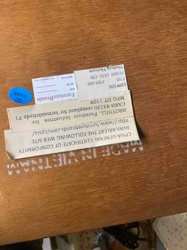
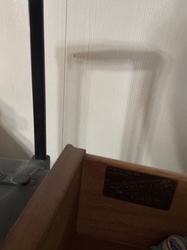
This item is a vintage two-piece hutch or step-back cupboard, likely dating from the mid-20th century. It is constructed from wood and features an Early American or Colonial Revival design aesthetic. The exterior is finished in an off-white or cream-colored paint, while the interior of the upper shelving unit has been painted a contrasting bold red. The upper section features an open hutch with scalloped or wave-patterned side supports and three horizontal shelves, ideal for displaying dishware. The base unit consists of a single wide drawer with two dark-colored circular knobs, situated above a two-door cabinet with similar hardware. The base is finished with a decorative scalloped apron that matches the profile of the upper section. Regarding condition, the piece shows evidence of a non-original, DIY-style paint job, which appears somewhat thick and uneven in the low-resolution image. There are visible signs of wear along the edges and base, consistent with age and regular use. The overall craftsmanship suggests a mass-produced furniture piece from the 1950s-1970s intended for household use. No maker's marks or stamps are clearly visible from this angle, but the utilitarian hardware and simple construction methods are typical of mid-century domestic furniture manufacturers.
AI Appraisal Report

·AI can make mistakes·Verify before acting
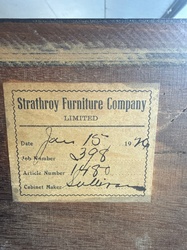
I have examined the provided imagery of the mid-20th-century Early American style step-back cupboard. This two-piece unit exhibits the characteristics of Colonial Revival mass-produced furniture, likely manufactured between 1950 and 1975. My assessment of the condition reveals significant modifications that detract from its value as a vintage collectible. The 'DIY' nature of the cream and red paint application is heavy-handed and lacks the professional finish or natural patina sought by serious collectors. While the scalloped apron and supports are charming, the wear on the base and edges appears to be standard household fatigue rather than intentional distressing. Market demand for this category of furniture is currently soft, specifically for pieces with non-original, high-contrast interior paint. Comparables found at local estate sales or second-hand marketplaces typically trade in the low hundreds. Its value is primarily utilitarian—as a functional storage or display piece—rather than as an investment-grade antique. The lack of visible maker’s marks suggests a standard manufacturer like Ethan Allen or Tell City, though without the premium of original finish. Limitations of this digital appraisal: I cannot definitively verify the wood species (likely pine or maple) or structural integrity under the thick paint. A physical inspection is required to check for dovetail joinery quality, drawer glides, and potential hidden stamps inside the drawers. To fully authenticate its origin and age, I would need to examine the back panel construction and the underside of the base to see if the hardware is original or replaced. Full authentication would require provenance documentation or a receipt from the original point of sale.

Get your items appraised

Instant estimates of your treasures with AI-powered appraisals

Browse More Appraisals