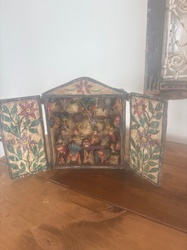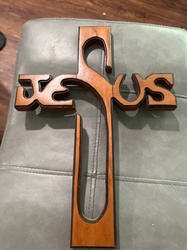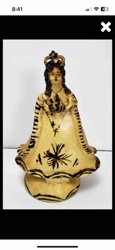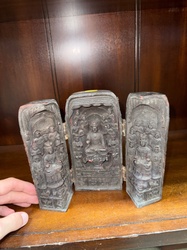
Spanish Colonial Santos Manikin Angel (Estatua de Animas)
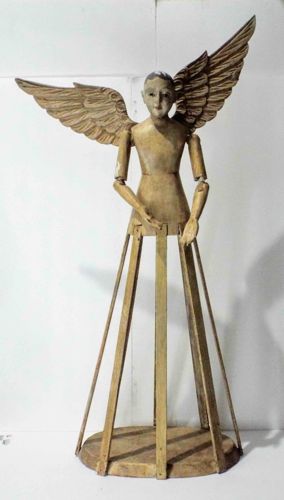
This is a hand-carved wooden sculptural figure, likely of Spanish Colonial origin, depicting a winged angel or celestial being. The piece is constructed as a 'manikin' or 'cage' santo, featuring a solid carved torso, head, and articulated arms, supported by a tiered slatted frame or cage base designed to be dressed in liturgical vestments. The head exhibits a serene, folk-art quality with painted facial features including dark eyes and a soft expression, topped with a simple blue-toned coiffure. The large, spread wings are intricately carved with layered feather detailing and attached at the back. The wood shows a significant aged patina with evidence of gesso and polychrome remnants. The articulated joints at the shoulders and elbows are pinned, which is characteristic of devotional statues meant to be posed. Condition-wise, the piece shows surface wear, minor wood cracking consistent with age, and areas of paint loss, particularly on the torso and joints. There are no visible maker's marks, suggesting it was created by an anonymous santero. The craftsmanship reflects a traditional 19th-century religious aesthetic, possibly from Latin America or the Philippines, where such caged figures were commonly used in processions and home altars.
AI-Generated Appraisal Disclaimer
Estimated Value
$2,500 - $3,500
Basic Information
Category
Religious Artifacts & Folk Art
Appraised On
March 9, 2026
Estimated Value
$2,500 - $3,500
Additional Details Provided By Owner
User Provided Information
Unknown artist, unknown sculpture
Item Description
This is a hand-carved wooden sculptural figure, likely of Spanish Colonial origin, depicting a winged angel or celestial being. The piece is constructed as a 'manikin' or 'cage' santo, featuring a solid carved torso, head, and articulated arms, supported by a tiered slatted frame or cage base designed to be dressed in liturgical vestments. The head exhibits a serene, folk-art quality with painted facial features including dark eyes and a soft expression, topped with a simple blue-toned coiffure. The large, spread wings are intricately carved with layered feather detailing and attached at the back. The wood shows a significant aged patina with evidence of gesso and polychrome remnants. The articulated joints at the shoulders and elbows are pinned, which is characteristic of devotional statues meant to be posed. Condition-wise, the piece shows surface wear, minor wood cracking consistent with age, and areas of paint loss, particularly on the torso and joints. There are no visible maker's marks, suggesting it was created by an anonymous santero. The craftsmanship reflects a traditional 19th-century religious aesthetic, possibly from Latin America or the Philippines, where such caged figures were commonly used in processions and home altars.
Get Your Items Appraised
Instant estimates of your treasures with AI-powered instant appraisals