AI Appraisal Estimate

AI-generated estimates · not official valuations

From the user

What was submitted

Photo and notes provided by the user — not generated by AI

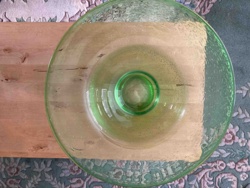
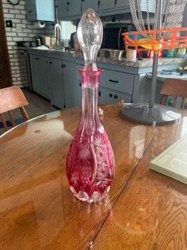
Submitted item photo
Submitted photo · June 6, 2026

User's notes

small plate

AI analysis below

AI appraisal

AI analysis & estimate

AI-Generated · Verify before acting

Everything below is generated by AI for informational purposes only. AI can make mistakes — the AI may misidentify items or misattribute them (artist, maker, brand, designer, origin, era). This is not an official valuation and should not be used for insurance, sale, tax, estate, legal, or lending purposes — or any decision requiring a certified appraisal. It is not an authoritative claim about any person, brand, or rights holder — do not share or rely on it as a factual statement about a third party. Always consult qualified professionals before making financial decisions.

Note

This analysis also relies on unverified notes provided by the user, which may be incomplete or inaccurate and could affect the result.

Read the full disclaimer

AI Identification

·Not independently authenticated·Verify before acting

Pressed Glass Nappy or Bonbon Dish

Antique & Vintage Glassware

AI Estimated Value

·Not an official valuation·Verify before acting

$10.00 - $18.00

As of June 6, 2026

AI Item Analysis

·AI can make mistakes·Verify before acting
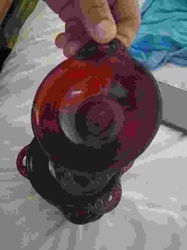
This is a small, vintage clear pressed glass dish, commonly referred to as a nappy or a bonbon dish. The piece is circular with a shallow, bowl-like depth and features a prominent, ornate loop handle extending from one side, characteristic of early to mid-20th-century American pressed glass. The underside is decorated with a complex geometric pattern, likely a hobnail or diamond-point design, which provides a textured surface and allows the glass to catch and refract light efficiently. The dish appears to be made from soda-lime glass, with a transparent but slightly grayish or yellowish tint common in vintage mass-produced utilitarian glassware. In the center of the interior, there is a small rectangular white and green adhesive label, which appears to be a vintage price tag or a manufacturer's identification sticker that has not been removed. The glass shows some visible signs of age including surface cloudiness, potentially from hard water deposits or oxidation, and fine surface scratches consistent with standard use. The style is reminiscent of patterns produced by companies like Imperial Glass, Hazel-Atlas, or Anchor Hocking during the Depression Era or early Mid-Century periods. The craftsmanship is industrial, with visible mold seams and a slightly irregular handle shape that denotes a press-mold manufacturing process.
AI Appraisal Report

·AI can make mistakes·Verify before acting
I have completed a visual examination of the vintage pressed glass nappy/bonbon dish. This piece, likely manufactured between 1930 and 1955, demonstrates the characteristic industrial fingerprints of American companies such as Hazel-Atlas or Anchor Hocking. The molded handle and geometric 'hobnail-adjacent' underside pattern are indicative of high-volume soda-lime glass production intended for the utilitarian domestic market. Condition-wise, the dish shows significant wear. The noted 'cloudiness'—if permanent—likely represents 'glass sickness' or etching from modern dishwashers, which cannot be reversed and significantly reduces appeal. The presence of mold seams confirms its mass-produced nature. Current market conditions for colorless, non-leaded pressed glass of this era remain soft; supply is abundant and collector demand is currently focused on rare colors (cobalt or pink) rather than clear examples. Comparable items frequently sell at estate sales or online marketplaces for under twenty dollars. While the vintage label adds a touch of charm, it does not significantly enhance the provenance or resale value. Limitations to this assessment include the inability to inspect for 'flea bites' (tiny chips) along the rim or to perform a UV light test to check for manganese or uranium content, common in glass of this vintage. A physical inspection would be required to determine if the surface cloudiness is merely surface film (removable) or permanent structural degradation. This valuation reflects a fair market value for a common, utilitarian piece of American glass history in average condition.

Get your items appraised

Instant estimates of your treasures with AI-powered appraisals

Browse More Appraisals