AI estimate as of December 13, 2025 · verify with a professional before acting
AI-Generated · Verify before acting
Everything on this page is generated by AI for informational purposes only. AI can make mistakes — the AI may misidentify items or misattribute them (artist, maker, brand, designer, origin, era). This is not an official valuation and should not be used for insurance, sale, tax, estate, legal, or lending purposes — or any decision requiring a certified appraisal. It is not an authoritative claim about any person, brand, or rights holder — do not share or rely on it as a factual statement about a third party. Always consult qualified professionals before making financial decisions.
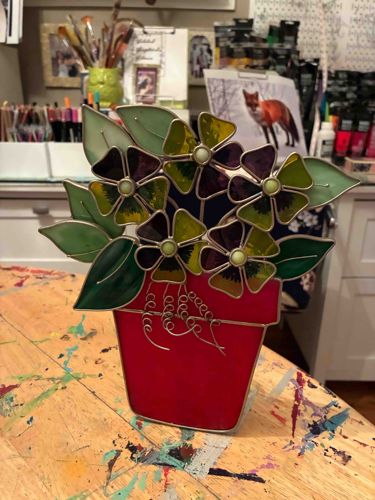
This item is a decorative stained glass suncatcher, fashioned in the shape of a potted plant. It features a bright red flower pot base, from which several flowers with accompanying leaves emerge. The flower pot itself is a vibrant, translucent red glass segment, outlined with a metallic solder, likely lead or copper foil, characteristic of Tiffany-style stained glass construction. Above the pot, there are approximately nine distinct flowers, each with four petals, rendered in a mix of translucent purple, dark green, and light yellow-green glass hues. The centers of these flowers appear to be small, opaque, light-colored beads or cabochons, possibly glass or plastic, integrated into the design. Interspersed among the flowers are several elongated, light green leaves. All individual glass pieces are joined together by thin, metallic solder lines, which have a dull, silver-grey finish, suggesting a natural patina or an antiqued treatment rather than a polished, bright sheen. A notable decorative element is the series of coiled wire tendrils, also in a similar metallic finish, that cascade down from the flowers onto the surface of the red pot, adding texture and mimicking climbing foliage. The overall construction appears robust, suggesting it is well-made for its purpose as a decorative suncatcher. No visible damage such as cracks, chips, or repairs are apparent in the glass or solder work. The item likely dates from the late 20th century to the present, representing a contemporary application of traditional stained glass techniques, possibly as a craft item or a mass-produced decorative piece. Its quality is indicated by the clean solder lines and the consistent coloration of the glass.
AI Appraisal Report
Based on my visual examination of the Stained Glass Flower Pot Suncatcher, I assess its condition as excellent. The glass pieces show no visible cracks, chips, or repairs, and the solder lines appear clean and consistent, indicating good craftsmanship. The coiled wire tendrils are a nice touch, adding a unique textural element. This piece authenticates as a decorative craft item, likely produced using the Tiffany-style copper foil method, as suggested by the thin solder lines. Given its stylistic elements, I believe it dates from the late 20th century to the present, consistent with contemporary stained glass craft. It's difficult to ascertain if this is a unique artisan piece or a mass-produced item without further information.
In terms of market conditions, items like this suncatcher fall into the broad category of decorative arts and craft items. Comparable stained glass suncatchers of this size and complexity typically retail in the $30-$50 range through online marketplaces, craft fairs, and small gift shops. Demand for such charming decorative pieces is generally steady, but they are not considered rare. Numerous artists and manufacturers produce similar items, meaning there isn't a significant rarity driving up value. Factors impacting value are primarily condition, aesthetic appeal, and perceived craftsmanship. This piece rates well on these points for its category.
A significant limitation of this appraisal is the lack of physical inspection. Without hands-on examination, I cannot definitively determine the exact type of glass used (e.g., art glass vs. common stained glass), the metal content of the solder, or the material of the flower centers. An in-person inspection would also allow me to check for micro-cracks or subtle repairs not visible in the image. Provenance documentation, such as artist signatures, studio tags, or purchase receipts, would be critical for authenticating it as an original from a known artisan, which could potentially inflate its value. Without such documentation, it remains valued as a generic, well-made decorative suncatcher.