AI estimate as of August 11, 2025 · verify with a professional before acting
AI-Generated · Verify before acting
Everything on this page is generated by AI for informational purposes only. AI can make mistakes — the AI may misidentify items or misattribute them (artist, maker, brand, designer, origin, era). This is not an official valuation and should not be used for insurance, sale, tax, estate, legal, or lending purposes — or any decision requiring a certified appraisal. It is not an authoritative claim about any person, brand, or rights holder — do not share or rely on it as a factual statement about a third party. Always consult qualified professionals before making financial decisions.
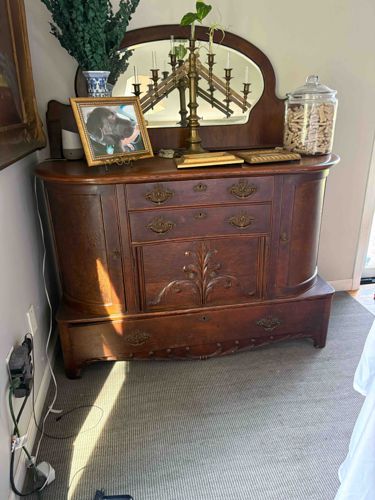
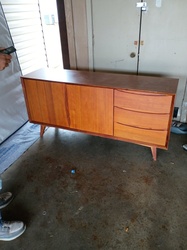
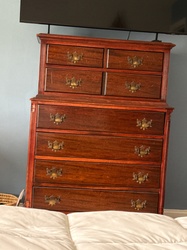
This is an antique wooden buffet or side cabinet with a detachable mirror top, likely crafted from oak due to its prominent grain and warm, medium brown hue. The piece features a substantial top surface, rounded at the front corners, suggesting a formal or semi-formal dining room application. The main body of the buffet includes multiple storage compartments: two central drawers positioned centrally and symmetrically, flanked by cabinet doors. A keyhole on one of the central drawers suggests it may be lockable. The drawer pulls are ornamental, made of brass or a similar metal, exhibiting an elaborate, possibly Rococo or Victorian-era, design with intricate scrollwork. Below the central drawers is a single, large, central cabinet door featuring a carved, ornate floral or foliate motif, indicative of a decorative period style. The lower section of the buffet includes a broad, full-width drawer, also with ornate brass pull handles, and a decorative, scalloped apron below it embellished with applied decorative elements, possibly rosettes or small turned accents. The buffet stands on short, sturdy legs, which are part of its solid construction. The attached mirror features an arched or scrolled top, providing a decorative and functional element, likely original to the piece. The wood shows a well-preserved patina, consistent with age, indicating careful maintenance over decades, though some minor cosmetic wear or surface inconsistencies might be present upon closer inspection, as is typical for antique furniture. The overall craftsmanship appears solid and detailed, reflecting quality construction from its era.
AI Appraisal Report
Upon visual examination of the provided image, this antique wooden buffet with a detachable mirror top appears to be a robust and well-preserved piece, likely fashioned from oak given its prominent grain and warm, medium-brown tone. The overall condition seems consistent with its age, displaying a desirable patina indicating careful maintenance. Authenticity, based solely on visual cues, points to a late 19th or early 20th-century origin, typical of Rococo Revival or Victorian-era furniture due to its ornate brass hardware, intricate carving (specifically the floral motif on the central door), and scalloped apron with applied decorative elements. The construction details, such as the rounded front corners and solid legs, suggest quality craftsmanship.
In terms of market conditions, antique buffets of this size and style generally have a steady demand, particularly for those seeking period-appropriate dining room or entryway furniture. Comparables in good condition typically fetch between medium to high price points depending on provenance and specific stylistic elements. The elaborateness of the carvings and hardware, coupled with the integrated mirror, adds to its appeal and value. Rarity is moderate; while not unique, finding pieces in such apparently good condition with all original features intact is becoming less common.
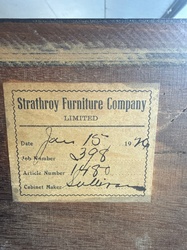
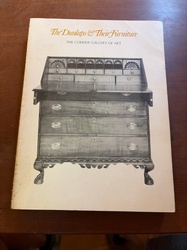
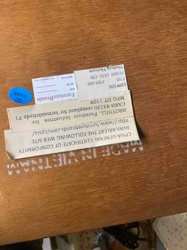
Factors significantly impacting value include the seemingly excellent state of preservation, the completeness of the mirror attachment, and the detailed ornamentation. Limitations in authenticity verification from an image alone are considerable. I cannot definitively assess the wood's species, the integrity of joints, the presence of repairs, or the originality of all components. An in-person examination would be crucial to inspect internal construction (e.g., dovetail joinery), wood uniformity, and absence of significant damage or restoration. Provenance documentation, such as original sales receipts or family history, would significantly enhance authentication and value. Scientific testing, like wood dating, would provide definitive age verification beyond visual assessment.