Vintage Tudor Revival Style Curio China Cabinet
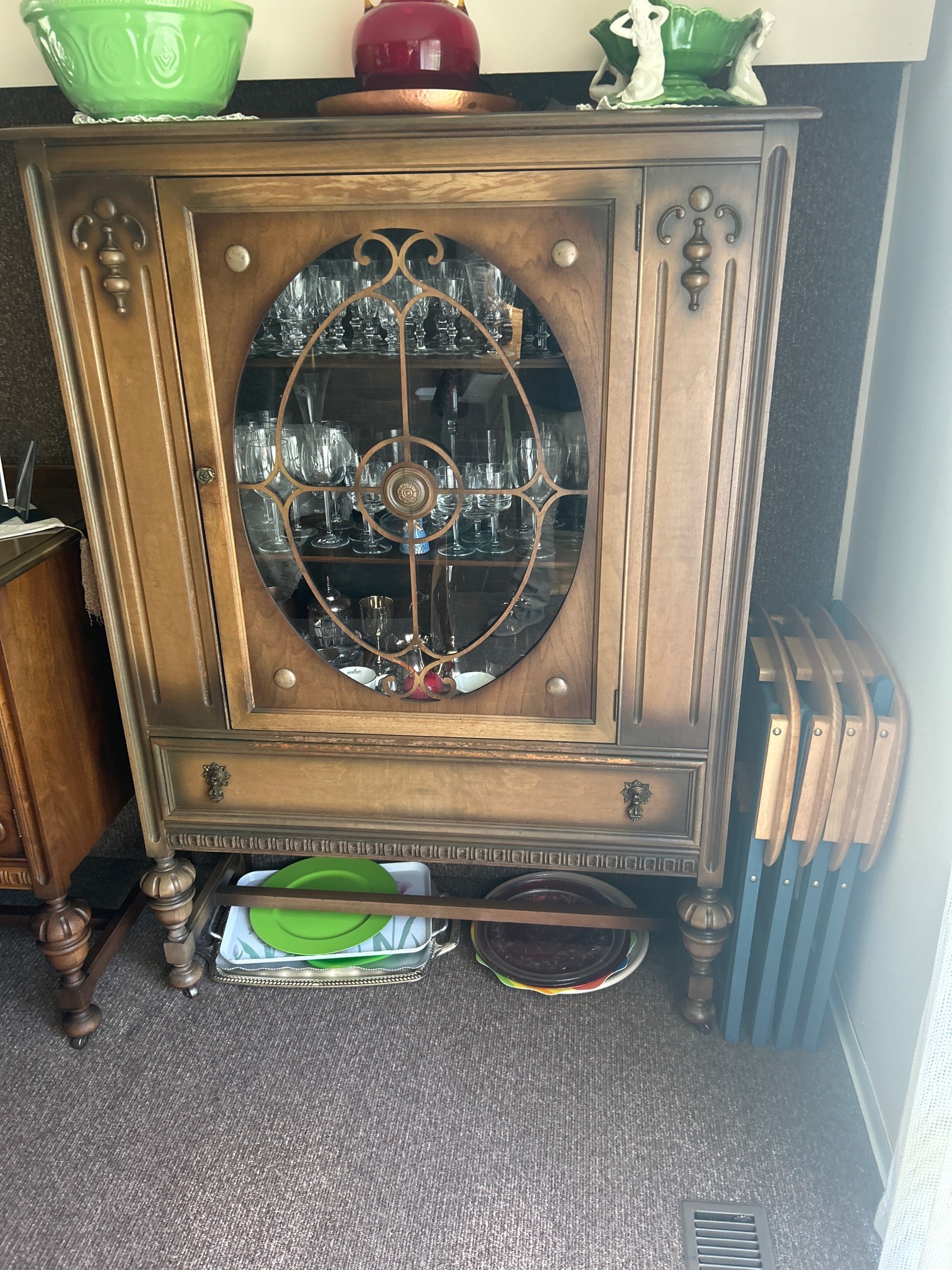
This is a mid-20th-century wooden china or curio cabinet designed in the Tudor or Jacobean Revival style. The piece is constructed from hardwood, likely stained maple or walnut, with a medium brown finish featuring darker shaded highlights on the pilasters and molding. Its most prominent feature is a single large cabinet door with an oval glass pane, accented by a decorative wooden fretwork overlay in a sunburst or compass-rose motif. The cabinet displays architectural elements including fluted pilasters topped with turned drop finials and four ornately turned bulbous legs ending in metal casters. A single full-width drawer at the base features two ornate metal drop pulls and sits above a band of dentil molding. The condition shows visible signs of age and use, particularly significant finish loss and scuffing along the wooden rail below the cabinet door and minor abrasions on the lower stretcher bar. The craftsmanship reflects mass-produced furniture of the 1920s-1940s, characterized by decorative veneers and machine-cut moldings intended to mimic historical English styles. Internally, it houses multiple shelves currently filled with glassware.
AI-Generated Appraisal Disclaimer
Estimated Value
$450 - $650
Basic Information
Category
Furniture
Appraised On
May 4, 2026
Estimated Value
$450 - $650
Item Description
This is a mid-20th-century wooden china or curio cabinet designed in the Tudor or Jacobean Revival style. The piece is constructed from hardwood, likely stained maple or walnut, with a medium brown finish featuring darker shaded highlights on the pilasters and molding. Its most prominent feature is a single large cabinet door with an oval glass pane, accented by a decorative wooden fretwork overlay in a sunburst or compass-rose motif. The cabinet displays architectural elements including fluted pilasters topped with turned drop finials and four ornately turned bulbous legs ending in metal casters. A single full-width drawer at the base features two ornate metal drop pulls and sits above a band of dentil molding. The condition shows visible signs of age and use, particularly significant finish loss and scuffing along the wooden rail below the cabinet door and minor abrasions on the lower stretcher bar. The craftsmanship reflects mass-produced furniture of the 1920s-1940s, characterized by decorative veneers and machine-cut moldings intended to mimic historical English styles. Internally, it houses multiple shelves currently filled with glassware.

Related Tags
Explore similar items and categories:
Get Your Items Appraised
Instant estimates of your treasures with AI-powered instant appraisals