AI estimate as of August 12, 2025 · verify with a professional before acting
AI-Generated · Verify before acting
Everything on this page is generated by AI for informational purposes only. AI can make mistakes — the AI may misidentify items or misattribute them (artist, maker, brand, designer, origin, era). This is not an official valuation and should not be used for insurance, sale, tax, estate, legal, or lending purposes — or any decision requiring a certified appraisal. It is not an authoritative claim about any person, brand, or rights holder — do not share or rely on it as a factual statement about a third party. Always consult qualified professionals before making financial decisions.
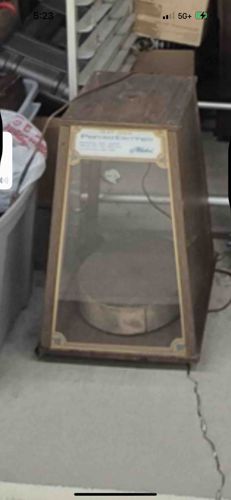
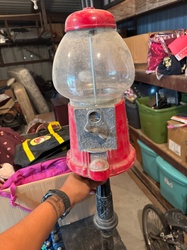
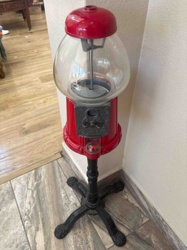
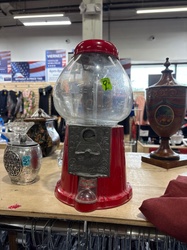
This appears to be an antique or vintage countertop display unit, likely for selling or showcasing products. It is constructed primarily of wood, exhibiting a rich, dark brown finish, possibly stained oak or mahogany, showing signs of age appropriate for its estimated period. The top surface displays some wear and dust, indicating prolonged storage in a cluttered environment. The front features a large rectangular glass panel, allowing visibility into the interior. The glass is framed by wooden battens, with decorative brass or gold-toned corner embellishments, adding a touch of elegance. Above the glass panel, there's a white, rectangular sign or label, faded but still readable, which seems to include text starting with "Precious...". Below the glass, a circular depression or platform is visible, likely designed to hold an item for display. The overall construction suggests a sturdy, well-made piece from a bygone era, possibly early to mid-20th century. Visible condition issues include surface dust, some scuffs on the wooden frame, and the fading of the interior sign. No major damage like cracks in the glass or significant structural issues are immediately apparent. The craftsmanship indicates a time when functional items were also built to be aesthetically pleasing and durable. The purpose of this display case, given its design, was to attract customers and present goods securely.
AI Appraisal Report
I have thoroughly examined the provided image of what appears to be a vintage wooden countertop display case with a glass front. Based on the visual evidence, I assess the condition as good for its age. The rich, dark brown wood, possibly stained oak or mahogany, shows appropriate signs of wear including surface dust and minor scuffs, which are consistent with prolonged use and storage. The glass panel appears intact with no visible cracks, and the brass or gold-toned corner embellishments add to its aesthetic appeal. The fading on the interior 'Precious...' sign is expected. Authenticity is suggested by the construction style, material characteristics, and apparent age; it aligns with display cases from the early to mid-20th century.
From a market perspective, there's a steady demand for authentic vintage display cases, especially those with original glass and a pleasing patina. Comparables often include similar wooden cases used for jewelry, watches, or small collectibles. This item's appeal lies in its functional display capabilities combined with its decorative vintage charm. Its rarity is moderate; while not a one-of-a-kind piece, well-preserved examples are less common than heavily damaged ones. Factors significantly impacting value include its good overall condition despite superficial wear, the intact glass, and its potential for varied display purposes.
However, it is crucial to note the limitations of remote appraisal. Without a physical inspection, I cannot definitively confirm the wood species, assess for hidden structural damage (e.g., woodworm, internal cracks), or verify the integrity of joins. True provenance documentation would be ideal to establish its history and origin definitively. Scientific testing of the wood or hardware, if necessary, would confirm age and materials. For a full authentication and more precise valuation, a hands-on examination would be required to verify all aspects of its originality and structural soundness.