AI Appraisal Estimate

AI-generated estimates · not official valuations

From the user

What was submitted

Photo and notes provided by the user — not generated by AI

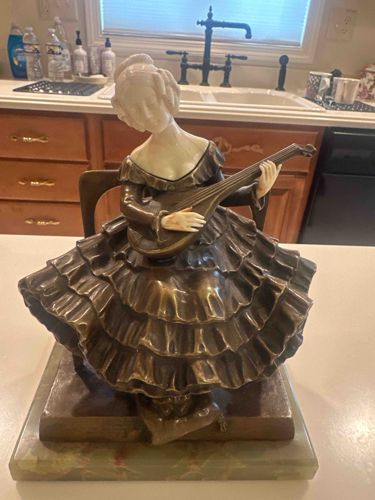
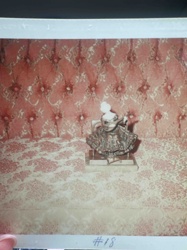
Submitted item photo
Submitted photo · June 1, 2026

User's notes

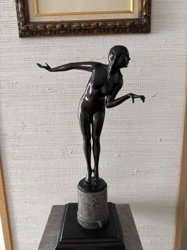
Bronze and ivory, signed P. Terrszizuk

AI analysis below

AI appraisal

AI analysis & estimate

AI-Generated · Verify before acting

Everything below is generated by AI for informational purposes only. AI can make mistakes — the AI may misidentify items or misattribute them (artist, maker, brand, designer, origin, era). This is not an official valuation and should not be used for insurance, sale, tax, estate, legal, or lending purposes — or any decision requiring a certified appraisal. It is not an authoritative claim about any person, brand, or rights holder — do not share or rely on it as a factual statement about a third party. Always consult qualified professionals before making financial decisions.

Note

This analysis also relies on unverified notes provided by the user, which may be incomplete or inaccurate and could affect the result.

Read the full disclaimer

AI Identification

·Not independently authenticated·Verify before acting

Peter Tereszczuk Chryselephantine Bronze and Ivory Lute Player Figure

Fine Art / Antique Sculpture

AI Estimated Value

·Not an official valuation·Verify before acting

$4,500 - $6,500

As of June 1, 2026

AI Item Analysis

·AI can make mistakes·Verify before acting
This is a detailed chryselephantine sculpture by the renowned Austrian-Ukrainian artist Peter Tereszczuk, created circa 1900-1920. The piece depicts a young woman seated on a chair while playing a lute, showcasing the signature Art Nouveau and early Art Deco style common of the period. The figure is constructed from cast bronze with a rich dark patination, representing the full-skirted dress and the body of the instrument. The skin surfaces, including the head, neck, and hands, are meticulously carved from ivory (as noted in the context), a technique known as chryselephantine. The woman wears a voluminous, multi-tiered ruffled gown that demonstrates high-quality casting with realistic depth and movement. She is mounted upon a pedestal base that appears to be made of onyx or a similar banded green stone. The work is signed 'P. Tereszczuk', identifying its origin from his celebrated foundry in Vienna. Notable details include the delicate carving of the hair and facial features, which remain well-defined despite the material's age. The bronze shows a soft luster on the raised edges of the folds, indicating long-term care, while the ivory components exhibit a creamy natural patina. There are no immediate signs of significant cracking or structural repair visible in the photograph, though ivory of this age often exhibits microscopic 'Schreger lines' or faint hairline checking. The ensemble represents the high craftsmanship and sentimental aesthetic typical of the Viennese sculpture movement at the turn of the century.
AI Appraisal Report

·AI can make mistakes·Verify before acting
Based on my visual analysis, this is an original chryselephantine sculpture by Peter Tereszczuk (1875–1963), the prominent ‘Vienna Bronzes’ figure known for his romanticized Art Nouveau subjects. The piece displays the high-quality bronze casting and delicate ivory carving characteristic of his collaboration with the Ullmann foundry. The dark brown patina appears original with appropriate wear on the high points of the gown’s ruffles, and the ivory face and hands show a natural creamy coloration without the significant yellowing or 'checking' often seen in pieces of this age. The market for Tereszczuk is currently stable, with high demand for his larger, more complex musical figures. Comparables for signed chryselephantine works featuring lutes or mandolins typically realize between $4,000 and $7,000 at auction, though the value can fluctuate based on the integrity of the ivory. The use of a banded onyx base—a hallmark of the period—adds to the aesthetic and commercial appeal. Limitations: My assessment is based on high-resolution imagery. A physical inspection is required to confirm the 'Schreger lines' in the ivory to ensure it is not a celluloid or synthetic substitute. I would also need to verify the bronze for any secondary marks (such as the AR foundry stamp) and examine the junction points between materials for signs of epoxy repairs. For a definitive authentication, documentation of the piece’s provenance prior to the 1947 CITES treaty regulations is highly recommended, as international sale of ivory is subject to strict legal constraints. The current estimated value reflects the piece's excellent visual condition and artistic merit.

Get your items appraised

Instant estimates of your treasures with AI-powered appraisals

Browse More Appraisals