AI estimate as of October 6, 2025 · verify with a professional before acting
AI-Generated · Verify before acting
Everything on this page is generated by AI for informational purposes only. AI can make mistakes — the AI may misidentify items or misattribute them (artist, maker, brand, designer, origin, era). This is not an official valuation and should not be used for insurance, sale, tax, estate, legal, or lending purposes — or any decision requiring a certified appraisal. It is not an authoritative claim about any person, brand, or rights holder — do not share or rely on it as a factual statement about a third party. Always consult qualified professionals before making financial decisions.
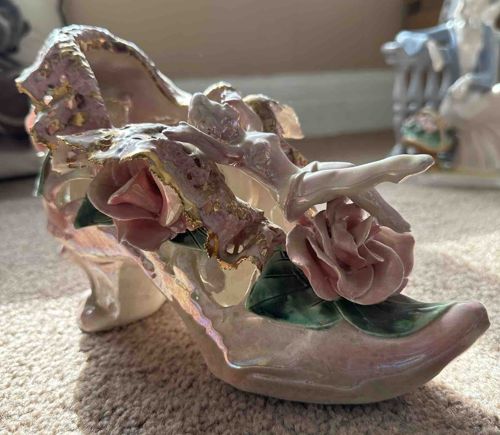
This exquisite item is a ceramic or porcelain high-heel shoe planter or decorative ornament, characterized by an iridescent, possibly mother-of-pearl or lusterware, finish that shifts in color, predominantly in shades of pale pink, lavender, and cream. The shoe features a distinct feminine style with a high heel and an open top, designed to hold a small plant or serve as a decorative vessel. Ornamenting the shoe are intricately applied three-dimensional floral elements, specifically several pink roses with detailed petals and green leaves, some of which appear to have gold accents or trim along their edges. A cherub or putto figure, sculpted in off-white porcelain, is gracefully positioned amidst the roses, adding a classical or romantic touch. This figure, possibly a winged angel or child, appears to be reclining or draped across the floral arrangements. The craftsmanship suggests a mid-20th century European style, possibly Italian or German, known for decorative porcelains. The gold accents, visible on the edges of the roses and some of the more elaborate scrollwork around the opening, indicate a desire for an opulent aesthetic. The overall condition appears good from the visible angle, with no obvious major chips or cracks, although closer inspection would be required to ascertain any subtle wear, crazing in the glaze, or chips on the delicate applied elements or the putto figure. The high level of detail in the roses and the cherub, combined with the iridescent glaze and gold accents, suggests a piece intended for decorative display, perhaps on a vanity, mantel, or as a centerpiece. The material is likely glazed ceramic or porcelain, typical for decorative wares of this style and period.
AI Appraisal Report
I have examined the provided image of this Porcelain High-Heel Shoe Planter with Applied Roses and Cherub/Putto. Visually, the piece presents as a decorative ceramic or porcelain item, likely from the mid-20th century, with an iridescent glaze, applied roses, and a cherub figure. The condition appears good from the photographic evidence; I see no obvious chips, cracks, or significant losses to the delicate applied elements or the putto. The gold accents also appear largely intact.
Authenticity, based purely on this image, points to a period decorative item, consistent with European, possibly Italian or German, production focusing on romantic or rococo-inspired themes. These types of items were popular for decorative display.
Market conditions for such decorative ceramic or porcelain pieces are generally modest. While charming, they are not exceedingly rare, and the demand is typically from collectors of decorative arts or those seeking vintage accents. Comparable items, often found at estate sales or online marketplaces, typically range from $50 to $200 depending on condition, size, and maker. The aesthetic appeal of the iridescent finish, detailed roses, and the cherub adds to its desirability, placing it towards the higher end of its typical range.
Key factors impacting value include the intricate applied decoration and the overall good visual condition. The absence of a clear maker's mark or definitive historical provenance, coupled with the commonality of this style, limits a higher valuation. To fully authenticate and ascertain value, an in-person examination is crucial to detect hairline cracks, repairs, crazing in the glaze, and to thoroughly inspect all applied elements for subtle damage. Physical inspection could also verify the material (ceramic vs. higher-quality porcelain) and search for any hidden maker's marks. Without physical inspection, I cannot definitively confirm its origin or rule out restoration, but based on the image, my appraisal range is $75 - $150.