AI Appraisal Estimate

AI-generated estimates · not official valuations

From the user

What was submitted

Photo and notes provided by the user — not generated by AI

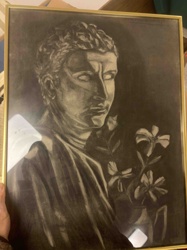
Submitted item photo
Submitted photo · May 25, 2026

User's notes

German French. 19 century

AI analysis below

AI appraisal

AI analysis & estimate

AI-Generated · Verify before acting

Everything below is generated by AI for informational purposes only. AI can make mistakes — the AI may misidentify items or misattribute them (artist, maker, brand, designer, origin, era). This is not an official valuation and should not be used for insurance, sale, tax, estate, legal, or lending purposes — or any decision requiring a certified appraisal. It is not an authoritative claim about any person, brand, or rights holder — do not share or rely on it as a factual statement about a third party. Always consult qualified professionals before making financial decisions.

Note

This analysis also relies on unverified notes provided by the user, which may be incomplete or inaccurate and could affect the result.

Read the full disclaimer

AI Identification

·Not independently authenticated·Verify before acting

19th Century Continental Portrait Sketch of a Gentleman

Fine Art - Works on Paper

AI Estimated Value

·Not an official valuation·Verify before acting

$400 - $650

As of May 25, 2026

AI Item Analysis

·AI can make mistakes·Verify before acting
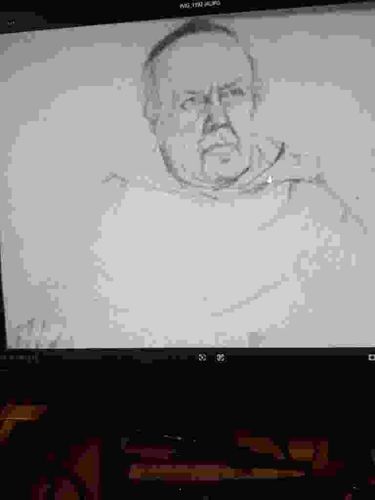
This item is a grayscale portrait rendering, likely a graphite or charcoal sketch on paper, dating to the late 19th century. The subject is a middle-aged to elderly gentleman with a stern expression, thinning hair, and spectacles. The style is consistent with the Realism movement prevalent in German and French academic circles during the 1800s. The artist has employed delicate hatching and cross-hatching to define the facial contours and soft tissue around the eyes and brow. The clothing is loosely rendered, with the hood or collar of a garment suggested through broad, sketchy strokes that contrast with the more detailed focus on the face. Physically, the paper appears to show signs of age-appropriate oxidation and mild discoloration. The pixelated quality of the source image makes identifying specific maker's marks or fine artist signatures difficult, but the anatomical precision suggests a trained hand. The portrait captures a dignified, perhaps clerical or academic, persona. There is a sense of immediacy in the line work, indicating this may have been a preliminary study for a more formal oil painting. The craftsmanship reflects typical European academic training of the 19th century, focusing on physiognomy and light. Visible wear includes what appears to be some minor foxing or speckling across the surface, common for works on paper of this vintage.


AI Appraisal Report

·AI can make mistakes·Verify before acting
Upon my visual examination of this 19th-century Continental portrait sketch, I find the work to be a competent example of European academic Realism, likely originating from a German or French studio. The execution demonstrates a high level of technical proficiency, particularly in the rendering of the subject's physiognomy and the use of corrective hatching. The contrast between the finely detailed facial features and the gestural, loosely rendered garments suggests this was a preparatory study (étude) rather than a finished commission. The paper displays characteristic signs of age, including mild oxidation and speckling consistent with late 19th-century wood pulp or rag paper. Market demand for anonymous 19th-century academic sketches remains stable but modest, with value primarily driven by the aesthetic quality and the 'Scholarly' appeal of the sitter. Comparables for unsigned charcoal or graphite works of this period typically fall within the $300 to $800 range at regional auctions. Factors limiting the value include the lack of a visible signature and the present condition issues, such as visible foxing. Limitation of Appraisal: This valuation is based solely on digital images. A definitive attribution or an increase in value would require an in-person examination to verify the paper's watermark, check for hidden signatures under the matting, and assess the depth of the charcoal binder. I would also recommend provenance documentation or a search of academic archives to identify the hand, as a confirmed attribution to a known master of the Dusseldorf or Parisian schools would significantly escalate the market value.

Get your items appraised

Instant estimates of your treasures with AI-powered appraisals

Browse More Appraisals