Paleolithic Biface Chert Hand Axe
Prehistoric Artifacts / Lithics

Paleolithic Biface Chert Hand Axe

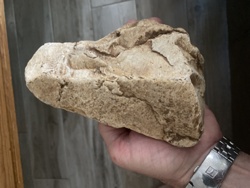
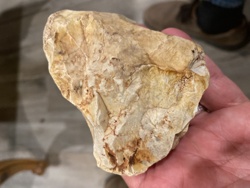
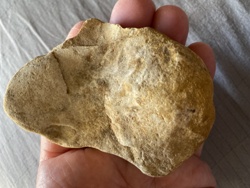
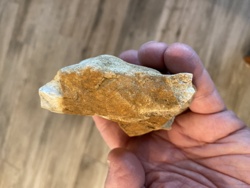
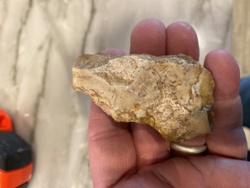
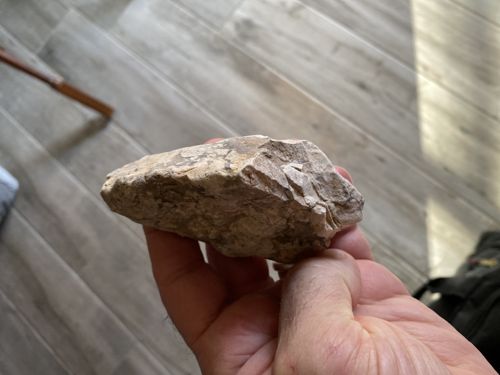
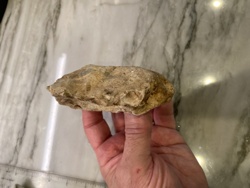
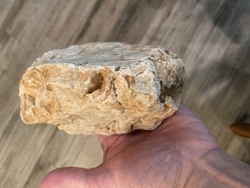
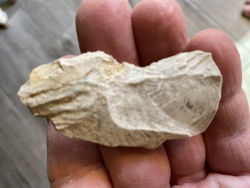
This item is a Paleolithic biface hand axe and lithic scraper, found in Guthrie, Oklahoma. It is crafted from a high-quality chert material, characterized by its fine-grained texture and a color palette of tan, beige, and earthy brown tones with subtle mottled ivory inclusions. The artifact displays classic percussion flaking techniques, where large flakes have been removed from both sides (bifacial) to create a tapered, wedge-like profile and sharp edges. The piece measures roughly 4-5 inches in length based on scale, fitting comfortably in the palm of a hand, which suggests it was intended as a handheld multi-tool for chopping or scraping hides. Notable features include a prominent central ridge and visible ripple marks from the flintknapping process. The condition shows heavy mineralization and a well-developed patina consistent with ancient lithic tools, with some evidence of modern edge wear or minor step fractures along the primary working face. The item lacks contemporary manufacturer marks, as is typical for prehistoric tools, but demonstrates significant craftsmanship through the deliberate symmetry of its percussion-sculpted form. This specimen is an excellent example of early human technology and tool development in the North American plains.
Estimated Value

$150 - $250

Basic Information

Category

Prehistoric Artifacts / Lithics

Appraised On

February 24, 2026

Estimated Value

$150 - $250

Additional Details Provided By Owner

User Provided Information

Paleolithic chert bi face hand axe lithic scraper found in Guthrie, OK measuring

Item Description

This item is a Paleolithic biface hand axe and lithic scraper, found in Guthrie, Oklahoma. It is crafted from a high-quality chert material, characterized by its fine-grained texture and a color palette of tan, beige, and earthy brown tones with subtle mottled ivory inclusions. The artifact displays classic percussion flaking techniques, where large flakes have been removed from both sides (bifacial) to create a tapered, wedge-like profile and sharp edges. The piece measures roughly 4-5 inches in length based on scale, fitting comfortably in the palm of a hand, which suggests it was intended as a handheld multi-tool for chopping or scraping hides. Notable features include a prominent central ridge and visible ripple marks from the flintknapping process. The condition shows heavy mineralization and a well-developed patina consistent with ancient lithic tools, with some evidence of modern edge wear or minor step fractures along the primary working face. The item lacks contemporary manufacturer marks, as is typical for prehistoric tools, but demonstrates significant craftsmanship through the deliberate symmetry of its percussion-sculpted form. This specimen is an excellent example of early human technology and tool development in the North American plains.
Get Your Items Appraised

Instant estimates of your treasures with AI-powered instant appraisals

Browse More Appraisals