AI Appraisal Estimate

AI-generated estimates · not official valuations

From the user

What was submitted

Photo and notes provided by the user — not generated by AI

Submitted item photo
Submitted photo · July 16, 2026

User's notes

No additional notes provided.

AI analysis below

AI appraisal

AI analysis & estimate

AI-Generated · Verify before acting

Everything below is generated by AI for informational purposes only. AI can make mistakes — the AI may misidentify items or misattribute them (artist, maker, brand, designer, origin, era). This is not an official valuation and should not be used for insurance, sale, tax, estate, legal, or lending purposes — or any decision requiring a certified appraisal. It is not an authoritative claim about any person, brand, or rights holder — do not share or rely on it as a factual statement about a third party. Always consult qualified professionals before making financial decisions.

Read the full disclaimer

AI Identification

·Not independently authenticated·Verify before acting

Early-to-mid 20th-century style oak card index cabinet

Antique Furniture

AI Estimated Value

·Not an official valuation·Verify before acting

$100 - $225

As of July 16, 2026

AI Item Analysis

·AI can make mistakes·Verify before acting
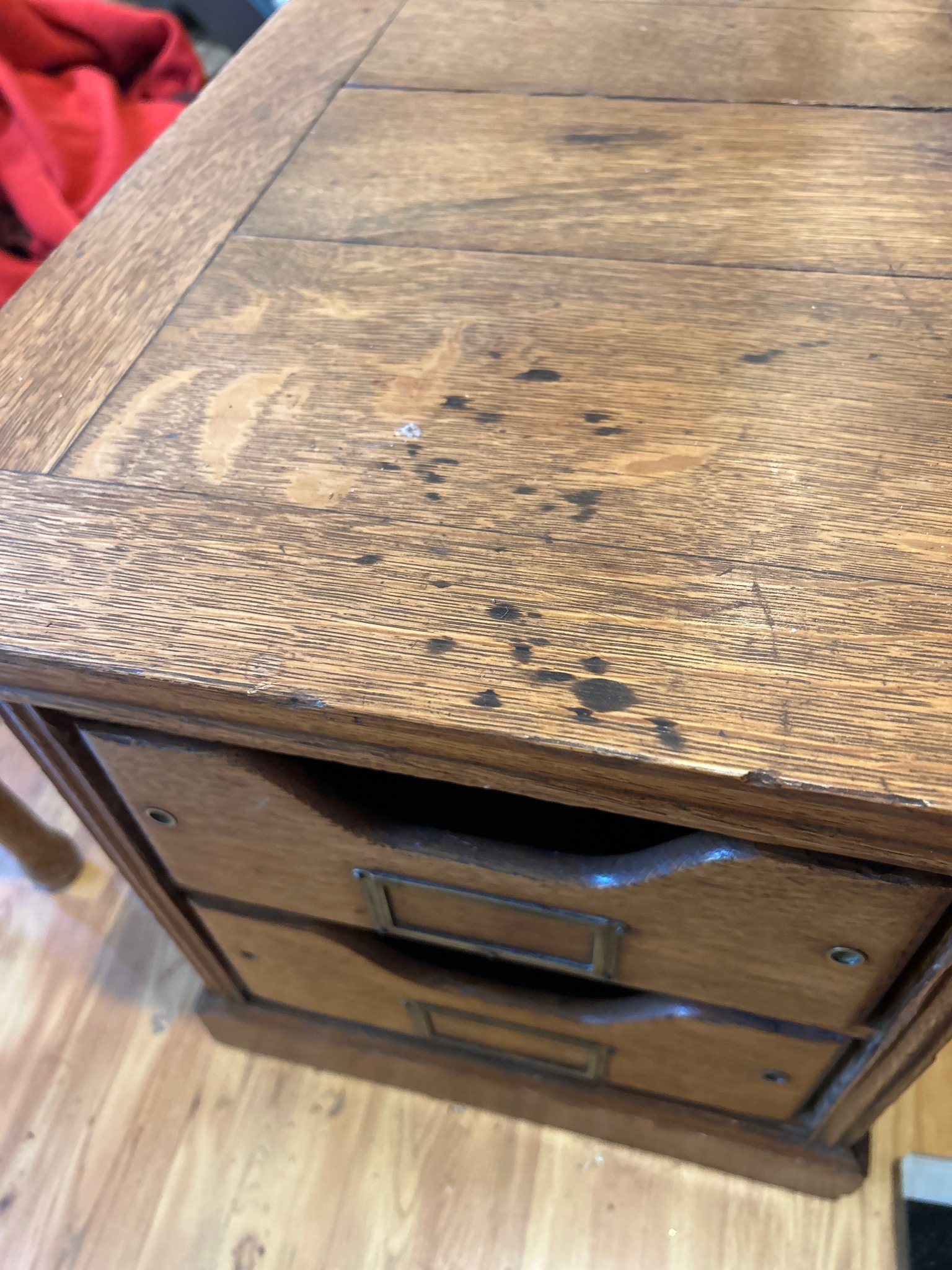
This item appears to be a small wooden filing cabinet, consistent with the style of a late 19th-to-mid 20th-century library card index or office organizer. From the image, the piece appears to be constructed of oak or a similar hardwood with a medium-honey finish, exhibiting a prominent straight grain consistent with quartersawn or plainsawn oak. The visible portion shows two drawers, each featuring a recessed 'scoop' handle design and an aged metal label holder, possibly brass or copper-plated steel, which are consistent with industrial or library equipment from the early 1900s. There are no visible maker's marks, stamps, or labels in the photograph to provide a specific manufacturer identification. The condition shows significant signs of age and wear: the top surface has numerous dark circular stains, likely ink or water damage, along with localized finish loss and light surface scratches. The edge of the top panel shows minor denting and wear consistent with heavy utility use. The recessed drawer pulls and label holders suggest a functional, utilitarian craftsmanship. Without a physical inspection or visible branding, this identification is based solely on the stylistic elements and traditional materials shown in the photograph.

AI Appraisal Report

·AI can make mistakes·Verify before acting
Based on the photograph provided, I have examined this two-drawer oak card index cabinet. The piece appears to be constructed from oak with a grain pattern consistent with early-to-mid 20th-century office furniture. Based on what I can see, the recessed 'scoop' handles and metal label holders suggest a utilitarian design frequently associated with library or industrial cataloging systems. I cannot verify from a photo the specific wood species or the exact age of the metal hardware, as these would require physical inspection to confirm whether they are period-correct or later replacements. The finish shows significant distress, including circular staining and finish loss on the top surface, which generally reduces the value for collectors seeking pristine office antiques. My value estimate is based on the hypothesis that this is a functional period piece from the 1920s-1940s. In the current secondary market, there is steady demand for small-scale industrial organizers for use in home decor. However, without a visible maker's mark—such as those from Library Bureau Sole Makers or Globe Wernicke—this remains an unattributed piece. If this were to be identified as a reproduction or a modern 'in the style of' piece using inferior veneers, the value would likely drop below $50. To confirm its origins and potentially increase its valuation, one would need an in-person examination of the joinery (such as dovetail construction) and any hidden stamps on the drawer interiors. The provided estimate assumes the item is of the period as suggested by its wear and stylistic elements, though its value relies on its utility and aesthetic appeal rather than a confirmed brand lineage.

Related Tags

Explore similar items and categories

Get your items appraised

Instant estimates of your treasures with AI-powered appraisals

Browse More Appraisals