AI Appraisal Estimate

AI-generated estimates · not official valuations

From the user

What was submitted

Photo and notes provided by the user — not generated by AI

Submitted item photo
Submitted photo · June 25, 2026

User's notes

8 inches high without stand

AI analysis below

AI appraisal

AI analysis & estimate

AI-Generated · Verify before acting

Everything below is generated by AI for informational purposes only. AI can make mistakes — the AI may misidentify items or misattribute them (artist, maker, brand, designer, origin, era). This is not an official valuation and should not be used for insurance, sale, tax, estate, legal, or lending purposes — or any decision requiring a certified appraisal. It is not an authoritative claim about any person, brand, or rights holder — do not share or rely on it as a factual statement about a third party. Always consult qualified professionals before making financial decisions.

Note

This analysis also relies on unverified notes provided by the user, which may be incomplete or inaccurate and could affect the result.

Read the full disclaimer

AI Identification

·Not independently authenticated·Verify before acting

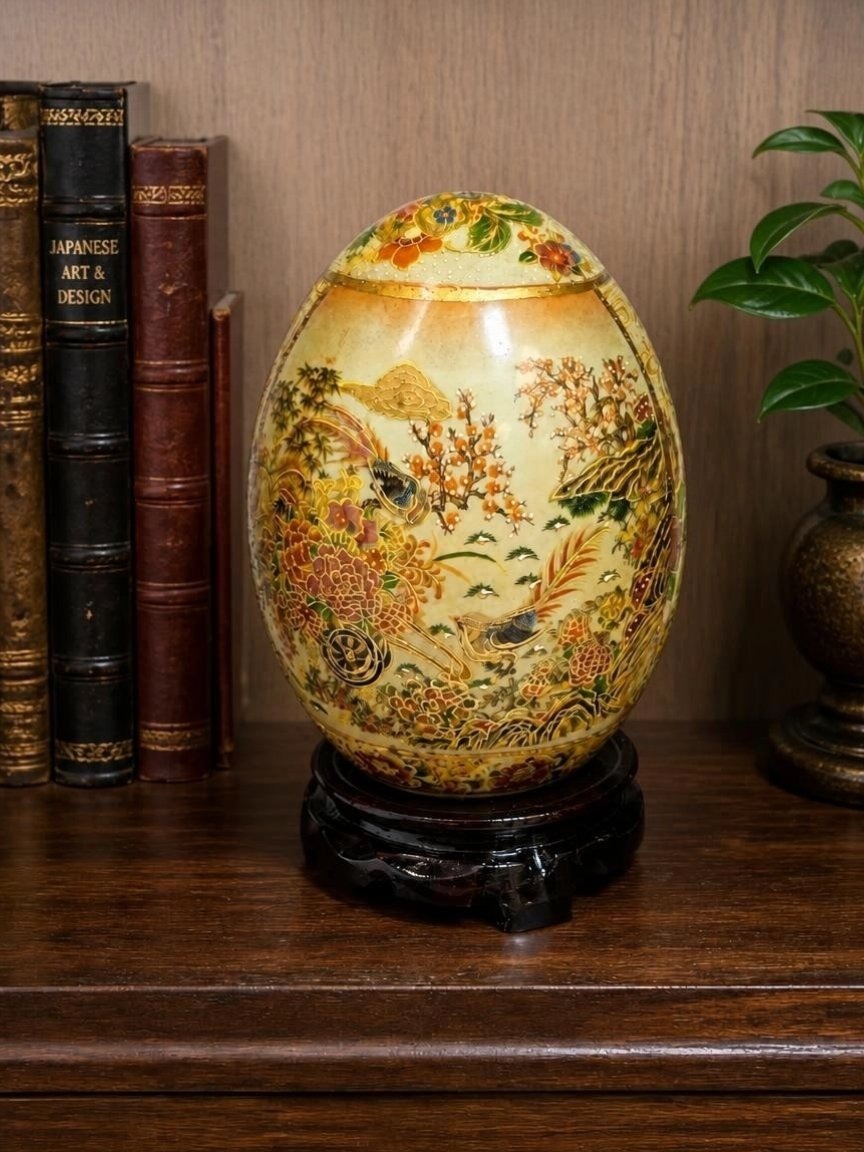
Satsuma-style ceramic egg on wooden stand

Decorative Ceramics

AI Estimated Value

·Not an official valuation·Verify before acting

$150 - $350

As of June 25, 2026

AI Item Analysis

·AI can make mistakes·Verify before acting
This item is an ovoid ceramic object, stylistically consistent with late 19th or early 20th-century Japanese Satsuma-ware Export pieces. The owner reports the height as 8 inches without the stand, which is unverified without physical measurement. The egg is heavily decorated in a polychrome palette featuring enamels of gold, red, orange, and green over a finely crackled, cream-colored glaze. The central motif depicts long-tailed birds, likely pheasants, amidst a dense landscape of chrysanthemums and cherry blossoms, bordered by intricate geometric and floral bands at the poles. The application of Moriage (raised enamel) is visible, particularly in the golden clouds and flower outlines. The workmanship is consistent with more modern decorative reproductions of Meiji-era styles, which often utilize high levels of gilding for the export market. The item rests on a dark-toned, possibly rosewood or stained hardwood, carved tripod stand. No maker's marks or signatures are visible in the image to provide a specific workshop attribution. The condition appears to be good with no obvious chips or cracks, though the presence of fine crazing is consistent with this type of pottery. All identifications are based on stylistic appearance and remain a hypothesis until physical inspection is performed.
AI Appraisal Report

·AI can make mistakes·Verify before acting
Based on the images provided, I have examined this ovoid ceramic object which presents characteristics consistent with a late 19th or early 20th-century Japanese Satsuma-style export piece. The item features a cream-colored glaze with fine crazing and dense polychrome enameling, including Moriage techniques. While the motif of long-tailed birds and cherry blossoms is traditional, the high level of gilding and specific application styles suggest this is a hypothesis rather than a confirmed period piece; it may be a later 20th-century decorative reproduction. Without visible maker's marks or a physical inspection, I cannot verify the exact workshop or age. The reported height of 8 inches and the condition appear favorable, though I cannot verify the absence of structural repairs or internal cracks from a photograph. This estimate of $150-$350 reflects the market for high-quality Satsuma-style export wares in today's decorative arts market. However, this value is contingent on the assumption that the piece is a genuine vintage export item rather than a modern mass-produced replica. If physical examination or provenance documentation were to reveal this as a modern porcelain copy, the value would likely fall below $75. To confirm the identity and age of the piece, an in-person examination by a specialist is required to evaluate the weight of the clay body, the precise nature of the enamels, and any hidden marks on the base. General market demand for Japanese export ceramics remains steady for well-executed decorative examples, though prices are significantly higher for documented Meiji-period masterworks.

Get your items appraised

Instant estimates of your treasures with AI-powered appraisals

Browse More Appraisals